
Matt Dinan in The Hedgehog Review:
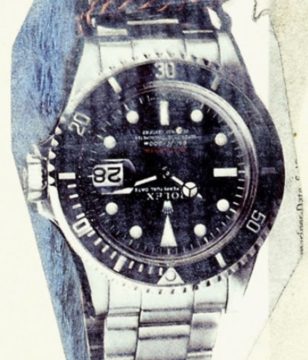 I am trying, in reviewing Why We Are Restless, an excellent new book by Benjamin Storey and Jenna Silber Storey, to keep myself out of it. My usual essayistic approach, I fear, will lead a reader to think that I object to the book’s diagnosis of what went wrong with the modern world more than I do. Besides, the tendency of critics to involve themselves in their reviews is irritating, and surely an example of the type of Montaignean introspection that may well be making us restless. But Why We Are Restless stands out among other books like it by answering the question implied by its title with rigor and charity, by (mostly) succeeding in presenting the view it contests “in terms of the most decent human aspirations.” Cataloguing one’s own restlessness, or subjecting readers to one’s bargain-bin Tocquevillian observations about the United States of America, would veer dangerously into the Montaignean territory here scrutinized. I will make an attempt (essai), in other words, to share some thoughts (pensées) about this fine book.
More here.
 W
W Are you an “insider threat?”
 When I want to know what the future is going to be like, I go ask
 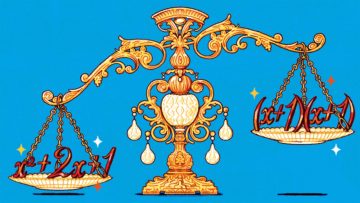 Last summer, three researchers took a small step toward answering one of the most important questions in theoretical computer science. To
  The upside of many NFTs having a uniform visual style is that, theoretically, as many of the medium’s biggest fans will stress, there is something inherently democratic about their design and their acquisition. If not every NFT creator makes the kind of money Bored Ape Yacht Club makes, they still have a fairly equal opportunity to share their work. Searching OpenSea for pieces is still easier by far than buying physical work from a gallery or an auction, and the only barrier to entry is a working knowledge of cryptocurrency. Buyers and artists who grew up on the internet of the 00s, meanwhile, may experience deja vu when given the opportunity to customise what is effectively an avatar, harking back to online cartoons like Blingees or Dollz Mania. When a rash of articles appeared in 2021 suggesting NFTs might be the Beanie Babies of the 2020s, the comparison was meant to be an insult; still, it is hard to overestimate the power of nostalgia when it comes to millennials on the web.
 During his lifetime, there was a long line of people who thought Admiral Hyman Rickover was an insufferable son of a bitch, a contemptible ass, an overbearing, opinionated, power-hungry menace. Biographer Marc Wortman called him, “obstinate, egotistical, and abrasive…” (119)
 It was at a party in Greenwich Village, in the spring of 1920, that the critic Edmund Wilson first encountered
  We now know who is rich in America. And it’s not who you might have guessed. A groundbreaking 2019
  N
N What you get from John Waters is crotch punching, exploding televisions, geysers of blood, deviants, wackos and reprobates. You get phrases like “ridiculous genital display” and “penis probation”; scatology, tickle fetishes and satanic babies. You get teeming panoramas of freaks in thrall to their own depravity. (Another painter comes to mind: Hieronymus Bosch.)
 Sam Anderson in the New York Times:
 Ryan Ruby in The New Left Review’s Sidecar:
 Patrick J. Deneen over at his substack The Postliberal Order (photo by Matt Cashore/University of Notre Dame):