Benjamin Ehrlich in Nautilus:
 In 1914, when World War I broke out, Santiago Ramón y Cajal, the most influential neuroscientist in the world—the man who discovered brain cells, later termed neurons— published only one article, by far his lowest output ever. “The horrendous European war of 1914 was for my scientific activity a very rude blow,” Cajal recalled. “It altered my health, already somewhat disturbed, and it cooled, for the first time, my enthusiasm for investigation.” Cajal’s tertulia, or café social circle, was “overwhelmed with horror and abomination, erasing the last relics of our youthful optimism.” Science was supposed to be universal, but now, as mail became unreliable, telegraph lines were cut, trenches were dug, and borders were almost constantly closed, scientists could not even share their work internationally.
…“I have to admit,” Cajal wrote in a new weekly newspaper, founded so that prominent intellectuals could share their views on the war, “I have a very low opinion of human beings.” As the “last hunter animal,” he wrote, we retain the “foul instincts” of beasts. “Our nerve cells continue to react in the same way as in the Neolithic Age,” he lamented. Because of “evolutionary resistance,” an “excruciating biological fact,” Cajal claimed that war will never be eradicated. All that civilization can hope to do is prolong the intervals of peace, but the “destructive phase” will always return, with each war becoming more horrifying. “In about twenty or thirty years, when the orphans of the present war will be men, the same stupendous massacre will be repeated,” he predicted with chilling accuracy. Suddenly, Cajal realized that the brain was not perfecting itself by evolution, as he had once believed. “Our descendants will be as putrid as we are,” he concluded.
More here.

 In recent weeks, I spoke with nearly two dozen people in, adjacent to, and critical of the crypto space about what they envision to be the purpose of crypto. What emerged was a picture that was simultaneously murky and clarifying, in that there’s not one good answer. Some of what it does is promising; a lot of what it does — even boosters admit — is trash, and trash that’s costing some people a lot of money. This probably isn’t the death knell for crypto — it’s gone through plenty of boom and bust cycles in the past. It would be unwise to definitively say that crypto has no chance of being a game changer; it would also be disingenuous to claim it is now.
 “Now we’re old with creaking bones,”
 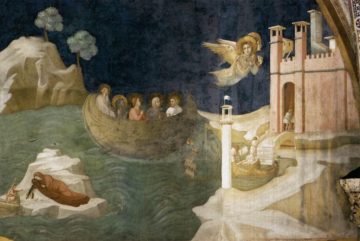 For a number of weeks one spring, I spent every afternoon at the Basilica di San Francesco d’Assisi. It was what we then thought was the tail end of a plague, and I had come to Italy to visit a friend who had lived for many years a few kilometers above Assisi, in an old schoolhouse. This turned out not to be the visit I had imagined, nor, I am sure, the one she had, and after a few weeks, I went to Rome. But before that, every afternoon, I drove down into town—I had rented a car—past the long flank of Monte Subasio, with its temperate oxen, parked on the escarpment before the gates because the switchback of tiny streets flummoxed me, and walked down to the basilica. Everything was off-kilter, as if a great wave had passed over us, and now, if we were lucky to be alive, we found ourselves stranded on the banks of our own lives or paddling furiously toward where we imagined the shore might be. I had been to the basilica and to Assisi many times over the years to visit my friend, and so I knew my way on the small strade that opened and closed into a series of piazze, as if the town had exhaled and then drawn breath again.
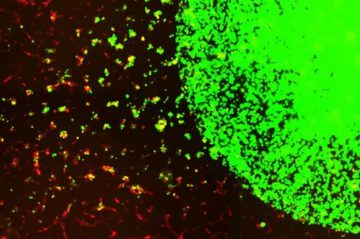 Glioblastomas (GBMs) are highly aggressive cancerous tumors of the brain and spinal cord. Brain cancers like GBM are challenging to treat because many cancer therapeutics cannot pass through the blood-brain barrier, and more than 90 percent of GBM tumors return after being surgically removed, despite surgery and subsequent chemo- and radiation therapy being the most successful way to treat the disease. In a new study led by investigators at Brigham and Women’s Hospital and Harvard Medical School, scientists devised a novel therapeutic strategy for treating GBMs post-surgery by using stem cells taken from healthy donors engineered to attack GBM-specific tumor cells. This strategy demonstrated profound efficacy in preclinical models of GBM, with 100 percent of mice living over 90 days after treatment.
 Is moral expertise possible? Well, we certainly act like it is in our everyday judgments of other people. We judge some people as lacking moral expertise, insofar as we don’t expect very good moral decision-making from them, we don’t seek out their advice on moral issues, and we don’t praise them as moral role models. Such people include young children, low-IQ adults, older adults with dementia, and criminal psychopaths.
 Spillover events, in which a pathogen that originates in animals jumps into people, have probably triggered every viral pandemic that’s occurred since the start of the twentieth century
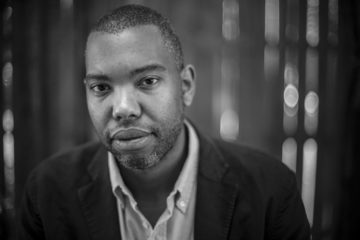 Ta-Nehisi Coates is best known for his writing about racism in America—in particular, his 2014 essay “The Case for Reparations,” and his 2015 book, Between the World and Me. Ta-Nehisi’s readers know that the toll racism has inflicted on the bodies of Black people, and the enduring power of white supremacy, have long preoccupied him. On this show, however, he’ll be talking about a subject—or rather an influence—that few people associate with his work.
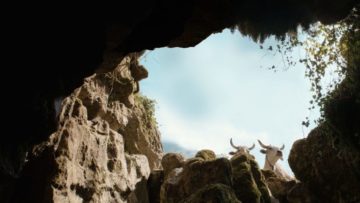 Throughout Il Buco, most human speech—apart from that in a television feature on the Pirelli palace and the old man’s cattle calls—is only ever heard at a distance, both standard Italian and Calabrian dialects disappearing into the acoustic fabric of the film. Cinematographer Renato Berta’s camera, either suffocatingly close or slightly afield from its subjects, hastens this sensorial defamiliarization. So does the rarity of subtitles. That these only appear under two brief archival segments—the aforementioned scientific report and the Pirelli doc, viewed, in a beguiling crepuscular scene, by a mesmerized group of townspeople motionlessly watching a television plopped outside on the dirt—is to insist upon a certain incommunicability. Despite our best efforts to dominate the heavens and the underworld, some places evade epistemic capture. Murmurous soundscapes, both infinitesimal and grandiose, perplex and disorient, causing human agents and their endeavors to appear more like incidental elements in the greater chasm of time.
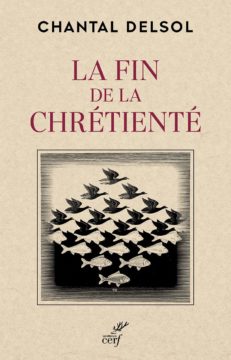 Jean-Luc Marion (b. 1946) and Chantal Delsol (b. 1947) are both prominent French philosophers who are very public about their Roman Catholicism. This alone would put them, in the minds of many of their fellow citizens, into “conservative” political and cultural camps, though the truth is considerably more complicated. This past year saw the appearance in English translation of Marion’s 2017 book,
  NOT ALL THAT LONG AGO,
 When his first novel,
 For many decades, part of the premise behind AI was that artificial intelligence should take inspiration from natural intelligence. John McCarthy, one of the co-founders of AI, wrote groundbreaking papers on