
Jonaki Mehta from NPR (All Things Considered):
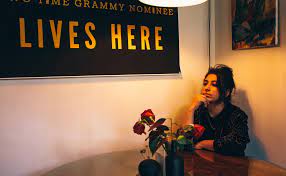 Remnants of a party linger inside Arooj Aftab’s Brooklyn brownstone on a gloomy winter day: Slightly deflated balloons in metallic purple, red and gold hover against the ceiling of her living room, and a well-used ashtray sits on her patio table. Against one wall, a banner reads “TWO TIME GRAMMY NOMINEE LIVES HERE” in big, bold letters. It is mid-December, just a few days after she heard the news. “I did not get this myself and, like, put it up,” Aftab says, chuckling as she points to the banner. Her friends had bought it for the party they threw to celebrate Aftab’s nominations for Best New Artist and Best Global Performance for her song “Mohabbat.” Aftab has lived in this apartment for more than six years. She shares it with her partner, roommate, and Tuna, a feral cat she took in as her own. She has spent a lot of time here, ruminating, writing, rehearsing and occasionally recording music— some of which is on her 2021 album Vulture Prince.
…She draws inspiration from the likes of Abida Parveen — “the queen of Sufi music” — famed jazz singer Ella Fitzgerald, and minimalist composer Terry Riley. Yet while her influences span genres and generations, Aftab says she didn’t listen to any music while making her latest album. “It distracts you from your own voice,” she sums up neatly.
More here.
 Travis Gustavson died in February, 2021 in Mankato, Minnesota at the age of 21. The morning of the day he died, he had a tooth pulled at the dentist’s office. Due to a drug history, the doctors didn’t prescribe him strong painkillers, so he was planning to white knuckle it through the day with ibuprofen, according to his mother. Instead, he called a guy who sold him illegal street heroin and fentanyl. In a text to the dealer, Gustavson sent a photo of the amount he planned to take and asked if he had gotten the dose right. “Smaller bro” and “be careful plz!” the dealer wrote back. Gustavson overdosed.
 In a Supreme Court ruling released last week, dissenting Justice Neil Gorsuch stated that the story of CIA detainee Abu Zubaydah’s time at a black site in Poland, where he and others were tortured by a team led by James Mitchell and Bruce Jessen, contracted to the CIA, remained incomplete even though 20 years has passed. “While we know that the CIA held Zubaydah at Detention Site Blue from December 2002 until September 2003, and while we know that the site was in Poland, what happened to him there remains unclear,” said Gorsuch.
 Adding to the brutal,
  After a prolonged buildup of forces, the total reaching 120,000 soldiers and National Guard troops, Russian President Vladimir Putin decided on February 24 to launch a full-scale invasion of Ukraine. The decision has revived a sharp-elbowed debate in the United States. One side consists mainly, though not exclusively, of those belonging to the realist school of thought. This side insists that Putin’s move can only be understood by taking account of the friction that NATO’s eastward expansion created between Russia and the United States. The other side, primarily comprised of neoconservatives and liberal internationalists, retorts that Putin’s protests against NATO’s enlargement are bogus. They contend that Putin’s animosity toward democracy—particularly the fear that its success in Ukraine would rub off on Russia and bring down the state that he has built since 2000—was the sole reason for the war.
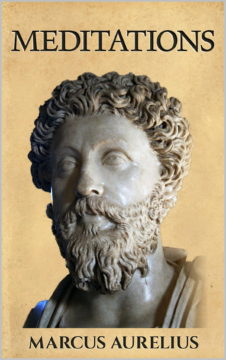 I
I On December 10, 2019, the Austrian writer Peter Handke received the Nobel Prize in Literature. If he felt pride or triumph, he didn’t show it. His bow tie askance above an ill-fitting white dress shirt, his eyes unsmiling behind his trademark round glasses, Handke looked resigned and stoical, as if he were submitting to a bothersome medical procedure. As he accepted his award, some of the onlookers—not all of whom joined in the applause—appeared equally grim.
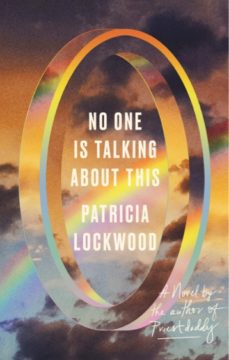 I’m uncomfortable saying a book that was a Good Morning America Book Club pick is underhyped. But Calvin Kasulke’s
  How is a lost tale of chivalry from
 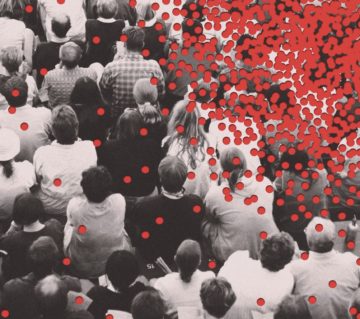 What if China had been open and honest in December 2019? What if the world had reacted as quickly and aggressively in January 2020 as Taiwan did? What if the United States had put appropriate protective measures in place in February 2020, as South Korea did?
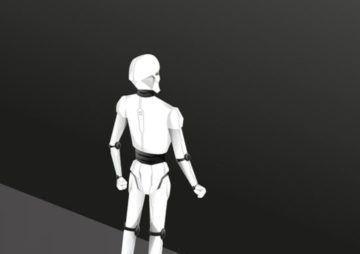 Let me start by saying a few things that seem obvious,” Geoffrey Hinton, “Godfather” of deep learning, and one of the most celebrated scientists of our time, told a leading AI conference in Toronto in 2016. “If you work as a radiologist you’re like the coyote that’s already over the edge of the cliff but hasn’t looked down.” Deep learning is so well-suited to reading images from MRIs and CT scans, he reasoned, that people should “stop training radiologists now” and that it’s “just completely obvious within five years deep learning is going to do better.”
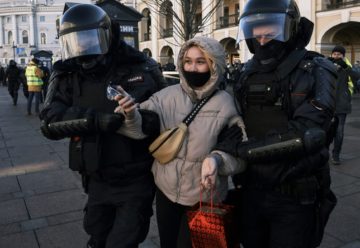 A protest movement against the invasion of Ukraine is growing in Russia. Demonstrations were held in 60 cities on March 6 and in 37 on Sunday, spurred in part by calls to turn out from imprisoned opposition leader Alexei Navalny. More than 14,900 people have been detained by security forces and police for protesting, according to
 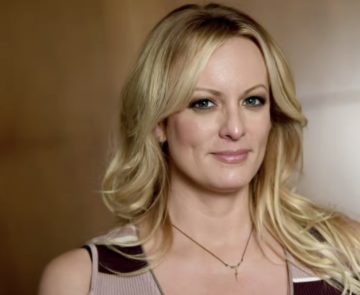 Like much of the world, I’ve been captivated by adult film actress turned director Stormy Daniels—but not for the usual reasons. Her encounter with former President Donald Trump is the least interesting thing about this otherwise brilliant, original, and deeply fascinating person whose single-minded pursuit to defend her dignity is mostly lost amid a rage of salacious headlines.
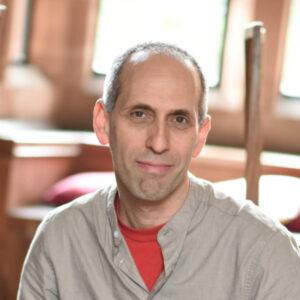 If extraterrestrial life is out there — not just microbial slime, but big, complex, macroscopic organisms — what will they be like? Movies have trained us to think that they won’t be that different at all; they’ll even drink and play music at the same cafes that humans frequent. A bit of imagination, however, makes us wonder whether they won’t be completely alien — we have zero data about what extraterrestrial biology could be like, so it makes sense to keep an open mind. Arik Kershenbaum argues for a judicious middle ground. He points to constraints from physics and chemistry, as well as the tendency of evolution to converge toward successful designs, as reasons to think that biologically complex aliens won’t be utterly different from us after all.