
Matt Taibbi in his Substack newsletter:

The New York Times ran a tepid house editorial in favor of free speech last week. A sober reaction [shown on right here]:
One might think running botched WMD reports that got us into the Iraq war or getting a Pulitzer for lauding Stalin’s liquidation of five million kulaks might have constituted worse days — who knew? Pundits, academics, and politicians across the cultural mainstream seemed to agree with Watson, plunging into a days-long freakout over a meh editorial that shows little sign of abating.
“Appalling,” barked J-school professor Jeff Jarvis. “By the time the Times finally realizes what side it’s on, it may be too late,” screeched Philadelphia Inquirer columnist Will Bunch. “The board should retract and resign,” said journalist and former Planet Money of NPR fame founder Adam Davidson. “Toxic, brain-deadening bothsidesism,” railed Dan Froomkin of Press Watch, who went on to demand a retraction and a “mass resignation.” The aforementioned Watson agreed, saying “the NYT should retract this insanity, and replace the entire editorial board.”
More here.
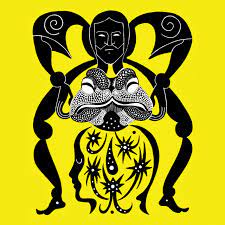 In 2013, a charismatic Mexican doctor took the stage at Burning Man, in Nevada, to give a tedx talk on what he called “the ultimate experience.” The doctor’s name was Octavio Rettig, and he would soon become known by his first name alone, like some pop diva or soccer star. He told the crowd that, years earlier, he had overcome a crack addiction by using a powerful psychedelic substance produced by toads in the Sonoran Desert. Afterward, he shared “toad medicine” with a tribal community in northern Mexico, where the rise of narco-trafficking had brought on a methamphetamine crisis. Through this work, he came to believe that smoking toad, as the practice is called, was an ancient Mesoamerican ritual—a “unique toadal language,” shared by Mayans and Aztecs—that had been stamped out during the colonial era. He announced that he’d restored a lost tradition, and that he had a duty to share it with others. “Sooner or later, everyone in the world will have this experience,” he told an interviewer after the talk.
 During a workshop last fall at the Vatican, Stanislas Dehaene, a cognitive neuroscientist with the Collège de France, gave a presentation chronicling his quest to understand what makes humans — for better or worse — so special. Dr. Dehaene has spent decades probing the evolutionary roots of our mathematical instinct; this was the subject of his 1996 book, “
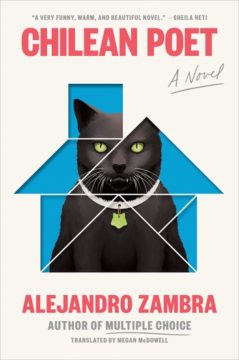 IN AN ESSAY ABOUT NATALIA GINZBURG, the Chilean novelist and critic Alejandro Zambra writes, “When someone repeats a story we presume they don’t remember that they’ve already told it, but often we repeat stories consciously, because we are unable to repress the desire, the joy of telling them again.” Of course the compulsion to retell a story is not always situated in joy’s lofty terrain. We might repeat a story in the hopes of shrinking it to a manageable bite, or because it reminds us of another story, or to shine up disagreeable aspects of our lives, or to mock it, perhaps secretly wishing it will deflect mockery from our more vulnerable, foolish selves. All of this is present, for me, in Zambra’s writing, and has been since the first time I read his work, which was around four years ago on the recommendation of someone I’d been on a few dates with. In the desultory landscapes of Bushwick and Greenpoint the snow was comically high, but only in retrospect. Everyone suddenly knew what an NDA was and wondered how to get out of theirs. We talked haughtily and agreeably about literature, and then I said something cruel about his dog, which turned out really to be the only thing, years later, we still talked about. The dog was named after a writer who composed several books of poetry but is best known for his novels.
 The Spanish pop star Rosalía is the rarest kind of modern musician: a relentlessly innovative aesthetic omnivore who also happens to have a decade of Old World, genre-specific formal training under her belt. As a teen-ager living on the outskirts of Barcelona, she was introduced to flamenco music by a group of friends from Andalusia, a region in the south of Spain where the style originated. Hearing the music of the flamenco giant Camarón de la Isla, she once told El Mundo, made her feel as if her “head exploded.” The discovery prompted Rosalía to throw her entire being into the practice of flamenco, an elemental genre built around hand-clapping, acoustic guitar, and a fierce and improvisational vocal style. She took flamenco dance classes; she learned guitar and piano, and, most important, she enrolled at the Catalonia College of Music, under the tutelage of the decorated flamenco singer and teacher Chiqui de la Línea. Pioneered by the Romani people (the term for Spain’s Gypsy population), the vocals of traditional flamenco are like kites—they follow unpredictable and precarious paths but sound as if they’re being buoyed by an invisible force of nature. Rosalía did not merely train to become a singer; she strove to master the intense and distinctive styles of flamenco’s beloved cantaores and cantaoras.
 A
A When we experience shame, we feel bad; and when we inflict shame, we feel good. Those seem to be among the few points of consensus when it comes to what the historian Peter N. Stearns calls a “disputed emotion.” Unlike fear or anger, shame is “self-conscious”; it doesn’t erupt so much as coil around itself. It requires an awareness of others and their disapproval, and it has to be learned. Aristotle thought of it as fundamental to ethical behavior; Confucius saw it as essential to social order.
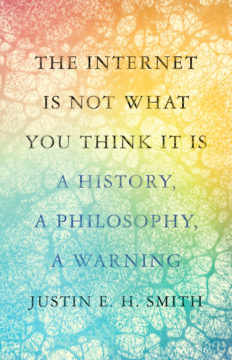 When did it become as hard to imagine what a good—or at least not as bad—internet might look like as to picture a world without the internet at all? Social-media mobs, conspiratorial thinking, deadly disinformation campaigns, gadget addiction, the funk of mass attention-deficit disorder: World-Wide-Web woes comprise a growth economy. The less acute but vague unease of our encounter with digital technology isn’t much alleviated by the possibility of imagining a truly off-the-grid alternative. (That a bit of shorthand like “off the grid” exists to describe a break from tech is as much a symptom of the problem as anything.) Perhaps to say that we feel backed into a corner by a claque of devices of our own making is not really to say much of anything at all.
 Even after vaccination,
  The Russian invasion of Ukraine and ongoing responses by the global community have prompted renewed scrutiny of glaring energy and resource security gaps in the post-Cold War era. War, of course, is not new, nor is Russia’s aggression a unique threat to global energy security or decarbonization. However, as a nuclear-armed and energy export-intensive state engaged in an unprovoked attack on a neighboring country, Russia’s actions do pose novel challenges to national energy, security, and climate priorities.
 Dominik A. Leusder in n+1:
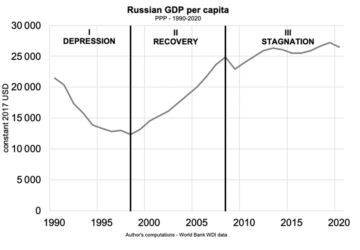 Cedric Durand in the New Left Review’s Sidecar: