
Morning in the Burned House
In the burned house I am eating breakfast.
You understand: there is no house, there is no breakfast,
yet here I am.
The spoon which was melted scrapes against
the bowl which was melted also.
No one else is around.
Where have they gone to, brother and sister,
mother and father? Off along the shore,
perhaps. Their clothes are still on the hangers,
their dishes piled beside the sink,
which is beside the woodstove
with its grate and sooty kettle,
every detail clear,
tin cup and rippled mirror.
The day is bright and songless,
the lake is blue, the forest watchful.
In the east a bank of cloud
rises up silently like dark bread.
I can see the swirls in the oilcloth,
I can see the flaws in the glass,
those flares where the sun hits them.
I can’t see my own arms and legs
or know if this is a trap or blessing,
finding myself back here, where everything
in this house has long been over,
kettle and mirror, spoon and bowl,
including my own body,
including the body I had then,
including the body I have now
as I sit at this morning table, alone and happy,
bare child’s feet on the scorched floorboards
(I can almost see)
in my burning clothes, the thin green shorts
and grubby yellow T-shirt
holding my cindery, non-existent,
radiant flesh. Incandescent.
by Margaret Atwood
from Morning in the Burned House
Houghton Mifflin Co.,
published in Canada by McClelland and Stewart, Inc.
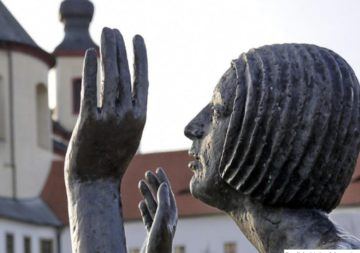 Does anyone still need advice on how not to think like a liberal? Amid widespread doubts on both left and right about the legitimacy of liberal institutions and economic arrangements, it might appear that the new book by Raymond Geuss, an American-born Cambridge University professor of philosophy, has come to tell us how not to do what we have already ceased doing. Yet as Geuss observes, “Some form of liberalism”—with its characteristic emphasis on uncoerced consent and open discussion among notionally free individuals—“is…still the basic framework which structures political, economic, and social thought in the English-speaking world.” So deeply embedded are liberal ideas in our institutions and discourse, he writes, that even when the conditions that gave rise to them have altered, “it can be difficult for someone who does not have a slightly deviant social position or education to get an appropriate cognitive distance from them, and thus to see some of their deficiencies for what they are.” Not Thinking Like a Liberal tells how its author came to acquire such deviancy.
 The Covid-19 pandemic has killed an estimated fifteen million people around the world, ravaged health systems, and destroyed economies. It has also exposed destabilizing divisions at home and abroad, and revealed domestic and global weaknesses in biodefense. The United States alone has seen a million lives lost to the virus and an estimated
 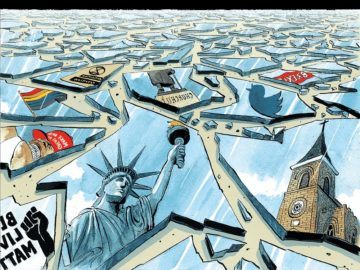 What usually happens is this: some academic or other thinker or creative type is cheerfully chugging along in their career, living and working in progressive spaces. Maybe he is a professor, maybe he is a TV writer. Then, he commits some offence, or is perceived as having done so, and suddenly faces an onslaught of censure. Sometimes the opprobrium is wildly disproportionate to the offence. And there’s a very real walls-closing-in feeling, because the hate is coming from people he viewed as members of his ‘tribe,’ sometimes friends or close colleagues.
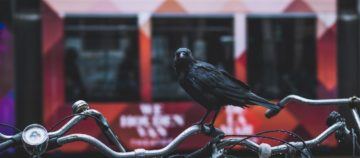 Cities are, indeed, the opposite of natural ecosystems. Net sinks of energy and materials, they are hot, noisy, poisonous and dangerous. They are constantly changing, often for frivolous or even wasteful reasons. Very few non-human species can cope with such chaos and stay away. Some species, however, see opportunities where others find only disturbance and stress. Cities offer countless productive chances for those willing and able to adapt. Those that take up this challenge share several crucial characteristics, including: already being abundant in the neighbouring landscape (10), having a generalised diet (with granivores being at a great advantage given the ubiquity of feeders)(11), demonstrating innovative foraging capacity and often belonging to groups with proportionally larger brains (12). Clearly, the latter two features go hand in hand.
 S
S I
I Manish Vira, a urologist at Northwell Health in New York performs prostate biopsy procedures three to five times a week. He inserts 12 needles into specific locations on the prostate gland, identified by MRI images that reveal malignant or suspicious lesions. The samples then go to a pathologist who determines whether cancer is present and how aggressive it is. “It’s a standard protocol,” explains Vira, who is also
 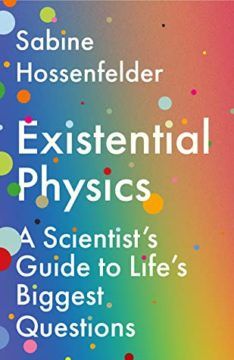 In pursuit of the natural laws of the universe, human beings have accomplished remarkable things. We’ve outlined the principles of gravity and thermodynamics. We’ve built enormous machines to dig into the deepest parts of the Earth, to understand what happens at the shortest quantum distances, and equally large machines to take pictures of the most distant parts of the cosmos. Still, there remain a number of foundational gaps in our knowledge—gaps that have allowed some wild ideas to take root. Some scientists hypothesize that, with every decision we make, our universe forks into multiverses, that consciousness arises from the quantum movements of microtubules, that the universe itself is conscious, or that there is this cat in a box and not in a box at the same time. These ideas, and related big questions about the nature of the universe, are the subject of particle physicist Sabine Hossenfelder’s new book, Existential Physics. In it, she argues that many of these far-out theories, put forward without evidence, are on par with religious belief. Physics, she contends, does not yet provide the answers to all of our questions—and it’s doubtful that it ever will.
 Inside a soundproofed crate sits one of the world’s worst neural networks. After being presented with an image of the number 6, it pauses for a moment before identifying the digit: zero.
 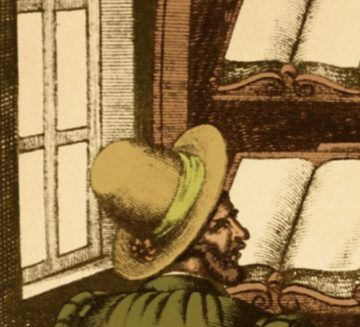 We’ve got the Internet all wrong. Its raison d’être is not, as Mark Zuckerberg claims for his own corporation, to “strengthen our social fabric and bring the world closer together.” To the contrary, the Internet is a pernicious disease. It is—as Justin E.H. Smith argues in his new book, The Internet Is Not What You Think It Is—thoroughly “anti-human.”
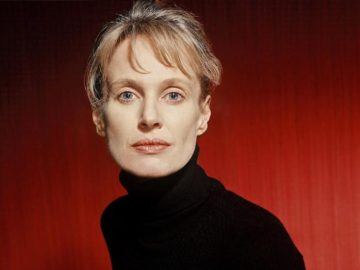 Very few writers in the twenty-first century are polymaths of the sort that previous centuries sometimes spawned – those who knew about all the subjects that mattered at the time, while still producing original work. Specialisation and the multiplication of fields and subfields of research, in both the humanities and the sciences, has rendered such breadth nearly impossible. Siri Hustvedt, however, is an exception: she is a polymath for our times, fluent in multiple specialised discourses, but whose mode is artistic.
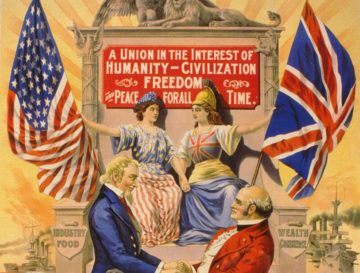 In the United States, the political baptism of the non-elites to the hegemonic mission happened in the years between 1920 and 1960. Mass culture in those crucial years paved the way for a patriotic politics built around U.S. military prowess, massive expansion of literacy and lifestyle, the phobias of the Red Scare and Jim Crow, and commercial success across the globe. By the midcentury, anti-communism produced a coordinated ideological effort at cohesion. Elites recruited the political aspirations of working-class and middle-class voters into the cause of American supremacy, framing the export of American consumer capitalism as the triple gift of sacred freedom, true democracy, and general prosperity. The Hollywood studio system picked up the plots of late-Victorian adventure genres, adapting them to the worldview of U.S. supremacy and global centrality.
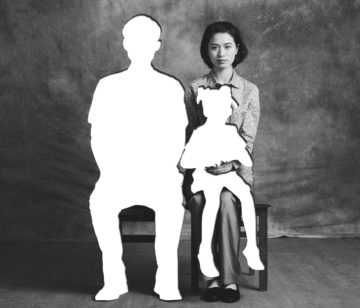 Two Chinese psychologists talk about divorce, stockpiling and crying into your mask.