
 Gregory Brew in Phenomenal World:
In October 2021, the price of gasoline in the United States rose to its highest level in seven years. There were many reasons for this: surging demand following a year-and-a-half of lockdown, a slower than expected recovery of oil production, and imbalances in products inventories due to energy shortages in Europe and East Asia. Experts believed prices would fall in the new year. Instead, Russia’s invasion of Ukraine in February 2022 sent them to new and historic heights, rattling markets and increasing the US price of gasoline to more than $4 a gallon.
It is easy to see that the price of oil is one of Joe Biden’s biggest problems, but harder to figure out whether Biden can do much about it. If he can’t, who can? An entire industry exists to predict future changes in the price of oil. Oil companies themselves try to imagine where the price will be, so that they can schedule capital expenditures to meet future demand, often without much success.
Today, the volatility of oil prices is taken for granted. But this was not always the case.
More here.
 Columbine. Parkland. Pulse. Virginia Tech. Sandy Hook. Las Vegas.
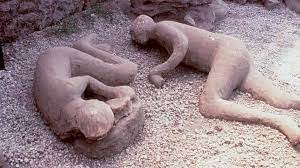 Researchers studying human remains from Pompeii have extracted genetic secrets from the bones of a man and a woman who were buried when the Roman city was engulfed in volcanic ash.
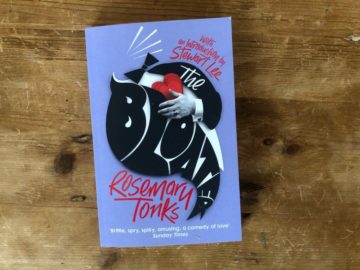 The poet and novelist Rosemary Tonks wrote her third novel, The Bloater, in just four weeks in the autumn of 1967, which would have been impressive by any standards but her own. She had originally set out to finish it in half the time and had hoped it would earn her “a lot of red-hot money.” (Here, she fell short too). But the result was a dizzying, madcap story that was a hit with the critics. Again, most writers would have been over the moon with such a reception, but Tonks could never be so predictable. “It just proves the English like their porridge,” she once reportedly replied to congratulations from her editor. To borrow a confession from The Bloater’s canny narrator—a young woman who bears more than a passing resemblance to Tonks herself: “I knew perfectly well what I was doing.”
 When you get into a car with John Waters, the infamous filmmaker behind transgressive classics such as “Pink Flamingos,” “
 SPEAKING AT HARVARD LAW SCHOOL’S
 Evan Seyfried, 40, a Kroger employee for nearly 20 years in Milford, Ohio, died by suicide on 9 March 2021, after experiencing months of harassment, bullying and abuse in the workplace, according to a lawsuit against Kroger
 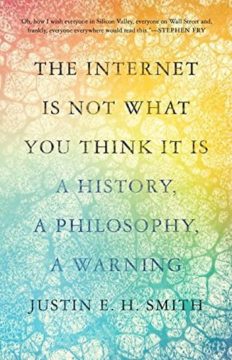 Talking sponges, spelling snails, dogs whose howls can be triggered from 1,000 miles away — these are but a few of the many historical examples upon which Justin E. H. Smith draws to illustrate the persistence of the telecommunicative imaginary throughout human history. Working in the same vein of scholarship as Ian Hacking’s “historical ontology,” Smith presents a view of technology in his new book, The Internet Is Not What You Think It Is: A History, a Philosophy, a Warning, that is the exact antithesis of much fashionable continental theorizing. Unlike a Kittler or Virilio — who see the technological object as forming the human subject who comes in contact with it, teaching him or her how to use it, its operation and value not explicitly designed but latent within its form, waiting to be discovered — Smith sees technology as a prosthesis, designed to meet stable desires: “[N]otwithstanding the enormous changes in the size, speed, and organization of the devices we use from one decade or century to the next, what these devices are, and how they shape our world, has been substantially the same throughout the course of human history.” In Smith’s view, the technological object is not “a discursive product forever trapped within the confines of a single epoch’s epistēmē,” but rather a continued striving toward what he presents as the dominant end of human technological innovation: the facilitation of communication.
 In recent years
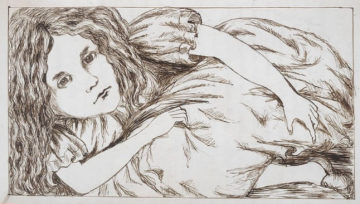 Nabokov and Balthus were intellectually and emotionally connected by their lifelong interest in Lewis Carroll and Edgar Allan Poe, and by their hatred of Sigmund Freud. Carroll epitomized the surprisingly large group of sexually repressed, dysfunctional and miserable English writers in the Victorian age, including Carlyle, Ruskin, Swinburne, Pater, Hopkins, Wilde and Housman. Carroll was a pseudonym, like Balthus and V. Sirin. A Cheshire cat appears in Alice in Wonderland and in many pictures by Balthus. At Cambridge, Nabokov translated Alice into Russian, and he describes Lolita as “a half-naked nymphet stilled in the act of combing her Alice-in-Wonderland hair.”
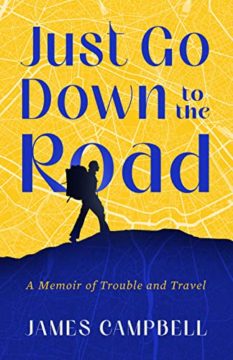 A social anthropologist may already have asked this question, but what was it in the 1960s that caused so many young British men to become dedicated fans of American blues? Usually what went with it was a radical rejection of all they had been brought up to believe in. If you were lucky to live in the London area, you formed a band and could thump out some Muddy Waters. And if you were born in Glasgow? Interests there were more acoustic. A flourishing folk scene accommodated accomplished guitar pickers like Bert Jansch and even spawned psychedelic groups such as the Incredible String Band. Along with all this music, a vibrant poetry scene thrived in the city’s pubs and clubs.
 The United States has institutionalized the mass shooting in a way that Durkheim would immediately recognize. As I discovered to my shock when my own children started school in North Carolina some years ago, preparation for a shooting is a part of our children’s lives as soon as they enter kindergarten. The ritual of a Killing Day is known to all adults. It is taught to children first in outline only, and then gradually in more detail as they get older. The lockdown drill is its Mass. The language of “Active shooters”, “Safe corners”, and “Shelter in place” is its liturgy. “Run, Hide, Fight” is its creed. Security consultants and credential-dispensing experts are its clergy. My son and daughter have been institutionally readied to be shot dead as surely as I, at their age, was readied by my school to receive my first communion. They practice their movements. They are taught how to hold themselves; who to defer to; what to say to their parents; how to hold their hands. The only real difference is that there is a lottery for participation. Most will only prepare. But each week, a chosen few will fully consummate the process, and be killed.
 On May 18, 2022,
 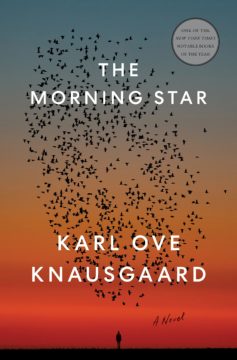 When I learned that Knausgaard had published a new novel, The Morning Star, I was perplexed. The final book of My Struggle, The End, brings to termination the whole arc of the series, completing not only the story of Karl Ove’s father’s life and death but also Karl Ove’s own life as the author of that story: “Afterwards we will catch the train to Malmö, where we will get in the car and drive back to our house, and the whole way I will revel in, truly revel in, the thought that I am no longer a writer.”