
Timothy J. Moore in The Common Reader:
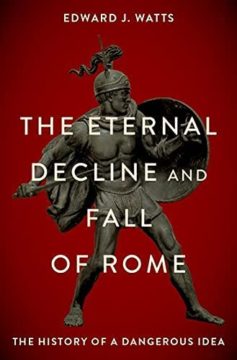 This book is as much a manifesto as a work of history. The manifesto is timely, important, and utterly persuasive. The history is a bit more complicated, but nevertheless offers an eloquent explanation of much that happened in the long history of Rome and its empire.
Watts follows a long series of modern thinkers in using the history of Rome, especially the end of its empire, to demonstrate an understanding of politics (see Watts’s excellent assessments of Bruni, Biondo, Machiavelli, Montesquieu, and Gibbon [227-233]). Responding explicitly to the rhetoric of decline and renewal used by contemporary conservatives, Watts argues that from the second century BCE through the fall of Constantinople in 1453 CE, and even beyond, Roman rhetoric of decline and restoration caused massive suffering and often brought about the very decline it professed to combat; for the attempts at restoration almost always brought victims, as the alleged restorers blamed others for the alleged decline. In responding to crises and challenges, Watts argues, states need not to seek scapegoats, but rather to “take credit for what we restore as part of a collaborative process that rebuilds and renews, bringing society together rather than tearing it apart through recrimination and violence.”
More here.
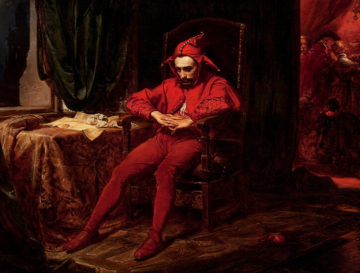 The carnivalesque has always been at its core a theological construct, a method of religious critique. Knowing which faiths deserve our opprobrium makes all the difference in how effective such a rebellion shall be. When Medieval society crowned an Abbot of Unreason, that daring act of blasphemy paradoxically depended on an acknowledgment of the sacred; heresy and the divine mutually reinforcing and always dependent on one another. To similarly mock Christianity today is toothless because even with the dangerous rise of fascistic Christian Nationalism, we must take stock of who the real gods of this world are. Adam Kotsko in Neoliberalism’s Demons: On the Political Theology of Late Capital writes that our contemporary normative economic thinking “Aspires to be a complete way of life and a holistic worldview . . . [a] combination of policy agenda and moral ethos.” Just as the Roman Catholic Church was the overreaching and dominant ideology of Western Christendom in the era when the Lord of Misrule poked at the pieties of both pope and prince, now our hegemonic faith is deregulated, privatized, free-market absolutist capitalism. If secularism means anything at all it’s not the demise of religion, but rather the replacement of that previous total system with a new one in the form of neoliberal capitalism.
 It takes a particularly agile intelligence to continue coming to terms with several generations of new art, as regularly, and for as long, as Peter did. Things change and so must arguments, though without losing credibility. One way Peter maintained that trust was by narrating his own inner process, attending to ambivalence and contradiction in print. Changing your mind was not a failure, but a freedom to be carefully guarded. Once, he described this to me as his willingness to entertain the thought that anything, no matter how sacred or unimpeachable, might just be bullshit after all. Then what? Could you trace it backward back into meaning? In conversation Peter often evoked the fourteenth-century spiritual tract The Cloud of Unknowing, which teaches a method of contemplation for willfully releasing all prior conceptions of life on this earth and pushing into this great “unknowing” where God finds you. Acclimate to being uncomfortable and just stay there until the miraculous appears. It lent a theological framework to the techniques he’d developed for encountering art.
 Last week, in a much heralded-speech at Union Station in Washington, D.C., President Joe Biden
 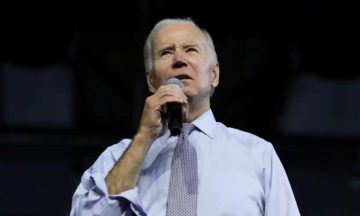 Many known unknowns remain in the US congressional elections, including the critical question of who will hold the majority in the Senate.
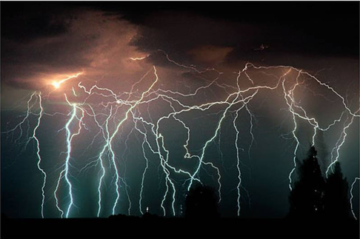 It’s more colorful on the high desert plains of western New Mexico’s remote Catron County than most Americans probably think: a rainbow of gold, sanguine, and umber, blotted with shocks of assertive teals and jades, and accents of muted violet. A dozen miles east of the Continental Divide, at an elevation of 7,200 feet, the sky is inescapable, glowing so blue that it borders on the psychedelic. Here, in 1977,
  One Monday evening some five years ago, I walked into my first Spiritualist service. In those days, the New York Spiritualist Church held services roughly once a month in a broad-minded white-marble Methodist structure designed to hold some thousand parishioners. But the Spiritualists only filled the first few rows. It was dim, churchy-smelling, and vast.
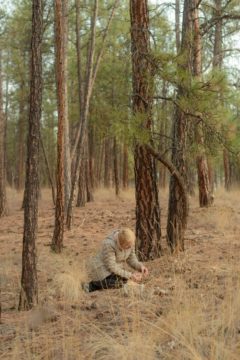 Justine Karst, a mycologist at the University of Alberta, feared things had gone too far when her son got home from eighth grade and told her he had learned that trees could talk to each other through underground networks. Her colleague, Jason Hoeksema of the University of Mississippi, had a similar feeling when watching an episode of “Ted Lasso” in which one soccer coach told another that trees in a forest cooperated rather than competed for resources.
 The philosopher Stanley Cavell, who was the author of some 19 books, passed away in 2018. Fifteen years earlier, he had turned his attention to his death in Little Did I Know, a memoir occasioned by the discovery of his own declining health. There, as in much of his work, he was comfortable writing in the retrospective mode, reflecting again and again on his most famous collection of essays, Must We Mean What We Say? (1969), and the arguments, ideas, and distinctive style he developed there. The latter would be described by his critics as self-indulgent and by his defenders as profound. The reality was somewhere between these judgments, although often closer to the former than the latter.
 As an evolutionary biologist, I am quite used to attempts to censor research and suppress knowledge. But for most of my career, that kind of behavior came from the right. In the old days, most students and administrators were actually on our side; we were aligned against creationists. Now, the threat comes mainly from the left.
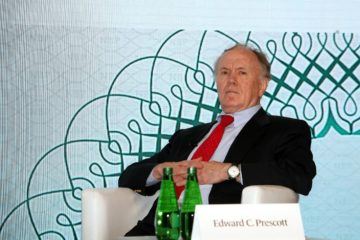 It isn’t just pundits and commentators who are annoyed with the state of macro; economists in other fields often join in the criticism. For example, here’s
  One of the last flashes of creativity I saw before I deactivated my Twitter account (more on that below, and on its significance for this Substack project), was a question launched by another user (whom I can’t locate now, without Twitter, but to whom I say “thanks”). “Are there,” this user asked, “more eyes or legs in the world?”
 Moving to daylight saving time permanently could prevent 36,550 deer deaths, 33 human deaths and $1.19 billion in costs annually in the US.
 People have a complicated relationship to mathematics. We all use it in our everyday lives, from calculating a tip at a restaurant to estimating the probability of some future event. But many people find the subject intimidating, if not off-putting. John Allen Paulos has long been working to make mathematics more approachable and encourage people to become more numerate. We talk about how people think about math, what kinds of math they should know, and the role of stories and narrative to make math come alive.