
Sara Reardon in Nature:
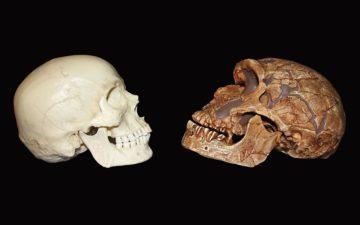 More than 500,000 years ago, the ancestors of Neanderthals and modern humans were migrating around the world when a fateful genetic mutation caused some of their brains to suddenly improve. This mutation, researchers report in Science1,2, dramatically increased the number of brain cells in the hominins that preceded modern humans, probably giving them a cognitive advantage over their Neanderthal cousins.
“This is a surprisingly important gene,” says Arnold Kriegstein, a neurologist at the University of California, San Francisco. However, he expects that it will turn out to be one of many genetic tweaks that gave humans an evolutionary advantage over other hominins. “I think it sheds a whole new light on human evolution.”
When researchers first fully sequenced a Neanderthal genome in 20143, they identified 96 amino acids — the building blocks that make up proteins — that differ between Neanderthals and modern humans in addition to a number of other genetic tweaks. Scientists have been studying this list to learn which of these helped modern humans to outcompete Neanderthals and other hominins.
More here.
 In September of 1994, the editors and writers of The Angolite sought to identify everyone in America who had served two decades or more in prison in a piece titled, “
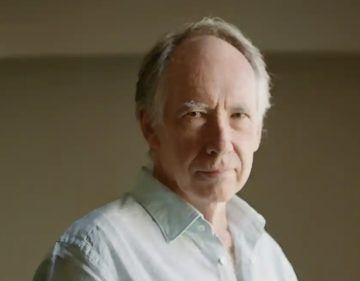 Although not originally part of the notorious gang of writers – Martin Amis, Julian Barnes and the late Christopher Hitchens – who made their names in the 70s and dominated the literary scene for much longer (too long, according to their critics), Rushdie arrived a few years later with the publication in 1981 of
  Statesman, majored in women’s studies. During her university years, she believed that hookup culture, pornography, and rough sex were all OK for consenting adults. A decade later, she’s changed her mind. Ms. Perry’s experience of working at a rape crisis center made her question the narrative she’d been taught that “rape is about power, not sex.” She then began to rethink other tenets of second-wave academic feminism.
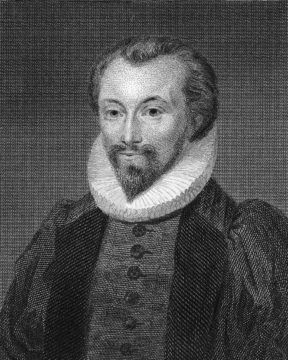 The power of John Donne’s words nearly killed a man.
 Chris Lehmann in The Baffler:
 Catarina Dutilh Novaes and Silvia Ivani in Boston Review:
 F
F Camila Vergara in Sidecar:
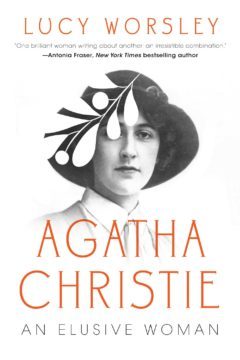 Agatha Christie’s best books have crisp dialogue and high-velocity plots. The bad ones have a Mad Libs quality: feeble prose studded with blank spots into which you can picture the prolific Christie plugging a random “BODY PART” or “WEAPON.” In a 1971 study of English crime fiction, Colin Watson snickered that Christie “seems to have been well aware that intelligence and readership-potential are quite unrelated.”
 For as long as she can remember, Kay Tye has wondered why she feels the way she does. Rather than just dabble in theories of the mind, however, Tye has long wanted to know what was happening in the brain. In college in the early 2000s, she could not find a class that spelled out how electrical impulses coursing through the brain’s trillions of connections could
  “The 140 years from 1870 to 2010 of the long twentieth century were, I strongly believe, the most consequential years of all humanity’s centuries.” So argues