
Tomas Pueyo in Uncharted Territories:
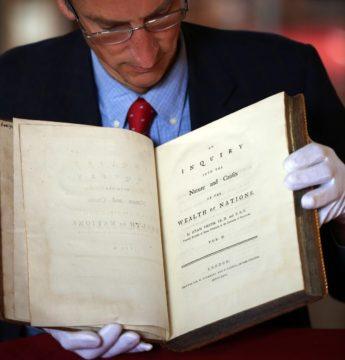 Fish don’t realize they’re swimming in water.
We don’t realize what alternatives to democracy will emerge because we’re submerged in the current system.
Democracy is the worst form of Government except for all those other forms that have been tried.—Winston Churchill
When you look at ideas to improve democracy, you find things like alternative ways to vote for your leaders or delegating your vote altogether. These are nice ideas, and can change the party in government like they recently did in Australia. But they’re superficial. The Internet is a bulldozer. It will uproot democracy and grow something new from scratch. To understand what will blossom in its place, we need to reprogram our brain first1. We’re too used to the current system to realize there are alternatives.
More here.
 There’s only one word for it: indescribable. “It’s one of those awesome experiences you can’t put into words,” says fish ecologist Simon Thorrold. Thorrold is trying to explain how it feels to dive into the ocean and attach a tag to a whale shark — the most stupendous fish in the sea. “Every single time I do it, I get this huge adrenaline rush,” he says. “That’s partly about the science and the mad race to get the tags fixed. But part of it is just being human and amazed by nature and huge animals.”
 Rather than repel or frighten him as it might a conventional English gentleman travel-writer, this “atmosphere of entire strangeness” calls to Fermor, pulling him into the fray. Not only does he foray into the local market before even reaching his hotel, but soon afterward he investigates all things Créole—the language, the population, and the dress. Within a mere two days—and despite the fact that Guadeloupe ends up his least inspiring destination—he has so thoroughly immersed himself in the very things whose strangeness had captured his attention that he can bandy Créole patois terms with ease and has decoded the amorous messages indicated by the number of spikes into which the older women tie their silk Madras turbans. What is striking is the thoroughness of his inquiry and his capacity to explain the exotic without eviscerating its alluring quality of otherness.
 In the spring, just before the launch of Fatherly, a Clemson University student’s
 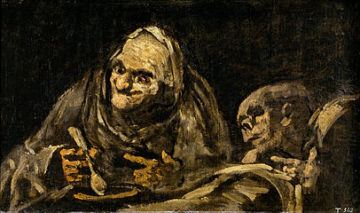 Among the most enigmatic works of his turbulent life, they now occupy a single room at Madrid’s Prado museum, whose collection they entered in 1881. Why Goya painted them, and even if they were all originally painted by the artist himself; how much he revised and changed them, and how much they were further altered by early restorers – all that remains a matter of debate. There is also conjecture about his house (which got its name not from Goya, but from the previous occupant), which was demolished in 1909.
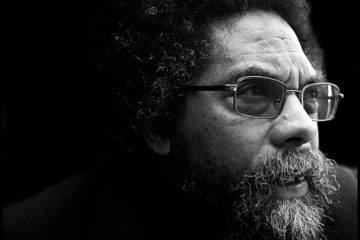 Cornel West is one of the most unique philosophical voices in America. He has written a ton of books and taught for over 40 years at schools like Princeton, Harvard, and now at the Union Theological Seminary.
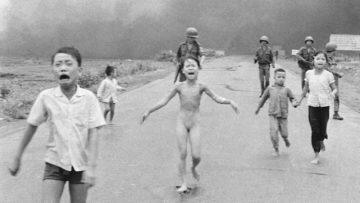 The horrifying photograph of children fleeing a deadly napalm attack has become a defining image not only of the Vietnam War but the 20th century. Dark smoke billowing behind them, the young subjects’ faces are painted with a mixture of terror, pain and confusion. Soldiers from the South Vietnamese army’s 25th Division follow helplessly behind.
 Sascha Roth remembers the phone call came on a hectic Friday evening. She was racing around her home in Washington, D.C., to pack for New York, where she was scheduled to undergo weeks of radiation therapy for
 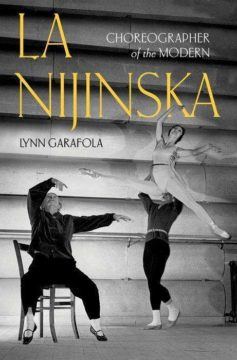 Bronislava Nijinska looked a lot like her brother, the famous dancer Vaslav Nijinsky. This proved an advantage to her own career, and a disadvantage. They’d grown up together, studied at the Imperial Ballet school in St. Petersburg, and begun their performing careers in the Maryinsky Theater. Both were trained in the virtuosic skills of the time. Acclaimed as a prodigy from the first, Vaslav left the home company soon after graduation to join Serge Diaghilev, founder of what became the legendary Ballets Russes. Vaslav’s story—his relationship with Diaghilev, his meteoric stardom in the early ballets of Michel Fokine, his budding choreographic career fostered by the possessive Diaghilev, his expulsion from the company following his marriage to Romola de Pulzsky, and his long mental deterioration—has been told many times. It’s only a sideline in Lynn Garafola’s new book La Nijinska: Choreographer of the Modern.
 Wispy, thick, swirled and streaking, the dark lines burst outward, racing or splintering. The strongest impression one is left with while paging through this exquisitely produced volume of Kafka’s complete drawings is of minimally delineated figures in states of maximally dramatised unrest.
 Living as I do, mostly by choice, in a post-Babel cacophony of languages, I find I often discern meanings that are not really there. This is particularly easy to do in the contact zones of the former Angevin Empire, where more than a millennium’s worth of cross-hybridity between English and French has brought it about that this empire’s ruins are populated principally by faux amis, so that one must not so much learn new words, as reconceive words one already knows. Thus deception becomes disappointment, to assist is not to help but only to be present, to report is to postpone, to defend is to prohibit (sometimes), to verbalise is to fine, to sense is to smell, to mount is to get in, to descend is to get out, a location is a rental, ice-cream has a perfume instead of a flavor, and so on.
 Every now and then engineers make an advance, and scientists and lay people begin to ponder the question of whether that advance might yield important insight into the human mind. Descartes wondered whether the mind might work on hydraulic principles; throughout the second half of the 20th century, many wondered whether the digital computer would offer a