Olivier Zunz in American Purpose:
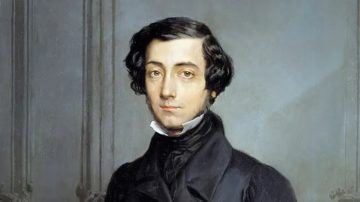 Tocqueville’s parents were imprisoned following the Revolution, but survived the execution planned for them by Robespierre only because he was guillotined first. The family benefited from the Restoration, and after the Revolution of 1830 Tocqueville swore loyalty to the new regime—hesitantly. His political position was precarious, his career prospects slim, and eager for personal independence, he set out for America with his friend Gustave de Beaumont to study penitentiary systems and test his suspicion that the key to France’s future could be found in America’s present.
In The Man Who Understood Democracy, Olivier Zunz captures not just the ambiguities of Tocqueville’s thought but his essence as a person.
More here.
 WHEN PHYSICIAN GABOR MATÉ
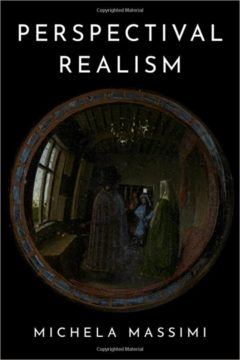 Antivax raises deep questions about what science is and does—concerns that have long been debated by scientists and philosophers. Michela Massimi is among them. A philosopher at the University of Edinburgh, she has pioneered a distinctive form of “perspectivism” in the philosophy of science. Her magisterial new book, Perspectival Realism, is the culmination of two decades of work on this score. It stems, she tells us, from “worries of a concerned citizen in a society where trust in science was being eroded under the pressure of powerful lobbies,” anxieties reinforced as she worked on the final draft during the pandemic. Her aim is not to address Antivax directly, but to answer a more fundamental need: developing an accurate picture of scientific practice, in order to enable citizens and scholars alike to identify the sources of its triumphs and its limitations.
 Orhan Pamuk likes to play new games. Every one of his books has differed markedly from the others, yet each shares a capacity for disconcerting the reader. This one is long and intellectually capacious. It tackles big subjects: nationalism and the way nations are imagined into being; ethnic and religious conflict; the decline of an empire; the political repercussions of a pandemic. It includes many deaths.
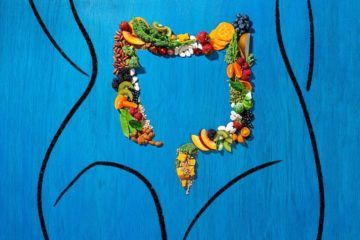 Every time you eat, you are feeding trillions of bacteria, viruses and fungi that live inside your gut. But are you feeding them the right foods? Scientists used to know very little about these communities of microbes that collectively make up the gut microbiota, also known as your gut microbiome. But a growing body of research suggests that these vast communities of microbes are the gateway to your health and well-being — and that one of the simplest and most powerful ways to shape and nurture them is through your diet.
  But only now can I tell you about the texture of the world Miyazaki created—for instance, the flickering neon signs advertising pork on the lane where Chihiro’s parents first turn into hogs. During one recent rewatch in a double feature with Howl’s Moving Castle, I noticed the choice to dress Yubaba, the witch who puts Chihiro to work, in gaudy Western attire despite her Asian-bathhouse surroundings, similar to Miyazaki’s later rendition of Howl’s Witch of the Waste; in both cases, he uses the women’s occidental stylings to highlight their tasteless greed. On another occasion, I realized that Rin, the young bathhouse worker who becomes Sen’s friend and guide, shares a resemblance to Lady Eboshi in Princess Mononoke and Satsuki from My Neighbor Totoro—they all fit the Ghibli big-sister archetype. Only in rewatching did I start to see and appreciate the connections between characters in the Miyazaki Cinematic Universe.
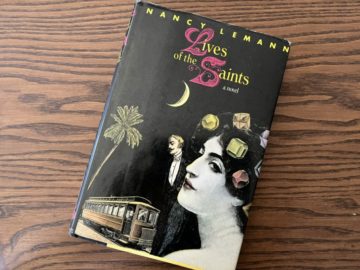 I picked up Nancy Lemann’s Lives of the Saints from a sidewalk pile in Greenpoint in October 2020, just a few minutes before it started raining in sheets. I read the novel in one sitting when I got home. The next day, I lent it to a friend with whom I was crashing for a few weeks. She returned it twenty-two months later, at the beach. Before we even left Fort Tilden I found myself lending it out to another friend. I’m not very generous with books, to be honest, but for some reason, this novel, like an early-aughts chain email, demands to be forwarded. It is a short book, which makes it a good loan to a friend, because you can jointly anticipate a sense of accomplishment. And it may then become a field guide to certain shared experiences of Youth—allowing you both to observe, for instance, on a summer night when everyone around you is having Breakdowns, that this is exactly like Lives of the Saints.
 University College, Oxford,
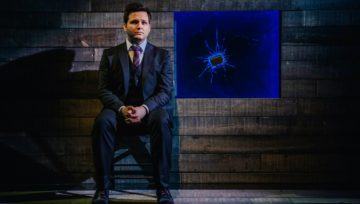 It’s not possible. There must be a rational explanation. Surely, you say to yourself, there is a logical justification. But no matter how hard you look, there is no answer that aligns with what you know about reality. With the magician’s final deception, the last act of their trick, the audience encounters the impossible: a bird appears out of thin air, a person begins to levitate and fly, or private thoughts are read like pages in a book. Magicians do things spectators know aren’t possible. This is the power of illusion. As the American magician Simon Aronson put it in 1980: ‘There’s a world of difference between a spectator’s not knowing how something’s done versus his knowing that it can’t be done.’ But magic is not only an encounter with the impossible. It is also an encounter with the perceptual machinery we use to assemble reality.
 My colleagues Gary Gerstle and
  L
L Sad times are inevitable, and most people eventually rally. But clinical depression is different, and more brutal. All sense of well-being evaporates; life can seem not worth the trouble. According to one estimate, more than 60% of people worldwide who have attempted suicide have a depressive disorder (