
Elaine Scarry in The Boston Review:
 When Plato was an infant, bees alighted on his lips and, nestling there, set about making honey. His parents had placed him, sleeping, on the summit of a mountain while they paid tribute to the gods, and when they turned their attention back to him, they found the infant’s mouth full of golden sweetness. Cicero provides our first surviving record of the legend, which is repeated with variations over centuries, always as a portent of the sweet style the infant would ultimately possess.
Plato’s honeyed voice was celebrated in classical antiquity by thinkers as different as Aristotle, Cicero, and Diogenes Laertius. Praise for Plato’s literary genius regularly recurs until at least the early nineteenth century. As the Romantic poet Percy Shelley writes, “Plato was essentially a poet—the truth and splendour of his imagery, and the melody of his language, are the most intense that it is possible to conceive.”
More here.
Enjoying the content on 3QD? Help keep us going by donating now.
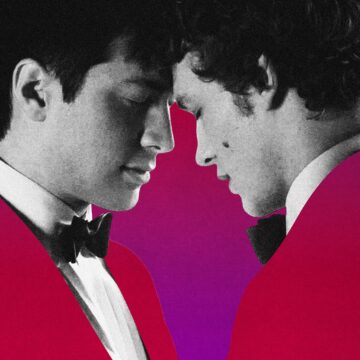 “Heated Rivalry” has become a breakout hit. The hockey drama — adapted from an erotic romance novel for the Canadian streaming service Crave — just ended its first season on HBO Max and has left gay men crying at watch parties that feel more like 19th-century religious revivals. If you want to understand why this show has become our community’s equivalent of a cultural earthquake, the answer is that watching a gay couple be mildly boring and in love is still radical.
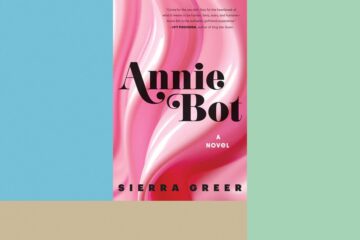 In an unremarkable New York apartment, sometime in the not-too-distant future, a man tells his robot to come to bed. She is a “Stella,” an intelligent machine who looks and sounds like a woman. We soon learn that she is a “Cuddle Bunny,” a euphemistic term for the sex-robot setting she’s currently running. She is also set to “autodidactic” mode, which gives her a searching intellect and a nascent independence. Her name is Annie, and we will follow her on the journey to elevated consciousness in “Annie Bot,” Sierra Greer’s slyly profound debut novel.
 If you want to lose weight, exercise doesn’t really matter.
 In a way I’ve never experienced in my life, I feel in synch with a political turn, felt by millions of voters, that’s now being reflected in the voice of one of the most dynamic leaders we’ve seen in a long time.
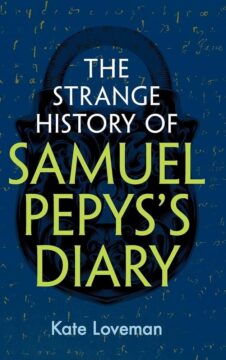 Pepys was a meticulous – some might say compulsive – record-keeper, and his talent for storing and retrieving vast amounts of information would be useful to him throughout his career. Loveman argues that the diary became his ‘catch-all’ for anything he couldn’t safely or conveniently note in his official or household accounts. Into its pages went social debts (who had given him dinner, who still owed him one), gossip, the music he heard and the plays he saw, and the most intimate aspects of his life, from bodily functions (including what has been called ‘one of the best documented attacks of flatulence in history’) to sex.
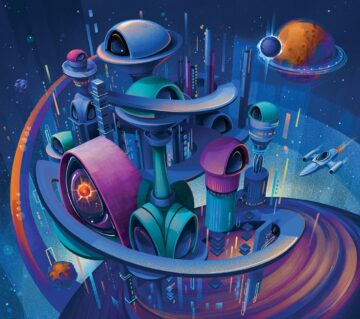 The Roman sage Marcus Aurelius said we should never let the future disturb us. But then he never had a conversation with the futurologist Nick Bostrom about the state of the world in 2050. “There’s a good likelihood that by 2050, all scientific research will be done by superintelligent AI rather than human researchers,” Bostrom said in an e-mail. “Some humans might do science as a hobby, but they wouldn’t be making any useful contributions.” Time to rethink your career options, Nature readers!
 W
W “I don’t have a clear-cut film identity,” Rob Reiner
  International chess masters, Olympic gold medallists and Nobel prize-winning scientists were rarely child prodigies, a review reveals. Likewise, early
 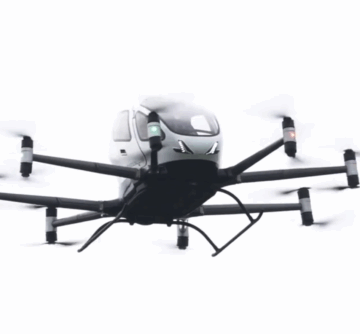 As an American reporter living in Beijing, I’ve watched both China and the rest of the world flirt with cutting-edge technologies involving robots, drones and self-driving vehicles.
 I
I