
From Nature:
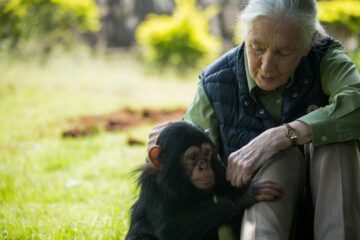 Jane Goodall, a British primatologist known for her work with chimpanzees, died on Wednesday 1 October, aged 91. She was in California on a speaking tour and died of natural causes, according to the Jane Goodall Institute.
Goodall is best known for her work with chimpanzees in Gombe National Park in Tanzania. She was the first to discover that chimpanzees made and used tools1. She went on to become an advocate for conservation, human rights and animal welfare, including stopping the use of animals in medical research. She established the Jane Goodall Institute, a non-profit wildlife and conservation organization in Washington DC, in 1977.
Here are the ways in which Goodall’s legacy will endure.
Humanizing primates
While studying for her PhD at the University of Cambridge, UK, in the early 1960s, Goodall broke with the scientific convention of using numbers to identify animals, assigning them names instead. She named a male chimp with silver facial hair David Greybeard. This change upset senior scientists at the time, but it is now common practice to use animal names.
More here.
Enjoying the content on 3QD? Help keep us going by donating now.