
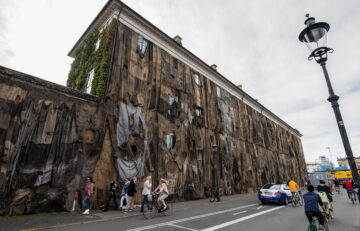
 Born in Tamale and primarily raised in Accra, Mahama chose to base his art studio, Red Clay, in the provincial city rather than in the nation’s capital. Tamale, an important trading hub in northern Ghana, is known for its fugu clothing, a type of smock with roots in the Malian and Songhai empires. Over the centuries, Muslim traders built mosques and schools in sedate Tamale, which was more inland and distant from the direct links of the transatlantic slave and colonial trade. By contrast, Accra, the nation’s capital, with its Parliamentary Building and Black Star Square, is enlivened by streams of mellow banter and commerce. The city’s nocturnal activity creates an electric pulse. Pentecostal revival meeting lights and condominium-sale advertisements illuminate the city, leaving a ruddy glow along the highway. Although both Accra and Tamale have influenced Mahama’s work insofar as he draws from the capital’s marketplace and the provincial city’s scrap metal, his talent emerged against the broader backdrop of the postindependence promise of industrialization and its failure to deliver prosperity to most Ghanaians. Mahama’s installations, which say something about societal deterioration, also dramatize the country’s inability to sustain robust funding in the arts or technology in its postindependence years.
more here.
Enjoying the content on 3QD? Help keep us going by donating now.