
Scotty Hendricks at Big Think:
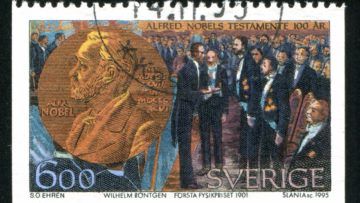 Nobel Prizes used to be awarded fairly quickly after the discovery, achievement, or event that prompted them. The instructions left by Alfred Nobel seemed to warrant this speed. However, this has occasionally led to awards for discoveries that later turned out to be bunk. Perhaps no case of this is clearer-cut than the 1926 prize in medicine, which was awarded “for [Fibiger’s] discovery of the Spiroptera carcinoma.”
In brief, Dr. Fibiger’s research appeared to show that a certain roundworm parasite could cause cancer in rats. However, later experiments proved that the “cancers” he claimed to have observed were lesions caused by insufficient vitamin A. The roundworms he examined didn’t cause cancer, although certain parasites are known to do so.
More here.
 The House committee tasked with investigating the Jan. 6 attack on the Capitol made its closing arguments to the American public today and voted 9-0 to subpoena former President Donald Trump. They highlighted snippets from more than a million Secret Service communications in the days and hours leading up to the breach of the Capitol, bolstering their thesis that then-President Donald Trump had incited a mob and bears singular responsibility for the violence that ensued. “Armed and Ready, Mr. President!” read one snippet of intelligence presented in a Secret Service email on Dec. 24, 2020, about two weeks before the Jan. 6 joint session of Congress to formalize Joe Biden’s election victory.
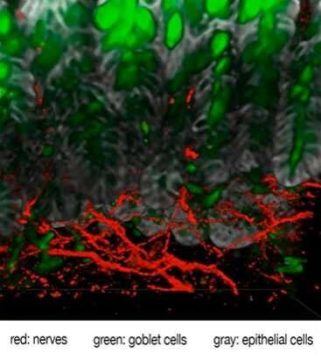 Pain has been long recognized as one of evolution’s most reliable tools to detect the presence of harm and signal that something is wrong—an alert system that tells us to pause and pay attention to our bodies. But what if
  Cihan Tugal in Sidecar:
 Samir Sonti and JW Mason in Phenomenal World:
 Ingrid Robeyns in Crooked Timber:
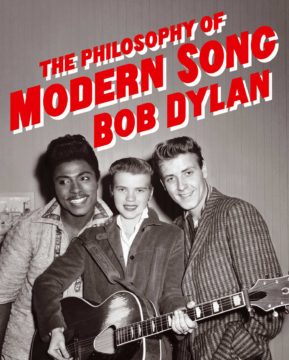 This is a song that does no favors for anyone, and casts doubt on everything.
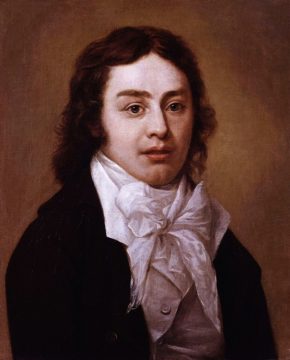 In June 1794,
 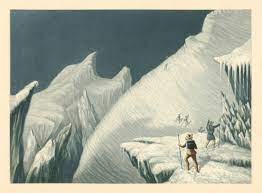 Analytic philosophers avoided the subject of meaning in life till relatively recently. The standard explanation is that they associated it with the meaning of life question they considered bankrupt. But it’s surely also because the subject conflicts with some of the core tendencies of the analytic tradition. “What gives point to life?” is a sweeping question that invites the synoptic approach associated with continental philosophy, not the divide-and-conquer method favored by Anglo-Americans. The question also wears its angst on its sleeve, making it an awkward fit with the dispassionate mode employed in the mainstream academy.
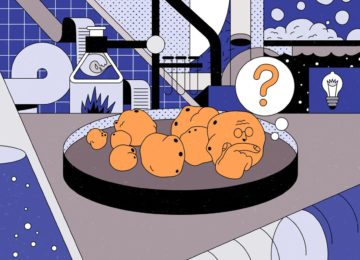 In Alysson Muotri’s laboratory, hundreds of miniature human brains, the size of sesame seeds, float in Petri dishes, sparking with electrical activity.
 In November of 1660, at Gresham College in London, an invisible college of learned men held their first meeting after 20 years of informal collaboration. They chose their coat of arms: the royal crown’s three lions of England set against a white backdrop. Their motto: “Nullius in verba,” or “take no one’s word for it.” Three years later, they received a charter from King Charles II and became what was and remains the world’s preeminent scientific institution: the Royal Society.
 Researchers who grew a brain cell culture in a lab claim that they taught the cells to play a version of
  The energy crisis incited by Russia’s war in Ukraine has triggered intense debates in many countries about whether the windfall profits that energy companies are now making should be taxed. While this question concerns all companies that produce coal, gas, or oil, the focus currently is on electricity producers. Since a high gas price is driving up electricity prices across the board, suppliers with power plants that use other fuels or renewables can reap extremely high profits. And the immense burden of rising electricity prices on consumers has ratcheted up political pressure to tax “unjustified” profits.