
Alice Su in The Economist:
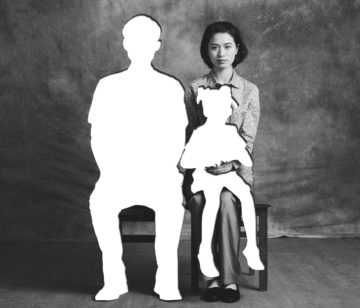 Two Chinese psychologists talk about divorce, stockpiling and crying into your mask.
Chuan He: Some of my patients were surprisingly happy when the lockdown began. There was a couple and the husband had had an affair. The wife was in pain, thinking, should I fight with my spouse, avoid him, or let myself go numb? Then suddenly they were inside together for months, forced to face their relationship. Things actually improved.
Other couples struggled. One of my clients is a high-performing businessman. At first he was OK, busy in his study all day. But after the fourth, fifth week of lockdown, work annoyed him and he started yelling at his wife and kids. He didn’t want to get up in the morning; he napped at lunch and then played mahjong and watched videos on his phone until 3am. He felt powerless and started to ask: What am I working for? What is this life for? Is there still meaning? That is depression. He needed a professional to tell him: “You’ve met something unprecedented. This is a stress response. It doesn’t mean you’ll always be like this.”
More here.
 Suzanne Kahn at the Roosevelt Institute:
 Marco D’Eramo in Sidecar:
 In the course of his book, Calvo describes many experiments that reveal plants’ remarkable range, including the way they communicate with others nearby using “chemical talk”, a language encoded in about 1,700 volatile organic compounds. He also shows how, like animals, they can be anaesthetised. In lectures, he places a Venus flytrap under a glass bell jar with a cotton pad soaked in anaesthetic. After an hour the plant no longer responds to touch by closing its traps. Tests show the plant’s electrical activity has stopped. It is effectively asleep, just as a cat would be. He also notes that the process of germination in seeds can be halted under anaesthetic. If plants can be put to sleep, does that imply they also have a waking state? Calvo thinks it does, for he argues that plants are not just “photosynthetic machines” and that it’s quite possible that they have an individual experience of the world: “They may be aware.”
 It was nothing short of a miracle — that was what South African schoolchildren were taught when Nelson Mandela was elected president in 1994, in the country’s first fully democratic elections. Apartheid, the brutal system of white minority rule that made South Africa a global pariah, was over. As Eve Fairbanks writes in “The Inheritors,” her new book about the decades before and after that transition, its miraculousness “was like mathematics, amazing but incontrovertible.”
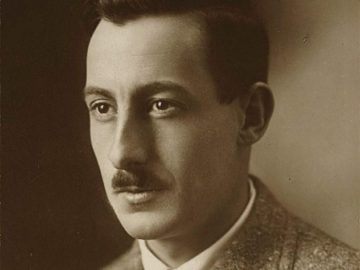 MILMAN PARRY
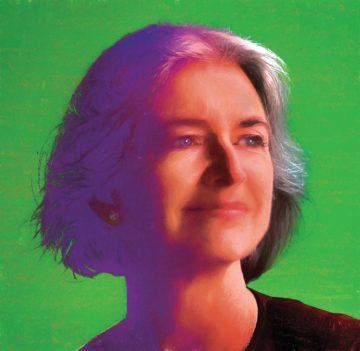 It’s entirely possible, maybe even likely, that during some slow day at the lab early in her career, Jennifer Doudna, in a moment of private ambition, daydreamed about making a breakthrough that could change the world. But communicating with the world about the ethical ramifications of such a breakthrough? “Definitely not!” says Doudna, who along with Emmanuelle Charpentier won the Nobel Prize in Chemistry in 2020 for their research on CRISPR gene-editing technology. “I’m still on the learning curve with that.” Since 2012, when Doudna and her colleagues shared the findings of work they did on editing bacterial genes, the 58-year-old has become a leading voice in the conversation about how we might use CRISPR — uses that could, and probably will, include tweaking crops to become more drought resistant, curing genetically inheritable medical disorders and, most controversial, editing human embryos. “It’s a little scary, quite honestly,” Doudna says about the possibilities of our CRISPR future. “But it’s also quite exciting.”
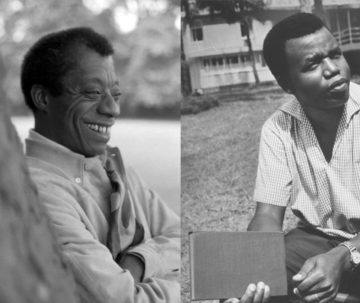 Chinua Achebe and James Baldwin met for the first time at the 1980 conference of the African Language Association in Gainesville, Florida. The historic encounter between two literary giants comes to us in poignant fragments. Achebe recalled the meeting in a 2001
  It’s always a little humbling to think about what affects your words and actions might have on other people, not only right now but potentially well into the future. Now take that humble feeling and promote it to all of humanity, and arbitrarily far in time. How do our actions as a society affect all the potential generations to come? William MacAskill is best known as a founder of the
 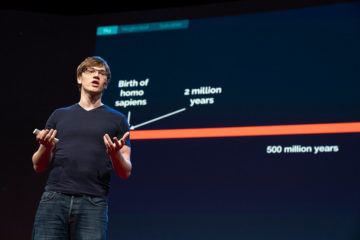 What we do now affects those future people in dramatic ways: whether they will exist at all and in what numbers; what values they embrace; what sort of planet they inherit; what sorts of lives they lead. It’s as if we’re trapped on a tiny island while our actions determine the habitability of a vast continent and the life prospects of the many who may, or may not, inhabit it. What an awful responsibility.
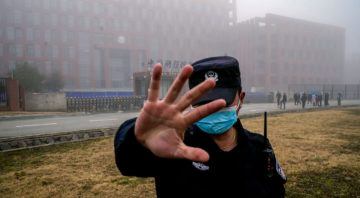 When Alice Hughes downloaded a preprint from the server Research Square in September 2021, she could hardly believe her eyes. The study
 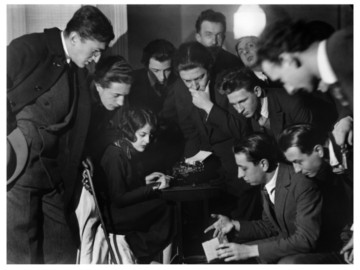 Ultimately, Surrealist Sabotage presents anti-work aesthetics as a fascinating and enduring thematic in Surrealist production, yet the political stakes of this thematic remain elusive. One reason lies in the book’s tendency toward diffuse and evenhanded treatment of wide-ranging source materials, at times deflecting important nuances and contradictions among and within them. Historical tensions internal to Surrealism are sidelined, including political disagreements between Breton and other interwar Surrealist-communists like Aragon and Bataille (the latter once colorfully denounced Breton’s camp as “too many fucking idealists”). Moreover, the complexities of Soviet art’s evolving orientation toward labor—inextricable, at the time, from the unprecedented challenge of transitioning to a classless society, despite economic underdevelopment and imperialist incursions—are all but elided. Socialist art becomes something of a straw man, reduced to a wholesale celebration of labor for labor’s sake. Nevertheless, Susik succeeds in eliciting tantalizing frictions around the relation of avant-garde movements to leftist politics in her study of the Surrealists’ attempts to “reconcile their revolution of the mind with the Marxist call for a proletarian overthrow.”