
Timothy Garton Ash in The Guardian:
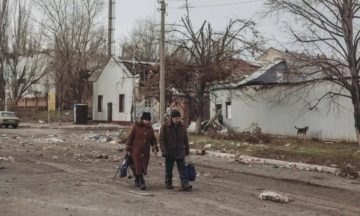 Wherever I turned, in every conversation, there was a total rejection not just of the Russian dictator, not merely of the Russian Federation as a state, but of everything and almost everyone Russian. Polling by the Kyiv International Institute of Sociology shows that some 80% of Ukrainians had a positive attitude to Russia in 2013; by May 2022, the figure was just 2%. A university lecturer told me that his students now write “russia” with a small initial letter. “I don’t correct them.”
This may be unsurprising in Ukraine, a country suffering from a Russian war that is now primarily directed against the civilian population. But the same thing is happening across much of the territory of the former Russian (and subsequently Soviet) empire – which, since the early 2000s, Moscow has tried to reimagine as the russkiy mir, or Russian world.
More here.
 The recent study’s analysis of zinc from the tooth enamel of a Neanderthal who lived and died around 150,000 years ago in the Spanish Pyrenees gives new insights into the diet of ancient humans. Zinc isotopes were analyzed from 43 teeth of 12 animal species living in a grassland around the Los Moros I Cave in Catalonia, Spain. These included carnivores such as wolf, hyena, and dhole (also known as mountain wolf); omnivorous cave bears; and herbivores including ibex, red deer, horse, and rabbit. The results brought to life a food web of the Pleistocene steppe, a system of interlocking food chains from plants up to the top carnivores. The zinc in the Neanderthal’s tooth had by far the lowest zinc value in the food web, revealing they were a top-level carnivore.
 Stephen Witt in The New Yorker:
 Vivian Lam in LA Review of Books:
 Philip Andrews-Speed in Green:
 Thomas B. Edsall Talks to Adam Shatz over at the LRB podcast (photo Hannah Beier/Alamy):
 “T
“T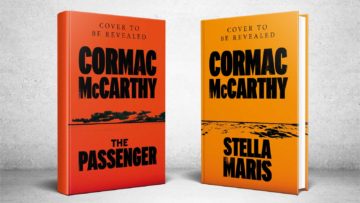 There have always been two dominant styles in Cormac McCarthy’s prose—roughly, afflatus and deflatus, with not enough breathable oxygen between them. McCarthy in afflatus mode is magnificent, vatic, wasteful, hammy. The words stagger around their meanings, intoxicated by the grandiloquence of their gesturing: “God’s own mudlark trudging cloaked and muttering the barren selvage of some nameless desolation where the cold sidereal sea breaks and seethes and the storms howl in from out of that black and heaving alcahest.” McCarthy’s deflatus mode is a rival rhetoric of mute exhaustion, as if all words, hungover from the intoxication, can hold on only to habit and familiar things: “He made himself a sandwich and spread some mustard over it and he poured a glass of milk.” “He put his toothbrush back in his shavingkit and got a towel out of his bag and went down to the bathroom and showered in one of the steel stalls and shaved and brushed his teeth and came back and put on a fresh shirt.”
 It’s time for our roundup of the biggest Pinocchios of the year.
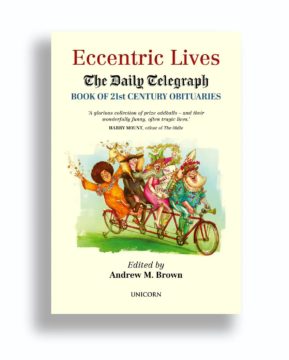 It used to be that, when you died, what you wanted was an obituary in a good newspaper, not that you’d be around to savor it. Since the introduction of the smartphone, the stakes have been raised. “I got a breaking news alert when I croaked,” some overachiever has surely bragged in the great beyond. “How about you?”
 Gilliam’s story is the all-too-familiar one of a Black artist only receiving critical acclaim and attention much later in his career. Although many were aware of his genius well before he came into the limelight, he simply was not given his due as one of the best abstractionists of his generation. I fell in love with his work early on, like many of us, through research and books. His drapery paintings – massive sculptural canvases, stained with whisps of colour and hung in various clumps sans stretcher – singlehandedly revitalized my passion for the medium. He was an expert colourist and a brilliant manipulator of materials. In so many ways, he taught me through his work what it meant to be a true master painter. Recently, I was lucky enough to see two great, posthumous shows of Gilliam’s work: ‘White and Black Paintings: 1975–77’ at David Kordansky in Los Angeles and ‘Late Paintings’ at Pace London. These two exhibitions served as effective bookends to Gilliam’s illustrious career. Many of the works in both shows looked simultaneously contemporary and historical: in the 1960s and ’70s, he experimented with bevelling his canvases, a technique he would return to much later.
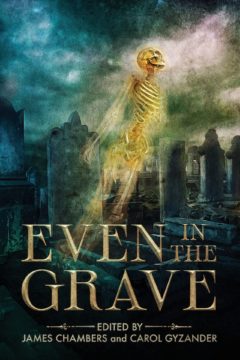 Ghost stories continue to be one of the most popular types of short stories, especially since the subgenre first appeared in early gothic novels such as Matthew Lewis’s The Monk (i.e., the ghost story of the Bleeding Nun) and Emily Brontë’s Wuthering Heights. I became enthralled with ghost stories after I read Rhoda Broughton’s Twilight Stories (1873) a few years ago. In particular, Broughton’s “Behold, It Was a Dream!” feels quite modern in its depiction of xenophobia, especially with the story being written over 100 years ago. Ever since reading this collection, I’ve been an avid ghost story collector, and, needless to say, I was eager to get my hands on not just one but two new collections of supernatural tales and ghost stories: Even in the Grave and Other Terrors: An Inclusive Anthology. Published in July 2022, both anthologies illustrate that the ghost story is alive and well despite being a classic genre.
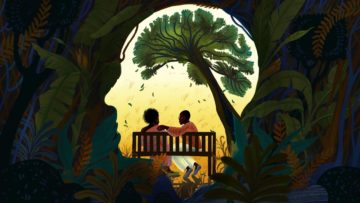 In Ghana, a nation of 32 million people, there are only 62 psychiatrists.
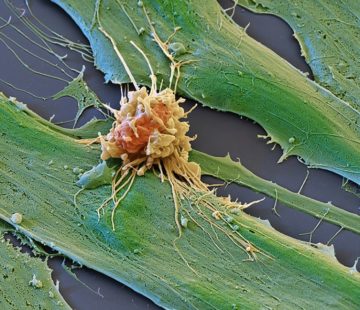 Elaborately engineered immune cells can not only recognize cancer cells, but also evade defences that tumours use to fend off attacks, researchers have found. Two studies published today in Science
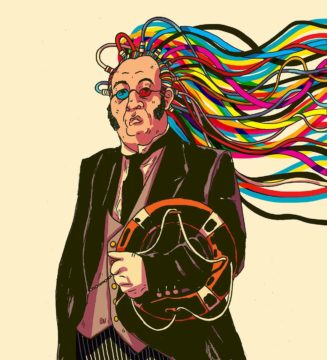 Despite being the culmination of a century-long dream, no better word describes the much-discussed output of OpenAI’s ChatGPT than the colloquial “mid.”
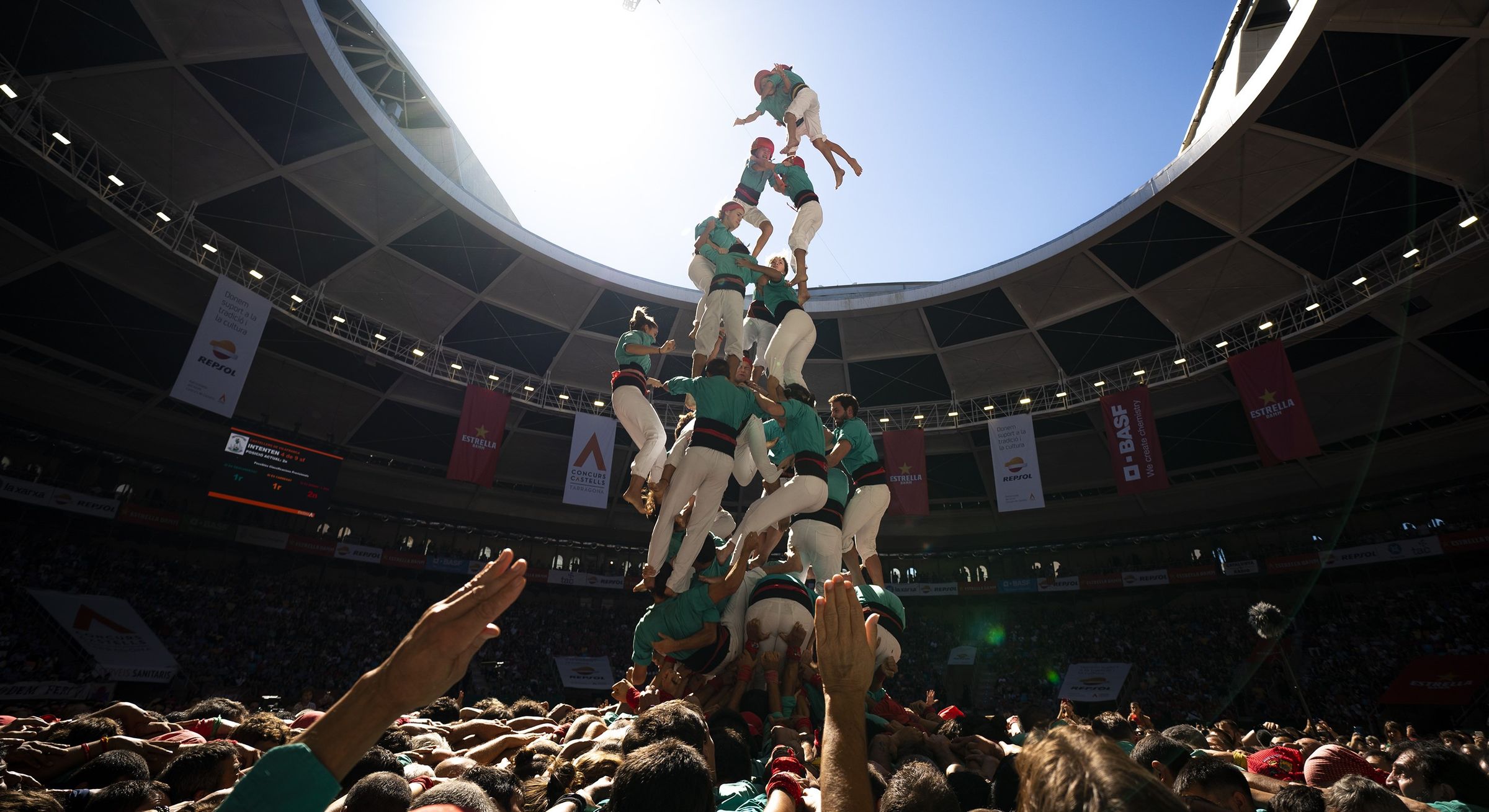 Our goal isn’t to try convince you to take one side over the other in a debate about optimism and pessimism – the world is far too muddled for that. Instead, it’s to remind you that away from the headlines, millions of people from every corner of the planet did their best to solve the problems that could be solved, and stayed open-eyed and open-hearted even in the most difficult of circumstances.