
Vinita Agrawal in Frontline:
 The twin books of Egyptian poet Yahia Lababidi— Learning to Pray: A Book of Longing and Desert Songs, published in 2021 and 2022, respectively—uphold the Sufi tradition that was critical in shaping the imagery, symbolism, metaphors, tropes, and indeed the world view, of classical Sufi poetry and portray mercy with a pluralistic vision by upholding an expression of love above all divides. Lababidi does this by the clean magic of his language, relatable imagery and fine craft.
In Lababidi’s poetry, one is brought face to face with the knowledge that it is love and love alone which can address all discord, whether spiritual or material, and help us find peace. This peace is beyond the fabric of political peace or peace between nations as we know it—it is the sublime bliss of becoming one with God, the cessation of inner turmoil and the sweet melding of the heart with the divine. And is that not the fundamental teaching of all religions?
More here.
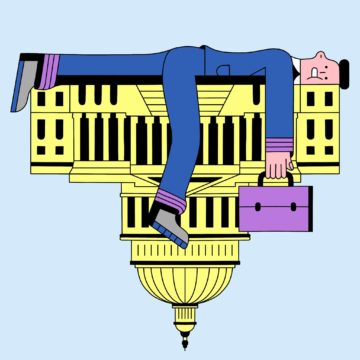 Democrats did so well, in part, because a conservative Supreme Court handed them a political gift by overturning Roe v. Wade and Republicans ran a group of dreadful celebrity Senate candidates.
 It has to be one of the more delightful details of the natural world: the ecosystem of an ant’s nest is home to its own constellation of creatures that specialise in living within or nearby it. Daniel Kronauer’s book
  “Everyone has their beliefs and cultures. We welcome and respect that. All we ask is that other people do the same for us.” So
  As these debates about identity and representation in American education were raging throughout the twentieth century, a second major shift was taking place. The central belief of Horace Mann and Catharine Beecher—that the point of education was to purify young souls—gradually gave way to a more utilitarian calculation that schools, first and foremost, were places to gain the skills that were valued in an increasingly competitive labor market. By 1972, when Gallup asked American parents why they wanted their children to be educated, the most frequent response was “to get better jobs”; “to make more money” was the third.
 It’s no secret, among political junkies anyway, that Senate Minority Leader Mitch McConnell and much of the Republican elite have been casting around for a way to derail Donald Trump’s bid to be the 2024 GOP presidential nominee. It’s a delicate operation, to be certain. Trump’s allure to the GOP primary voting base isn’t just that he triggers the liberals, but that he ruffles the feathers of the Republican establishment. It makes the deplorables feel powerful, watching people like McConnell and House Minority Leader Kevin McCarthy bow and scrape to the ludicrous reality TV host foisted on them by their own voters. So the strategy is always about trying to find some way to undermine Trump without provoking him to unload personal invective on Truth Social in retaliation.
 T
T To find mirth in the world is to be human.
 Psychically, Geuss argues, liberalism offers “the fantasy of being an entirely sovereign individual” as “a reaction to massive anxiety about real loss of agency in the world.” It offers the false security of “living in a bubble of nostalgia” for the international economic hegemony that the United States began to lose from the mid-1960s onwards, first as other economies recovered from the devastations of World War II and then with increasing globalization, job flight, Trumpism, and Brexit. In this situation, liberalism “responds in a particularly satisfactory way to deep human needs and to the vested interests of powerful economic and social groups.”
 Memory and perception seem like entirely distinct experiences, and neuroscientists used to be confident that the brain produced them differently, too. But in the 1990s neuroimaging studies revealed that parts of the brain that were thought to be active only during sensory perception are also active during the recall of memories.
 This is the promise of medical assistance in dying: that vulnerable people who want to die for the wrong reasons will be encouraged to live, as they always have been — while people who want to die for the right reasons will have their autonomous decision upheld. If even a single vulnerable person were pushed into assisted death, it would be a scandal to the system. That is why safeguards were put into place.
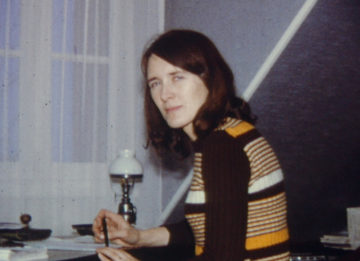 IN THE WINTER OF 1972, around the time Manhattan gallerygoers were immersing themselves in Memory—a sprawling installation comprising over a thousand tiled photographs and several hours of tape-recorded text amassed by the American poet Bernadette Mayer—the French writer of memory Annie Ernaux and her then-husband, Philippe, bought a Bell and Howell Super 8 camera. Mayer, who died this year and who in life seemed ahead of the future, once imagined “a computer or device that could record everything you think or see, even for a single day”—a thought Ernaux would echo across space and time: “Someday, would we be able to see, imprinted on a person’s brain, everything they had done, said, seen and heard?” And even so, would that suffice? Though Mayer shot a roll of film each day for one month, all the while jotting down and revising her exhaustive impressions, it was the gaps in Memory, like the ghostly zones of a photonegative, that stood out: “emotions, thoughts, sex, the relationship between poetry and light, storytelling, walking, and voyaging to name a few.” To name a few! To name everything—everything, that is, worth saving: the so-called empty hours haloing mundane life.
 G
G In voting on Monday to issue a sweeping final report, the Jan. 6 committee has honored its duty and the Constitution. When the full report is released this week, there will be much to review and process for our country, our government and American history. But given the facts that have been revealed, these hearings had to end with criminal referrals against Donald Trump and his minions.