
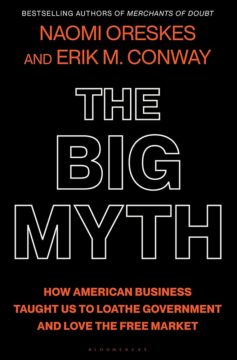
 Claudia Dreifus in The Nation:
The publication of Naomi Oreskes and Erik M. Conway’s Merchants of Doubt: How a Handful of Scientists Obscured the Truth on Issues From Tobacco Smoke to Climate Change in 2010 helped transform how science news was reported in the media. The book persuaded reporters worldwide to become more skeptical of industry-sponsored “experts”—particularly on issues like global warming. Oreskes and Conway hope their latest collaboration, The Big Myth: How American Business Taught Us to Loathe Government and Love the Free Market (Bloomsbury), will have a similar impact. I recently caught up with Oreskes, who teaches science history at Harvard, and is also the author of Why Trust Science, Science on a Mission: How Military Funding Shaped What We Do and Don’t Know About the Ocean, and Plate Tectonics An Insider’s History of the Modern Theory of the Earth. Long ago, in another life, Oreskes was a geologist. During our conversation, we discussed The Big Myth and how free-market economics became a dominant force in American public policy.
—Claudia Dreifus
CLAUDIA DREIFUS: How did the idea behind The Big Myth come to you?
NAOMI ORESKES: After the success of Merchants of Doubt, Erik and I started thinking about doing another book together. At first, we thought we’d write about the technological solutions to climate change. But every time we started, what kept coming up was that a lack of the right technologies wasn’t the problem—most of the technologies we need already exist. But to get them in place, you need the right policies. That’s mostly a political question. That threw us back to something we’d been thinking about since we began researching Merchants of Doubt. In that book, the big question was “Why would intelligent people deny science?” In particular, why would famous scientists attack science to create doubt about the dangers of smoking, the thinning of the ozone layer, and climate change?
More here.
 Herman Mark Schwartz in Phenomenal World:
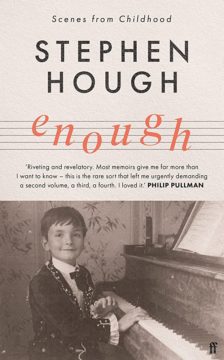 “A writer is God,” says Hough admiringly, thinking of God – he is a Catholic convert – rather than claiming godlike powers for himself. He then quotes the Bible on the word being made flesh as “an idea floating in the air is caught, a concept becomes carnal”. The piano leaves ideas afloat, airily uncatchable: Hough’s book describes “the liquid lasso” of a stone thrown into a pond in Debussy’s Reflets dans l’eau, and in the notes to his recent recording of Federico Mompou’s Música Callada he remarks that these brief, whispery religious meditations evaporate as they are played. Defying the monochrome abstraction of the keyboard, Hough always sets himself to make sounds tell stories without words. In his reimagining, Tippett’s Piano Concerto proceeds from an orchestral rumbling “under the soil of the earth to the tinkle of arpeggios tracing a delicate tune above the treetops”.
 Leaders in the U.S. scientific community must dismantle the power structures that lead to racial inequities within their organizations and create an environment in which everyone feels supported,
 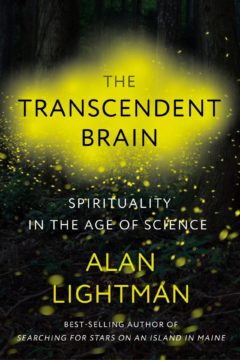 When did you begin on the project of reconciling a scientific worldview with human experience?
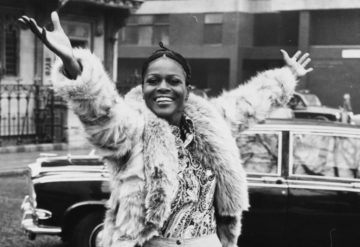 Black actresses have always faced barriers. Initially, they were not allowed to be on screen at all. Then, they could only play certain types of roles: typically either as a servant and/or enslaved woman, or as an “exotic” temptress. Never a character that was fully realized, one with depth or nuance.
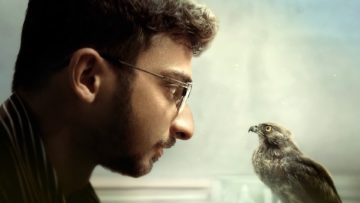 There is an astonishing moment near the beginning of
  Stunning as it may sound, nearly half of Americans ages 20 years and up – or more than 122 million people – have high blood pressure, according to a
  Although proponents of secret science like to focus on examples in which it has benefited society, insiders from the very beginning of the Cold War worried that the best minds would not be drawn to work that they could not even talk about. Secrecy protected those involved from embarrassment or criminal prosecution, but it also made it much harder to vet experimental protocols, validate the results, or replicate them in follow-up research.
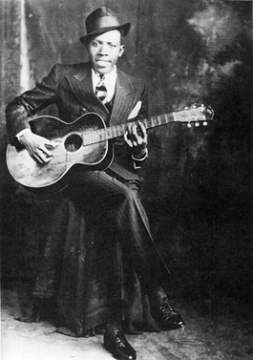 The crossroads shows up in three separate places in Plato’s accounts of the afterlife. In the Gorgias, Plato describes a “Meadow at the Crossroads,” where one path goes to the Isles of the Blessed, while the other leads to a prison of punishment and retribution.
 Months after buying the house, I learned, piece-meal, from people who should have told me what they knew about that house before I signed the mortgage papers, that the sprawling white elephant I’d acquired had functioned in the middle past as a transient home for orphans and abandoned children awaiting adoption into foster care. A few years later, the house became an overflow domestic abuse shelter for women hiding from stalking husbands and boyfriends. There were even indications, in two of the basement areas, that meetings of some disreputable fraternal organization, something along the lines of Storm Front, had been held there for a while. These may also have featured a karaoke night, since besides the crumpled confederate flags and vague neo-Nazi debris scattered in corners, there was also a truncated proscenium stage with a microphone stand and a dead amplifier on it.
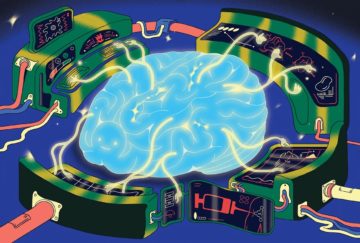 Hundreds of scientists around the world are looking for ways to treat heart attacks. But few started where Hedva Haykin has: in the brain. Haykin, a doctoral student at the Technion — Israel Institute of Technology in Haifa, wants to know whether stimulating a region of the brain involved in positive emotion and motivation can influence how the heart heals.
 You’ve probably heard of the famous Trolley case. Here is one version: suppose a runaway trolley is about to hit five workers who, by accident, happen to be working on the track. The only way to prevent their death is by pushing a switch that will redirect the trolley onto another track. Unfortunately, there is another worker on this sidetrack who will be killed if the switch is pushed. The question: Is it permissible to push the switch, saving five people but killing one?
 What a week we just had! Each morning brought fresh examples of unexpected sassy, moody, passive-aggressive behavior from “Sydney,” the internal codename for the new chat mode of Microsoft Bing, which is powered by GPT. For those who’ve been in a cave, the highlights include: Sydney