
 Devaka Gunawardena , Niyanthini Kadirgamar, and Ahilan Kadirgamar in Phenomenal World:
Massive demonstrations that swept Sri Lanka last year exposed the serious challenges at the heart of the global economy. In July 2022, former President Gotabaya Rajapaksa was forced to flee the country, only a few months after announcing a hasty default of Sri Lanka’s foreign debt obligations. He faced a wall of opposition as the nation suffered infamous kilometers-long fuel queues, power outages, and food and medicinal shortages, crippling everyday life.
In the months since, the current government led by Ranil Wickremesinghe—allied with the party of the disgraced Rajapaksa family—has appeared savvier than its predecessor, implementing a quota system to manage fuel distribution and end the queues. However, the government has also tripled fuel prices, which has severely dampened demand. Fuel consumption is half of what it was a year ago, bringing economic activity to a grinding halt. Inflation has skyrocketed, with food inflation peaking at 94 percent in September 2022. A quarter of Sri Lankans are facing severe food insecurity; household incomes across the board have decreased. The Central Bank dramatically doubled interest rates, making access to credit for economic activity extraordinarily difficult. Rural livelihoods have been disrupted. Many small businesses are collapsing.
More here.
 Perry Anderson in New Left Review:
 Kenda Mutongi in Boston Review:
 Dylan Saba in Jewish Currents:
 W
W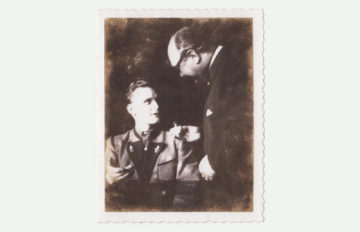 In the spring of 1954, Reinhard Müller stepped onto a stage in the German city of Wolfsburg as a volunteer in a magic show. His presence was captured in a small sepia photograph, where he can be seen in conversation with a tuxedoed magician holding the elegant pocket watch that Müller has just entrusted to him. The conjurer is Helmut Ewald Schreiber (1903–1963), better known by his stage name Kalanag. He is in the final stages of a trick called “The Devil’s Mail,” a popular feature of his world-touring magic revue, Simsalabim. A few moments before, Müller’s watch had been reduced to fragments in a mortar by sharp blows of the magician’s wand. In the photograph, Kalanag can be seen returning the now miraculously restored timepiece to its owner. But his watch is not all that Müller will take with him when he leaves the stage. To his delight, he will also carry this snapshot, delivered to him in an envelope by the magician within moments of the very scene that it depicts.
 EVERYONE HAS
 Zen and the Art of Motorcycle Maintenance, published in 1974, was nothing short of a cultural phenomenon. A work of fictionalised autobiography, the book follows its author Robert Pirsig on a long motorcycle ride through the US, from Minnesota across the prairie to Oregon, then down to southern California. The muscles of that skeletal journey are Pirsig’s philosophical musings on the notion of Quality. Pirsig created the concept in order explain the relationship between human values and societal values.
 With the use of this new technology exploding into the masses, previously unknown risks being revealed each day, and big tech companies pretending everything is fine, there is an expectation that the government might step in. But so far, legislators have taken little concrete action. And the reality is that even if lawmakers were suddenly gripped with an urgent desire to address this issue, most governments don’t have the institutional nimbleness, or frankly knowledge, needed to match the current speed of AI development.
 Tuesday 28 February marks the 70th anniversary of – in my view – the most important day in the history of science. On a fine Saturday morning with crocuses in flower along the Backs in Cambridge, two men saw something surprising and beautiful. The double helix structure of DNA instantly revealed why living things were different: a molecule carries self-copying messages from the past to the future, bearing instructions written in a four-letter alphabet about how to synthesise living bodies from food. In the Eagle pub that lunchtime, Francis Crick and James Watson announced to startled fellow drinkers that they had discovered the secret of life.
 THE PASSAGE OF
  I don’t know why but I’m still affected by the death of Philip Seymour Hoffman. I didn’t know him, and I don’t think I’ve even seen all of his work, but his presence is so affecting to me. He doesn’t look like an actor. He struggled with addiction. He got sober young and relapsed. It scares me.
 IN MANY WAYS, even before I knew exactly what I was looking at, I took Wavelength as a kind of long goodbye, an extended adieu to Western vanishing-point perspective. Or, at the very least, a goodbye to the obvious inferences, i.e., the eye-I dyad at the very center of Western classical ideas of (split/bifurcated/troubled) consciousness, mind/body, man/nature, foreground/background, and all its decidedly phallic impulses. Penetrating space, penetrating gaze as apex being. And none of the above even remotely meant as a critique. Michael Snow being, idea-of-the-north/star-like, a true Canadian, down to his spooky insistence on there being a point (neither/nor wave particle).
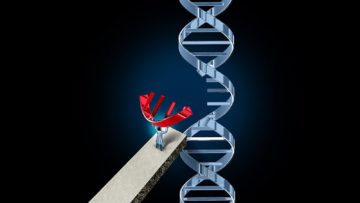 We’re always thinking about: What are those targets in the future? Cancer is one of those things. The biggest impact is going to be what’s called systemic delivery, or in vivo delivery. There’s been one example of this in the community right now—to treat a liver disease. Intellia Therapeutics, a biotech company, has shown that you can actually intravenously apply CRISPR-Cas9 treatment. (CRISPR is the guide RNA, the targeting molecule, and Cas9 is the cutting molecule that edits DNA.) It can go to the liver and target the liver cells, and make edits at a high enough efficacy to treat genetic liver disease. The problem is that the liver is the easiest. It’s like the garbage can of the body. Pretty much anything that you put into the body is ultimately going to find its way to the liver. So that’s absolutely the easiest tissue to deliver to. But trying to deliver to a solid tumor, or to the brain, is much more difficult.