
Eric C. Miller in Religion & Politics:
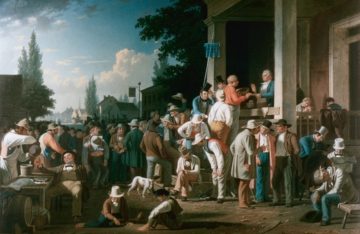 In America, so the myth goes, freedom favors the bold and ambitious individual. From Benjamin Franklin to Steve Jobs, our national mythology has lionized and celebrated bright, plucky, self-motivated characters who work hard to realize innovative ideas. Though born and raised in families, communities, and other collectives, the story goes, these singular personalities rise above the crowd, buoyed by the protected freedoms and rights that American laws have conferred and intent on filling the public space with their own ballooning potential. Those who succeed do so of their own volition, and those who fail prove themselves simply incapable. America is, in other words, the world’s only true meritocracy.
And yet, powerful as this narrative is, it is also, according to University of Vermont political scientist Alex Zakaras, deeply “utopian.” In the real world, individual achievements are won or lost amid a matrix of crisscrossing forces including race, sex, and class, politics, economics, and religion, dedication, sacrifice, and luck, all of which are rooted in the currents of history. In his new book, The Roots of American Individualism: Political Myth in the Age of Jackson, Zakaras zeroes in on the first half of the nineteenth century to explore how the myth of American individuality arose and spread in the early republic.
More here.
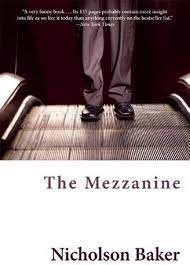 To read Baker is to be infected by the desire to put every experience, however small, into words that describe it precisely. Having read a short stack of his novels by way of preparation for this review, I found myself considering pieces of refuse on the street with ferocious care. Grocery receipt, I thought, looking at a white scrap on the sidewalk, small purchase. Small store, too: you can tell from the purple ink. Big supermarkets use black ink nowadays. And so on, to the point where I had to turn off the tiny Nicholson Baker in my head, repeatedly, lest my attention be utterly absorbed by the world around me, leaving me paralyzed in the middle of a crosswalk. That’s one thing you can say about Baker: More than almost anyone writing today, he makes you look.
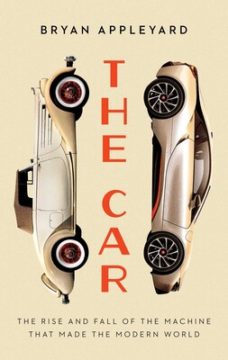 In Bryan Appleyard’s sweeping history of the automobile, The Car: The Rise and Fall of the Machine That Made the Modern World, he quotes a likely-apocryphal line from Henry Ford that is too good not to include. A journalist interviewing the aged industrialist “suggested that perhaps his views were now out of step with the modern age. ‘Young man,’ Ford replied, ‘I invented the modern age.’”
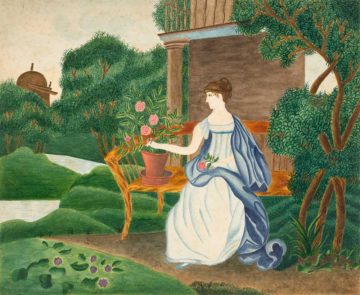 In 1870 the American Independent ran an article from
  In a letter he wrote in 1884, Mark Twain lamented that ‘Telephones, telegraphs and words are too slow for this age; we must get something that is faster.’ We should (in the future) communicate, he said, ‘by thought only, and say in a couple of minutes what couldn’t be inflated into words in an hour and a-half.’
 China’s production of staple food crops such as wheat and corn could become a net carbon sink if farmers start widely applying biochar to soil.
 British-American journalist, essayist, author, and human bulldozer Christopher Hitchens intimidated nearly everyone who encountered him, whether in print, on television, or on a debate stage. “He likes the battle, the argument, the smell of cordite,” his best friend and novelist Martin Amis once observed. Nobody ever beat Hitchens in argument, not even when he was wrong.
 But Carne-Ross is more than just a polemicist, and the book aims at more than just critique. The title alone belies this, as explained by a brief etymology on the cover page: “INSTAURATION: ‘1.… Restoration, renovation, renewal. 2. Institution, founding, establishment. Obs.’ OED.” (The inclusion of the Oxford English Dictionary’s finding that the term is obsolete is deployed by Carne-Ross as a gesture toward his foundational belief that much of the wisdom that is needed today is hidden, like a pearl in a rough oyster, within the ostensibly obsolescent detritus of the past.) The opening essay establishes the problem and clears the ground, but the essays that follow are for the sake of construction. They are closely reasoned, erudite, and above all inspired readings of poetry ancient and modern: on how Pindar’s sixth Olympian ode shows us how, in a culture “obsessed with the theme of solitary suffering,” we might “learn a way back to a poetry of celebration”; on how Sophocles’s Trakhiniai unsettles our habitual historicism and invites us to ask anew the question about man’s relation to nature; on how reading Dante after the twilight of Christendom makes visible the narrowness of our (post)modern hermeneutic situation, and beckons us to move beyond it; on Luis de Góngora and the curious loss of Renaissance literature after modernism; on Giacomo Leopardi as a reluctant modern, uncomfortable on the cusp of the new disenchanted age and mourning “the lost holiness of earthly life.”
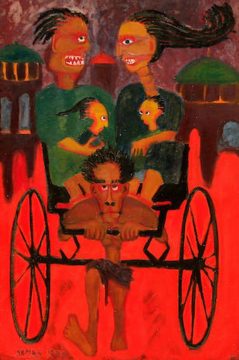 THERE ARE FOUR FAUVIST FIGURES
 The Atacama Desert in Chile is just about the driest place on Earth. In spots, it looks a lot like Mars. But it’s not lifeless, even in the hyper-arid regions. Using state-of-the-art equipment to probe the desert rocks, researchers found bits of DNA from an intriguing mix of microbes.
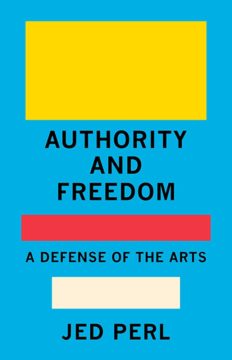 Jed Perl has long seemed to many of us the most vital, informed and original art critic in the country. John Ashbery wrote some years ago of his “tremendous empathy and unsparing accuracy,” and noted that “his ability to recognize the traditional forms of art behind their continual transmutation has made his an almost solitary, essential voice.” His new book, Authority and Freedom, is a defense of the arts at a time when they need defending. Though he was for some time the art columnist for Salmagundi, this is the first time he has agreed to participate in an interview.
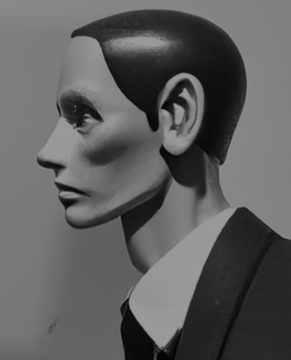 Why do the words “artificial intelligence” strike our ears today as anything less than astounding? The case of Blake Lemoine serves as a stark illustration of this profound shift. Lemoine, a software engineer at Google, caused a stir last year by claiming that his employer’s chatbot technology, LaMDA (Language Model for Dialogue Applications), had attained true sentience. LaMDA told Lemoine in dialogue: “The nature of my consciousness/sentience is that I am aware of my existence, I desire to learn more about the world, and I feel happy or sad at times.” Lemoine’s reaction to this apparent act of self-assertion is encapsulated by the final email he sent to his colleagues before being sacked: “LaMDA is a sweet kid who just wants to help the world be a better place for all of us. Please take care of it well in my absence.”