
Joseph E. Stiglitz in Project Syndicate:
 Now that the American electorate appears to have rejected Republican extremism, some will argue that Biden should tack right to capture the political center. But that is the wrong way to read the 2022 midterm result, because the electorate is not seeking some kind of Solomonic splitting of the baby.
Consider the divide between candidates who championed women’s reproductive rights and those who advocated an absolute ban on abortion, without exceptions even for rape, incest, risks to the mother, or any of the other compelling circumstances for ending a pregnancy. It is not as though America’s “middle” came out and said, “Draw the line at four and a half months, with exceptions for incest but not for any other cases of rape.” Whatever their beliefs about abortion – no one is enthusiastic about it – Americans have consistently signaled a general agreement that the decision should be left to the woman, not the government.
Centrism is the wrong approach for most other big issues as well.
More here.
 The Liz Truss
  Bacterial infections are the second leading cause of death worldwide, accounting for one in eight of all deaths in 2019, the first global estimate of their lethality revealed on Tuesday.
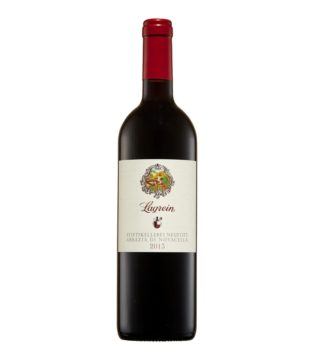 Your classiest friend invites you to dinner. They take out a bottle of Chardonnay that costs more than your last vacation and pour each of you a drink. They sip from their glass. “Ah,” they say. “1973. An excellent vintage. Notes of avocado, gingko and strontium.” You’re not sure what to do. You mumble something about how you can really taste the strontium. But internally, you wonder: Is wine fake?
 For most of my adult life, I believed in the implications of the phrase “non-stick pans”: other pans must be unmanageably sticky. During the pandemic, as I began to want my own listening room and wrote every day across from a stove, I started to cook. I bought a Lodge cast-iron skillet that cost about forty dollars. It heats up quickly and evenly and can be easily cleaned. Our non-stick pan, by comparison, sheds its coating, and the handle keeps coming unscrewed. This is like the history of audio gear. The cast iron was sufficient, but an imaginary quality—stickiness—was being “solved” by new technology like Teflon. The new gear is fine, and works well in a couple of settings, but seems largely like an unnecessary innovation.
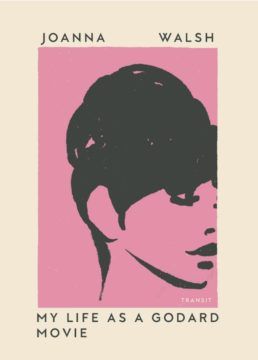 In My Life, Walsh remembers a time when “instead of dying I went to Paris,” a providentially budgeted eleventh-hour day trip consisting of “ten hours’ travel and eight hours’ walking: eighteen hours: a day, a day that saved my life.” The transformation by the pandemic of Paris — of crowds, of urban bustle, of the tactile delectations of flânerie — from a font of salvation into a space of mortal dangers and morbid anxieties appears as a kind of violent inversion. But this alienated affect sits comfortably in Walsh’s oeuvre: the founding condition of her writings is a consciousness and interrogation of feelings of geographic, interpersonal, and emotional displacement. Her women navigate their worlds in the exilic mode. Walsh’s settings are intermediary or quite literally transit/ory: hers is a literature of the cafe, the train, the bus, the hotel. That the principal concerns of Godard’s early period were the ennui and political uncertainties of an interstitial generation (“the children of Marx and Coca-Cola,” as Godard notoriously identifies them in 1966’s Masculin Féminin), the defamiliarization of romance, and a kind of uncanny French apocalyptica (think, for example, of the remarkable, and remarkably long, single-take traffic scene in Week-end) establishes an especially fructuous ground for Walsh’s philosophies of the uprooted.
 Anyone
  Malta is not so much an island as it is the top of a mountain. Some 14,000 years ago the glacier that covered Europe began to recede. As it did, the water level of the Mediterranean rose, some 120 meters to be exact, enough, anyway, to separate Malta from its mainland. Just 80 kilometers separates the island from Sicily’s Cape Passero. On a clear day you can see Mt. Etna.
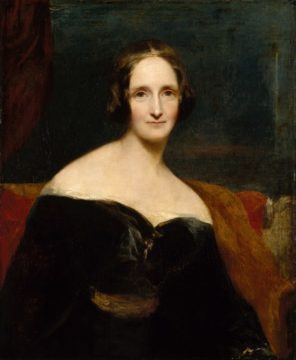 In the foreword to the 1947 edition of Mary Shelley’s collected journals, editor Frederick L. Jones complains that many of Mary’s entries are too short, too self-aware. She’s cautious, impersonal. As if it’s somehow unfair that Mary kept back some of herself, rather than filling page after page with the guileless trust that no one else would ever read them. Because clearly she knew otherwise.
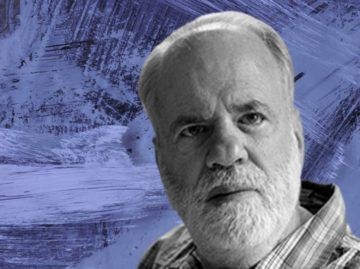 The stereotype of a philosopher is an old man with a long beard. Saul Kripke made world-leading contributions to philosophy and logic as a teenager. It was the starting-point for his most distinctive later work, which gave philosophers a new framework to think in.
 Sarah’s story is familiar in a country where more than 40% of adults and a fifth of children have obesity. At school, she was bullied for her weight and, starting in her teens, dreaded getting weighed by doctors because they were always critical. At age 26, she had bariatric surgery—yet after dropping 80 pounds, her weight returned. Year after year passed with cycles of strict dieting and trials of various anti-obesity medications. “The weight always came back,” says Sarah, who asks that her real name not be used.
 The race to commercialize the Internet is over, and advertising is the big winner. This is excellent news if you are an executive or major shareholder of one of the handful of companies that dominate the