
Penelope Rowlands at The American Scholar:
 After Bunny’s arrangement with Paul was established, she went on to flower artistically. Partly schooled by John Fowler, of the London interior design firm of Colefax & Fowler, she cast a spell on all seven of her residences—including ones in Nantucket, Washington, D.C., and New York City. In this phase, too, she championed and collaborated with a long line of gay visual artists. These relationships took the form of “violent crushes”; each of them, for her, was a kind of romance. And one, the gifted French jewelry designer Jean Schlumberger—”the black cat,” she called him—is rumored to have been her lover in the early 1950s. He escorted her to Paris, where she attended the haute couture collections for the first time. Once “perilously close to dowdy,” Griswold writes, Bunny was transformed. She became a style icon, seemingly overnight, thanks to her new, romance-tinged friendships with two famed fashion designers, Cristóbal Balenciaga and Hubert de Givenchy. The latter brought Bunny into Paris’s haut monde. She purchased an apartment on the Avenue Foch and basked in the attention of a chic new crowd she called her “French family.” The courtly Givenchy steered Bunny toward one of her most celebrated projects—her impeccable restoration of the 1678 Potager de Roi, Louis XIV’s kitchen garden at Versailles, which had long fallen into desuetude.
more here.
 On 11 July, in a live broadcast from the White House, U.S. President Joe Biden unveiled the first image from what he called a “miraculous” new space telescope. Along with millions of people around the world, he marveled at a crush of thousands of galaxies, some seen as they were 13 billion years ago. “It’s hard to even fathom,” Biden said.
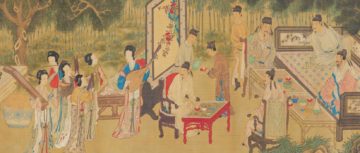 In 1788, as the young republic was trying to establish itself under the new Constitution,
 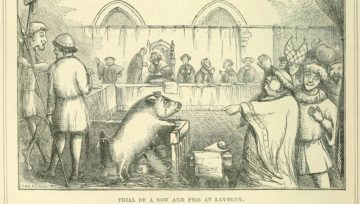 If you were an animal in need of legal representation in early 16th-century Burgundy – a horse that had trampled its owner, a sow that had attacked the farmer’s son, a goat caught
 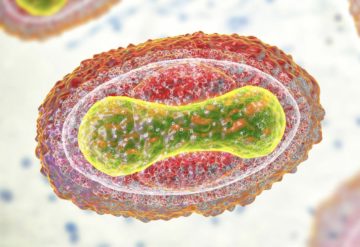 If DNA is the code of life, then outfits like GeneArt are printshops — they synthesize custom strands of DNA and ship them to scientists, who can
  Vivien Sansour is excited about wheat. More than 10,000 years ago, she explains, visionaries in the fertile crescent domesticated it and began to transform it into the croissants, pitas, and baguettes that feed the world today. Sansour studies seeds as a way to “design new things the way that [her] ancestors did.” In 2014 she founded the Heirloom Seed Library and then spent the next four years searching for heirloom varieties for preservation and propagation. Many of these seeds, all indigenous to Palestine, are threatened because of colonial regulation of Palestinian lands and lives. Israel has forced other species onto Palestinian farmers for the sake of efficiency and scale, though it maintains one of the largest heirloom seed libraries at the Arava Institute. While the institute maintains an experimental orchard, the seeds themselves are off-limits to farmers. Sansour insists that while the settler sovereign “took our seeds away from us, they don’t have the story and the system of knowledge associated with the seed.”
 WASHINGTON — I had always been a bah humbug sort of person about Christmas.
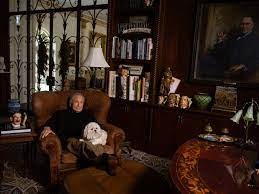 To revisit “The Dick Cavett Show,” which ran late night on ABC from 1969 to 1975 (and in various other incarnations before and after), is to enter a time capsule—not just because of Cavett’s guests, who included aging Hollywood doyennes (Bette Davis, Katharine Hepburn), rock legends in their chaotic prime (Janis Joplin, Jimi Hendrix), and squabbling intellectuals (Gore Vidal, Norman Mailer), but because Cavett’s free-flowing yet informed interviewing style is all but absent from contemporary television. Late-night shows are now tightly scripted affairs, where celebrities can plug a new movie, tell a rehearsed anecdote, and maybe get roped into a lip-synch battle. But Cavett gently prodded his subjects into revealing themselves. Though he was pegged as the “intellectual” late-night host, he resisted the label. He was a creature of show business: spontaneous, witty, and interested in everything.
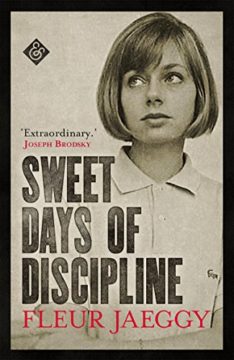 Fleur Jaeggy would like to see herself as something of a mystic.
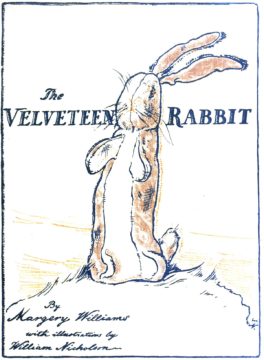 The story behind the story of “The Velveteen Rabbit” is itself a kind of fairy tale. Much of it was revealed to me during an interview I did with Margery’s daughter, Pamela Bianco, in 1979. Pamela, born in London in 1906, was an art prodigy, and by the tender age of 12, was one of the most famous children in the world. She was 62 when I met her and working in relative obscurity, as she had done for much of her adult life. During our lengthy conversation, she described the evolution of “The Velveteen Rabbit” and her crucial part in its inception. Pamela was the most childlike person I have ever met. That may well be because her childhood was taken from her. I have never quite forgotten her.
 At twenty-six, at the embarrassing end of a series of attempts at channelling Kerouac, I was beyond broke, back in my home town, living in my aunt and uncle’s basement. Having courted and won a girl I had courted but never come close to winning in high school, I was now losing her via my pathetically dwindling prospects. One night she said, “I’m not saying I’m great or anything, but still I think I deserve better than this.”
 Stimulating neurons that are linked to alertness helps rats with cochlear implants learn to quickly recognize tunes, researchers have found. The results suggest that activity in a brain region called the locus coeruleus (LC) improves hearing perception in deaf rodents. Researchers say the insights are important for understanding how the brain processes sound, but caution that the approach is a long way from helping people. “It’s like we gave them a cup of coffee,” says Robert Froemke, an otolaryngologist at New York University School of Medicine and a co-author of the study, published in Nature on 21 December
 With a title like that, obviously I will be making a nitpicky technical point. I’ll start by making the point, then explain why I think it matters.