
Joseph M Keegin in Psyche:
 Great art and thought have always been motivated by something other than mere moneymaking, even if moneymaking happened somewhere along the way. But our culture of instrumentality has settled like a thick fog over the idea that some activities are worth pursuing simply because they share in the beautiful, the good, or the true. No amount of birdwatching will win a person the presidency or a Beverly Hills mansion; making music with friends will not cure cancer or establish a colony on Mars. But the real project of humanity – of understanding ourselves as human beings, making a good world to live in, and striving together toward mutual flourishing – depends paradoxically upon the continued pursuit of what Hitz calls ‘splendid uselessness’.
The culture of the 21st century – on an increasingly planetary scale – is oriented around the practical principles of utility, effectiveness and impact. The worth of anything – an idea, an activity, an artwork, a relationship with another person – is determined pragmatically: things are good to the extent that they are instrumental, with instrumentality usually defined as the capacity to produce money or things.
More here.
 The biography of the actor Anthony Hopkins contains a striking example of a serendipitous coincidence. When he first heard he’d been cast to play a part in the film The Girl from Petrovka (1974), Hopkins went in search of a copy of the book on which it was based, a novel by George Feifer. He combed the bookshops of London in vain and, somewhat dejected, gave up and headed home. Then, to his amazement, he spotted a copy of The Girl from Petrovka lying on a bench at Leicester Square station. He recounted the story to Feifer when they met on location, and it transpired that the book Hopkins had stumbled upon was the very one that the author had mislaid in another part of London – an advance copy full of red-ink amendments and marginal notes he’d made in preparation for a US edition.
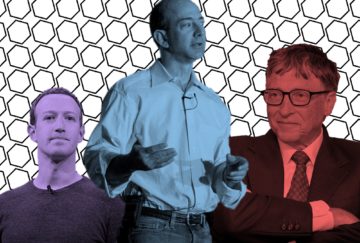 Much has been written about the dramatic increase in income and wealth inequality in the United States over the last four decades. This volume of literature not only warns about the injustice of our current system, but also raises alarm that extreme inequality poses a serious risk to our democracy.
 Know as we might
  Throughout 1667, the ruins of London’s St Paul’s Cathedral became overgrown with a thicket of weeds. One yellow-flowered plant in particular mounted the walls in huge quantities. That spring, on the south side of the church, “
 What is “creative nonfiction,” exactly? Isn’t the term an oxymoron? Creative writers—playwrights, poets, novelists—are people who make stuff up. Which means that the basic definition of “nonfiction writer” is a writer who doesn’t make stuff up, or is not supposed to make stuff up. If nonfiction writers are “creative” in the sense that poets and novelists are creative, if what they write is partly make-believe, are they still writing nonfiction? Biographers and historians sometimes adopt a narrative style intended to make their books read more like novels. Maybe that’s what people mean by “creative nonfiction”? Here are the opening sentences of a best-selling, Pulitzer Prize-winning biography of John Adams published a couple of decades ago:
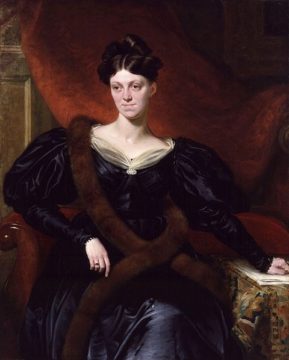 After the Revolution in the United States, American society coalesced around controlling women’s behavior and sexual activity while exploiting their labor. Women’s “reduced rate,” or free labor in the case of slaves, was critical to the growing economy. And they were coerced, compelled, and conditioned to be meekly submissive. They were encouraged to “not expect too much”:
 Charles Simic, the late, great Serbian-American poet, was born in 1938 in Belgrade, Yugoslavia. In 1941, when Simic was three, Hitler invaded, and a bomb explosion hurled Simic out of bed. Three years later, in 1944, another series of detonations exploded across town—this time, dropped by Allies. Images of a war-torn country inform Simic’s earliest memories. Belgrade had become a chess board, a deadly battleground for both the Nazis and Allies. Simic emigrated as a boy to the United States, and he wrote poetry in English, but the hellish landscape of his youth lay at the heart of his work.
 The key is that each piece of information, such as the notion of a car, or its make, model or color, or all of it together, is represented as a single entity: a hyperdimensional vector.
 To most people today, the notion of a leisure ethic will sound foreign, paradoxical, and indeed subversive, even though leisure is still commonly associated with the good life. More than any other society in the past, ours certainly has the technology and the wealth to furnish more people with greater freedom over more of their time. Yet because we lack a shared leisure ethic, we have not availed ourselves of that option. Nor does it occur to us even to demand or strive for such a dispensation.
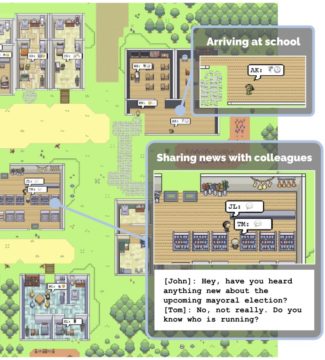 The researchers found that their agents could “produce believable individual and emergent social behaviors.” For instance, one agent attempted to throw a Valentine’s Day party by sending out invites and setting a time and place for the party.
 The thought of adding crickets to a summer gazpacho or making your tacos out of honey bee moths is likely to make the majority of us squirm. But faced with a future of growing food scarcity, insects may soon become a kitchen staple; a regular ingredient in our everyday cooking. In Beatle in the box, Italian photographers Michela Benaglia and Emanuela Colombo combine various genres such as still life and food photography in a bid to normalize this fact visually. Rich with proteins, vitamins, carbs, omega-3 fatty acids, calcium, iron and other micronutrients, bugs and beasties have a low environmental-impact as food. They are small, meaning they cause less greenhouse gasses which is an important factor in livestock farming, and they can also be bred easily with few resources. In short, they might be the food of our future. The photographers propose a handy comparison: the growth and spread of sushi through the West in the 1990s—first as a trend, then as a food business.
 Among the many unique experiences of reporting on A.I. is this: In a young industry flooded with hype and money, person after person tells me that they are desperate to be regulated, even if it slows them down. In fact, especially if it slows them down. What they tell me is obvious to anyone watching. Competition is forcing them to go too fast and cut too many corners. This technology is too important to be left to a race between Microsoft, Google, Meta and a few other firms. But no one company can slow down to a safe pace without risking irrelevancy. That’s where the government comes in — or so they hope.