
Charlie Campbell in Time:
 Political leaders often boast of inner steel. Imran Khan can point to three bullets dug out of his right leg. It was in November that a lone gunman opened fire on Khan during a rally, wounding the 70-year-old as well as several supporters, one fatally. “One bullet damaged a nerve so my foot is still recovering,” says the former Pakistani Prime Minister and onetime cricket icon. “I have a problem walking for too long.” The actual intrigue is purely Pakistani. Khan lost the backing of the country’s all-powerful military after he refused to endorse its choice to lead Pakistan’s intelligence services, known as ISI, because of his close relationship with the incumbent. When Khan belatedly greenlighted the new chief, the opposition sensed weakness and pounced with the no-confidence vote. Khan then took his outrage to the streets, with rallies crisscrossing the nation for months.
More here.
 Sharanya Deepak in The Baffler:
 Ewald Engelen in Sidecar:
 I
I The Robert Johnson we meet in this book remains somewhat blurry and indistinct. He wasn’t a big personality, people tell McCormick. He was soft-spoken; he held people’s attention only when he played.
 One of the stultifying but ultimately true maxims of the analytics movement in sports says that most narratives around player performance are lies. Each player has a “
 Those who don’t already admire Hardwick’s writing likely know her from her marriage to poet Robert Lowell. It is at times a lurid story. A masterful poet, Lowell was also bipolar at a time when treatment was (as it still can be for many) uncertain and inconsistent. During manic episodes, he could be cruel to his wife. (“Everybody has noticed that you’ve been getting pretty dumb lately,” he told her during one episode.) While she worked to keep their household together, ensure bills were paid, and oversee his care, he would call her family to tell them he never loved her. His mania often coincided with brazen affairs; friends, colleagues, and even doctors sometimes suspected Hardwick of jealousy when she tried to get him help. When he finally left her after 20 years of marriage, he wrote a collection of poems—dedicated to his new wife, Caroline Blackwood—that excerpted his ex-wife’s plaintive letters to him and (perhaps the worse betrayal) fabricated others without noting the difference. The Dolphin was condemned by friends like Elizabeth Bishop and Adrienne Rich, but it also won the National Book Award. (In a published review, Rich called the book “one of the most vindictive and mean-spirited acts in the history of poetry.”) Years later, Lowell and Hardwick reconciled. Visiting her in New York not long after, he took a taxi from the airport and died before arriving. Summoned by the cab driver, Hardwick rode alongside Lowell to the hospital, knowing that he was already dead.
 May, by contrast, the elusive
 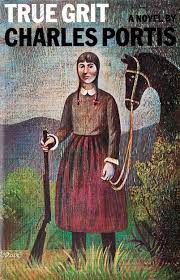 It was a source of some annoyance to Charles Portis that Shakespeare never wrote about Arkansas. As the novelist pointed out, it wasn’t, strictly speaking, impossible: Hernando de Soto had ventured to the area in 1541, members of his expedition wrote about their travels in journals that were translated into English, and at least one of those accounts was circulating in London when Shakespeare was working there in 1609. To Portis, it was also perfectly obvious that the exploration of his home state could have been fine fodder for the Bard: “It is just the kind of chronicle he quarried for his plots and characters, and DeSoto, a brutal, devout, heroic man brought low, is certainly of Shakespearean stature. But, bad luck, there is no play, with a scene at the Camden winter quarters, and, in another part of the forest, at Smackover Creek, where willows still grow aslant the brook.”
 At 53, Suga Free still looks exactly like Suga Free. Honoring his commandment to be fly for life, his hair remains long and luxurious. He’s draped in a custom-made tracksuit with his name emblazoned on the back. The right questions elicit stanzas of profane one-liners, flamboyant slang and coldblooded wisdom. (“Every time I walk out of my house and turn that key in my car, that means I’m finna spend some money,” he laughs. “I’m trying to squeeze a quarter till the eagle screams.”) Ask the wrong question and you don’t want the answer.
 It’s coming. Winds are weakening along the equatorial Pacific Ocean. Heat is building beneath the ocean surface. By July,
  It might feel pretty obvious to you that you’re weak-willed. You feel it, after all – every time you find yourself hitting the snooze button on the alarm when you know you ought to get out of bed; every time you scroll through cat videos on Instagram when you know you ought to be writing; every time you help yourself to a third slice of cake when you know you ought to order a kale smoothie instead. When you find yourself in these situations, there’s often a bit of shame, a bit of guilt, a bit of frustration. In many cases, the subsequent conviction that we’re weak-willed shapes our entire approach to motivating ourselves.
 Patterson, a poet, essayist, and translator, has a good ear for the sonic qualities of the Recherche’s prose. This is particularly notable in the opening of the volume. Finding Time Again begins with one of Proust’s analogies between nature and artifice, couched in a meandering, multiclausal sentence that is, nonetheless, beautifully balanced in its Byzantine way, culminating in one of Proust’s classic, grammatical course corrections in which, after drifting away from the initial subject in a metaphorizing reverie, the sentence begins all over again without ending, usually after the nominal concession of a semicolon: “Toute la journée,” it begins, “all day long” as Patterson renders it, before describing the “slightly too bucolic residence” where the narrator finds himself,
 S
S