
Alissa Bennett in The Paris Review:
 I briefly moved back to Rhode Island following the collapse of my first marriage. It was the summer before I turned twenty-seven, and I spent three months hiding away in my childhood bedroom, grief-damaged and humiliated by the task of trying to figure out who and how I was supposed to be. My husband and I had managed to stay married for only four years, the last of which I spent watching from the sidelines as he enjoyed an unexpectedly rapid and very public rise as an artist. His newly minted success introduced a host of newly minted problems, and I drifted through most of that winter and spring weeping in the utility closet at the boutique where I worked and asking him where I fit into his life so many times that I eventually didn’t fit into it at all.
By that July, we were completely estranged. I was living with my parents when his art dealer sent me a copy of The Age of Innocence, Edith Wharton’s 1920 Pulitzer Prize–winning novel that lays bare the punitive cruelties of a leisure class as expert at collecting things as it was at discarding people. Partially set in the Gilded Age Newport where Wharton herself had summered from the late 1870s through the turn of the century, the book lifts a curtain’s edge on what once happened inside those hedgerow-protected compounds. I never asked the art dealer if he was suggesting that I was a May Welland or an Ellen Olenska, but maybe it doesn’t matter. Maybe he was telling me that all bad marriages are exactly the same, that it makes no difference where you live or what you have, because even glamour cannot temper the pain of being left.
More here.
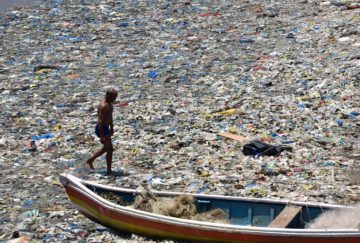 Plastic recycling doesn’t work, no matter how diligently you wash out your peanut butter container. Only about
  In conversation with the novelist
  The people of Rwanda have been tested by tragedy. Nearly thirty years ago, when ethnic Hutu extremists sought to exterminate the country’s Tutsi minority,
  In 1989, a redheaded mermaid made her big-screen debut. She wanted to be part of the above-surface world, where people walk around on (what do you call ‘em?) feet, to wander free on the sand in the sunshine. She fell in love with a handsome, kind prince. After some terrifying obstacles and a near-miss, they married. Ariel got her feet. For Disney, The Little Mermaid was a big hit, the start of a new era for the studio’s animated entertainment. She launched a hot streak that would continue through the 1990s: Beauty and the Beast (1991), Aladdin (1992), The Lion King (1994), Pocahontas (1995), The Hunchback of Notre Dame (1996), Hercules (1997), Mulan (1998), and Tarzan (1999). They were hits then, the early films in particular, and form a foundational plank in billions of lives. A tremendous percentage of people walking around on the planet can sing snatches of “Part of Your World” or “A Whole New World” or “Circle of Life” at the drop of a hat.
 Scientists might be able to keep tabs on the world’s flora and fauna by analysing DNA floating through the air. That’s the conclusion of a study published on 5 June in Current Biology
 What exactly separates the short story from the novel? As the contemporary Scottish writer William Boyd has observed, the issue is more complicated than it might at first appear. Novelists and short story writers, Boyd points out, rely on the same “literary tools,” including character, plot, setting, title, and dialogue, and their outputs—sentences and paragraphs—look the same on the page. The tempting answer is to fall back on the obvious difference: short stories are just shorter than novels.
 In the 1870s, German physician Robert Koch was trying to curtail an epidemic of anthrax that was sweeping local farm animals. Other scientists had seen a bacterium, Bacillus anthracis, in the victims’ tissues. Koch injected this microbe into a mouse – which died. He recovered it from the dead rodent and injected it into another one – which also died. Doggedly, he repeated this grim process for over 20 generations and the same thing happened every time. Koch had unequivocally shown that Bacillus anthracis caused anthrax.
 It is strange to think of Guinness World Records – a business named after a beer company, which catalogues humanity’s most batshit endeavours – as the kind of entity that could sell out. At first glance, it seems like accusing Alton Towers or Pizza Express of selling out. But the deeper I delved into the world of record breaking, the more sense it made. In spite of its absurdity, or maybe because of it, record breaking is a reflection of our deepest interests and desires. Look deeply enough at a man attempting to break the record for most spoons on a human body, or the woman seeking to become the oldest salsa dancer in the world, and you can find yourself starting to believe that you’re peering into humanity’s soul.
 Ellsberg, snowy-haired but energetic despite the cancer — renowned for his eloquence, he still speaks in perfect paragraphs — was calm, even jovial, during what his son, Robert Ellsberg, said would be his last interview. Based on his experience in the covert world, Ellsberg sees a direct line between the deceptions and lies that led to the Vietnam War — and 58,000 American deaths — and the deceptions and lies that justified the Iraq war. This high-level deceit, Ellsberg says, extends to America’s current drone war policy around the world, in which the government has
  Sarah Arkebauer in The Baffler:
 Cedric Durand in Sidecar:
 Isabel Estevez in Phenomenal World: