
Iris Kulbatski in The Scientist:
 Scent is a powerful time portal, reviving long-forgotten memories in stark detail. The human brain begins to build a library of smells in infancy, which grows into adulthood. For people with hereditary hyperosmia—a rare, heightened ability to detect and discern scents—this smell repository can be vast and remarkably fine-tuned. Joy Milne, a retired nurse, patient advocate, researcher, and grandmother, discovered this superpower as a child.1 Milne’s grandmother—also a super sniffer—trained her to identify scent signatures, as her own mother had taught her. As a nurse, Milne acquired an extensive clinical scent library, recognizing patterns between disease symptoms and diagnoses. After her late husband’s Parkinson’s disease (PD) diagnosis, she realized that the musky smell he wore at the nape of his neck for over a decade was an early warning sign and that she could detect it in other PD patients.
More here.
 6
6

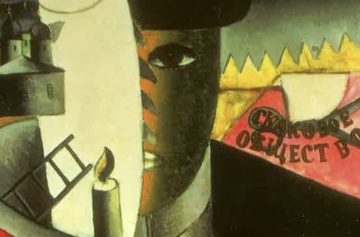 Bulgakov’s Moscow is my Moscow. Zemlyanoy Val, my street, is a few trolleybus stops away from his—Sadovaya. On evening walks of nearly six decades ago, I listened to my awe-struck parents talk about the seemingly unpublishable masterpiece of a forgotten writer improbably seeing the light of day.
 Scenario 1: Propaganda and bad actors
 I have never in my life ‘loved’ any people or collective,” Hannah Arendt famously wrote in a 1963 letter to Gersom Scholem, embracing Scholem’s accusation that she was a daughter of the Jews who failed to love the Jewish family as a whole. Besides the circularity and the meanness entailed in such self-love, Arendt made clear, the love of an abstraction made no sense to her: “I indeed love ‘only’ my friends and the only kind of love I know of and believe in is the love of persons.” Daniel Boyarin’s latest book, The No-State Solution: A Jewish Manifesto, can be read as the reply that Scholem, who stopped talking to Arendt, never sent—an attempt to describe a Jewish love of the Jewish people that somehow turns on the love of persons.
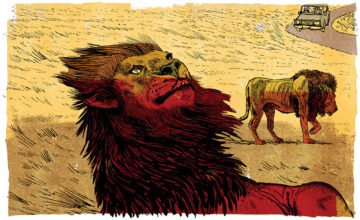 Even the warthogs in Botswana are incredibly charming. Everything is very distinct and pure. The Okavango Delta is an alluvial plain, sort of like a Louisiana swamp but with incredibly non-humid clear air. Especially compared to the camp on the Zambezi River, which was foreboding, with elephants constantly crushing the dry gnarled branches.
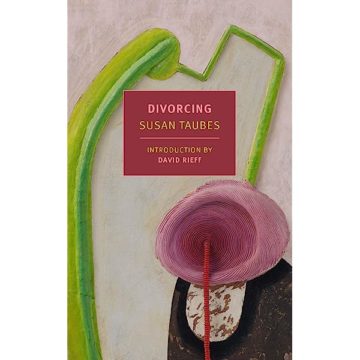 Susan Taubes’s novel “Divorcing” (1969) begins with a report in France-Soir of a femme décapitée, a woman whose head was cut clean off when she was hit by a car in the Eighteenth Arrondissement of Paris. The woman, Sophie Blind, is, like Taubes, the daughter of a psychoanalyst, the granddaughter of a rabbi, and the estranged wife of a scholar and a rabbi. She is also the mother of mostly male children, and the lover of Gaston, Roland, Alain, Nicholas, and Ivan. In flight from her married life in New York, she has just moved to Paris with her children. She is killed before she has a chance to finish arranging the furniture in her new apartment.
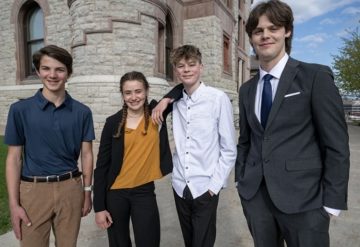 Climate science will get its day in court this week as lawyers for Rikki Held and 15 other young people argue that the state of Montana’s environmental policies promote fossil fuels, in violation of their right to a ‘clean and healthful environment’. That right is enshrined in the state’s constitution, making the climate case — Held v. Montana — the first of its kind to go to trial in the United States, and the latest example of frustrated citizens worldwide taking legal action to force their governments to act on climate change.
 On Nov. 30 last year, OpenAI released the
  J.K. Rowling is not a witch. She acquitted herself well in her recent “trial,” by which I mean the podcast series hosted by
  Adam Mastroianni was always bothered by anecdotal claims that people are becoming less kind, respectful and trustworthy over time. So he took a deep dive into such claims: he wrote a PhD dissertation.
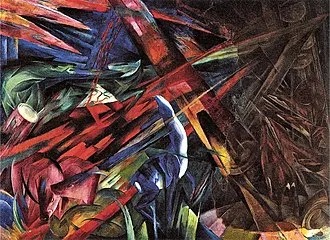 I’ve recently been corresponding with the erudite, recondite and just plain delightful arts writer Morgan Meis, initially about our mutual passion for
  A new study estimates the weight of New York City’s buildings at 1.68 trillion pounds and says that, little by little, they’re sinking into the ground. The Big Apple could ultimately share the same fate as Venice, which is
  On a chilly holiday Monday in January 2020, a medical milestone passed largely unnoticed. In a New York City operating room, surgeons gently removed the heart from a 43-year-old man who had died and shuttled it steps away to a patient in desperate need of a new one.