
Jill Lepore in The New Yorker:
 On November 4, 1963, the Beatles played at the Prince of Wales Theatre, in London, exuberant, exhausted, and defiant. “For our last number, I’d like to ask your help,” John Lennon cried out to the crowd. “Would the people in the cheaper seats clap your hands? And the rest of you, if you’d just rattle your jewelry.” Two weeks later, the band made their first appearance on American television, on NBC’s “Huntley-Brinkley Report.” “The hottest musical group in Great Britain today is the Beatles,” the reporter Edwin Newman said. “That’s not a collection of insects but a quartet of young men with pudding-bowl haircuts.” And, four days after that, “CBS Morning News with Mike Wallace” broadcast a four-minute report from “Beatleland,” by the London correspondent Alexander Kendrick. “The Beatles are said by sociologists to have a deeper meaning,” Kendrick reported. “Some say they are the authentic voice of the proletariat.” Everyone searched for that deeper meaning. The Beatles found it hard to take the search seriously.
“What has occurred to you as to why you’ve succeeded?” Kendrick asked Paul McCartney.
“Oh, I dunno,” he answered. “The haircuts?”
More here.
 [W]ith the victories of science, technology, and capitalism, we discovered that the cosmos of enchantment was unreal, or at best, utterly unverifiable; we cast most of the spirits into oblivion, and made room for their withered but venerable survivors in our chambers of private belief. Among the North Atlantic intelligentsia, at least, this story in some form is so widely hegemonic that even religious intellectuals accept it. For instance, in A Secular Age (2007), Charles Taylor—a practicing Catholic—affirms, albeit in his own peculiar way, the consensus of “disenchantment.” In the pre-modern epoch of enchantment, Taylor explains, the boundary that separated our world from the sacred was porous and indistinct; traffic between the two spheres was frequent, if not always desired or friendly. “Disenchantment” began with the church’s rationalization of doctrine and the growing awareness that Christianity was not the world’s only religion. Now, having left the enchanted universe behind, we disenchanted dwell within the moral and ontological parameters of an “immanent frame”: the world as apprehended through reason and science, bereft of immaterial and unquantifiable forces, structured by the immutable laws of nature and the contingent traditions of human societies.
 Borges famously singles out for praise Menard’s description of “truth’ whose mother is history, rival of time, depository of deeds, witness of the past …” (CF, 94). A rejected draft might have said something like this: “truth, whose father is history,” “preserver of time ….” Then “father” and “preserver” crossed out and replaced with “mother” and “rival,” the point of the revision being to express Menard’s thought better and also to make sure the text in which he expressed it coincided (“word for word and line for line”) with what Cervantes had written. Of course, it’s hardly likely that in expressing his own thoughts he would find himself doing so in Cervantes’s words, but that’s the problem that infinite time (like the monkeys and the typewriters or being “immortal” [CF, 91]) is supposed to solve. However, the idea that he could, in revising, check to see how he was doing is a deeper problem. You wouldn’t know that truth whose father is history was wrong unless you checked, but if you checked and then corrected, you’d be copying. So, you could never check. But if you didn’t know what the original said, how could you understand yourself to be trying to reproduce it? The difficulty of Menard’s project, in other words, is not exactly how hard it is to succeed in producing even a few sentences that coincide with rather than copy Cervantes but how hard it is even to try, how hard it is even to know what trying is.
 In 1923, the year after James Joyce’s novel Ulysses was first published in its complete form, T. S. Eliot wrote: “I hold this book to be the most important expression which the present age has found; it is a book to which we are all indebted, and from which none of us can escape.” Although Ulysses was not yet widely available at the time—its initial print runs were minuscule and it would be banned repeatedly by censorship boards—Eliot was writing in defense of a novel already broadly disparaged as immoral, obscene, formless, and chaotic. His friend Virginia Woolf had described it in her diary as “an illiterate, underbred book … the book of a self-taught working man, & we all know how distressing they are.” In comparison, Eliot’s praise is triumphal. “A book to which we are all indebted, and from which none of us can escape.” And yet this proposed relationship between Ulysses and its readers may not seem altogether inviting either. Do we really want to read a novel in order to experience the sensation of inescapable debt? In the century since its publication, Ulysses has of course become a monument not only of modernist literature but of the novel itself. But it’s also a notoriously “difficult” book. Among all English-language novels, there may be no greater gulf between how much a work is celebrated and discussed, and how seldom it is actually read.
 We now have a good explanation for how our brain keeps track of a conversation while we are in a loud, crowded room, a discovery that could improve hearing aids.
 Berlin in the 1920s was ablaze with sexual and gender freedom. Magazines at newsstands boasted covers featuring people who were transgender and clad scantily. Their headlines touted stories on “Homosexual Women and the Upcoming Legislative Elections,” and offered, on occasion, homoerotic fiction inside its pages.
 To tackle the world’s mounting plastics problem, humans may have to use every tool in the arsenal—even microscopic bacteria and fungi. High in the Swiss Alps and the Arctic, scientists have discovered microbes that can digest plastics—importantly, without the need to apply excess heat. Their findings, published this month in the journal
  In 2003, Ken Jennings was a twenty-nine-year-old software engineer, living in a suburb of Salt Lake City with his wife and young son, when his old college roommate suggested that they try out for “Jeopardy!” A year later, Jennings, a trivia enthusiast who’d grown up watching the show, made it on the air, had a seventy-four-game winning streak, and won more than $2.5 million, becoming the winningest “Jeopardy!” contestant of all time. (He still is: a year and a half ago, Amy Schneider, the second-winningest, won forty consecutive games.) After Alex Trebek, the show’s beloved host, died in 2020, the show endured an uneasy era of temporary hosts and executive blunders. But now Jennings helms the show, in rotation with Mayim Bialik—and “Jeopardy!,” that reliable source of answers-in-the-form-of-a-question comfort, once again feels like it’s in good hands. Jennings is a natural, ably enhancing the game’s inherent charms with warmth and wit, fostering an atmosphere of collegial curiosity. He even manages to make the show’s personal-anecdote segment the least awkward it’s ever been.
 Maybe one sign of being an important writer is how much attention you receive when you die. Tributes to and remembrances of Martin Amis, who died last week at 73, have been appearing all over the place, like fresh bouquets of sympathy sent to a funeral. I almost found myself lazily inserting the phrase “after a long battle with cancer” to specify the conditions of his demise, but since Amis was famously at war with cliches, this would not do. Amis refused to hide his taste, his opinions, and above all, his style under a bushel, and this is why people loved him on both sides of the Atlantic.
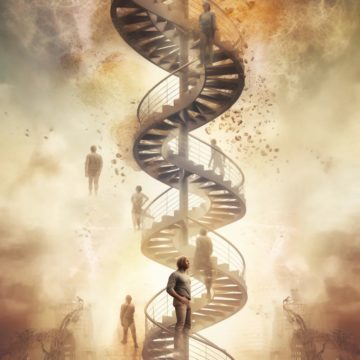 Will we ever decipher the language of molecular biology? Here, I argue that we are just a few years away from having accurate in silico models of the primary biomolecular information highway — from DNA to gene expression to proteins — that rival experimental accuracy and can be used in medicine and pharmaceutical discovery.
 At the end of the Korean war in 1953, captured American soldiers were allowed to return home. To widespread amazement, some declined the offer and followed their captors to China. A popular explanation quickly emerged. The Chinese army had undertaken an unusual project with its prisoners of war: through intense and sustained attempts at persuasion—using tactics such as sleep deprivation, solitary confinement, and exposure to propaganda—it had sought to convince them of the superiority of communism over capitalism. Amid the general paranoia of 1950s McCarthyism, the fact that such techniques had apparently achieved some success produced considerable alarm. The soldiers had been “
 When an ice cube melts and attains equilibrium with the liquid, physicists usually say the evolution of the system has ended. But it hasn’t — there is life after heat death. Weird and wonderful things continue to happen at the quantum level. “If you really look into a quantum system, the particle distribution might have equilibrated, and the energy distribution might have equilibrated, but there’s still so much more going on beyond that,” said
 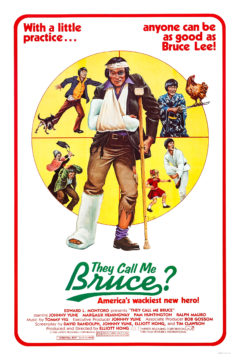 In the conventional canon of Asian American cinema, you’re unlikely to find They Call Me Bruce mentioned. This is in spite of the fact that it arrived right after Wayne Wang’s lauded debut, Chan Is Missing (1982), as arguably the second Asian American feature to ever gain theatrical distribution (and probably the first to turn a substantial profit). This makes its absence from the canon all the more curious, and both They Call Me Bruce and its primary creators are overdue a reconsideration.