
Jim Ruland and Terese Svoboda in the Los Angeles Review of Books:
 TERESE SVOBODA: At first, Make It Stop reads like a fast-paced action adventure with a superhero, but the mission fails, people die. Imagine that in a Bond film! So, while the reader’s gliding along in the narrative, lots of plot builds up, people struggle with sadness and what it’s like to be a hero, particularly an unknown super-ish hero. I love the term “powerless to unfuck” that you use to underscore their struggle. More and more of these heroes in media are presented with complex personalities. Were you influenced by that trend?
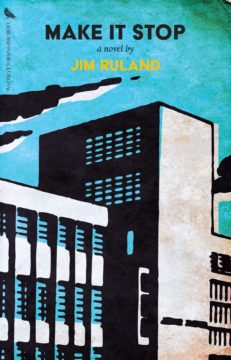 JIM RULAND: I don’t think so. You see a lot of that stuff in superhero movies, and before the pandemic I’d go see them with my daughter, but I read those comic books when I was her age in the ’80s. I knew from the very beginning that the vigilante group that my character Melanie was a part of would be highly dysfunctional, but I didn’t want it to be superficial. In blockbuster movies, there’s a scene or two where the main character is allowed to be sad and then it’s time to save the world again. Melanie’s world has been ripped apart—much like the narrator of Dog on Fire. What forces shaped your novel?
More here.
 Nineteenth-century final causes were ‘barren virgins’, an aphorism attributed to Francis Bacon, but twentieth-century teleology was a ‘mistress’, an adage of uncertain provenance. A study of historical uses of these gendered metaphors is used to probe changing attitudes toward teleological reasoning in biology. At the beginning of the nineteenth-century, invocations of final causes were commonplace but such idioms are rarely used at its end. This change is commonly attributed to publication of the Origin of Species in 1859 which completed the ejection of final causes from biology. Charles Darwin, however, openly and unashamedly uses teleological reasoning and language in his botanical research. He believed he had naturalized, rather than eliminated, the concept of final cause. A more important reason for the eclipse of final causes was the shift within physiology toward the explanatory modes of the physical sciences which had long held final causes in disrepute. The rejection of final causes as explanatory principles occurred despite a persistence of teleological reasoning that was experienced as a ‘guilty secret’ likened to a mistress that a physiologist could not give up but would not acknowledge in public. Biology’s ambivalent attitude toward teleological explanations persists in the twenty-first century.
 By the middle of the nineteenth century, such signs had become a familiar sight in many parts of Germany. In The Intercepted Love Letter, an 1850s painting by the Munich-based artist Carl Spitzweg, a young man is lowering a secret note from a garret window to his beloved sitting at the window one floor below. On the facade of the house, between the two floors, can be seen the fire mark of the Munich insurer Deutscher Phoenix, which bears a depiction of the mythical bird. Interestingly, the placing of the fire mark must have been a deliberate painterly choice, as such marks were never placed at such a height. Prominently displayed in this unusual location, the sign is perhaps intended to indicate to the viewer the social station of the young woman, who clearly comes from a good (Phoenix-insured) home. But it is also a risk-averse home, one that presumably would not encourage fiery love, love that shuns middle-class calculations about long-term security, financial and otherwise. It has been noted, however, that the pair of doves (read: lovebirds) to the right of the fire mark are presented slightly enlarged, perhaps an indication that, unlike fire, love finally cannot be extinguished. Whichever reading one subscribes to, Spitzweg’s painting figures the fate of love in the age of modern insurance, a history that has yet to be written.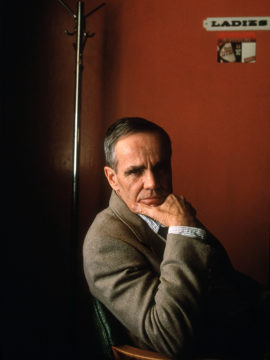
 Y
Y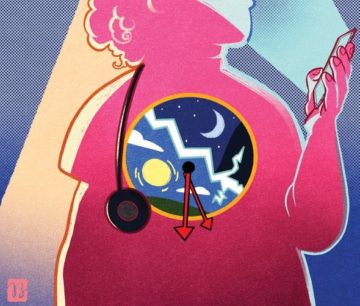 I usually get up by 7 A.M. and am in bed by 10 P.M. I tend to eat meals at the same times of day, too. This may sound a little dull, but it’s essential for my productivity. It’s also a schedule that rarely disrupts my body clock. And a steady clock, it turns out, just might help me and many other people avoid cancer and some other diseases, according to new research.
 But this week, like so many of us, I’ve been thinking about the other direction that can apply to that comment about Silicon Valley—what happens when the goal, having achieved so much else, is not extending life, but risking it? Because if placing a bet on living forever is one leisure activity to put your vast wealth toward, another is extreme feats of travel. The rich people of today
  B
B MIRCEA
  CONNIE CONVERSE is remembered now, if at all, as a rediscovered relic of blog-era music oddity. Like Rodriguez, Donnie and Joe Emerson, Sibylle Baier, Lavender Country, or Converse’s near-contemporary and kindred spirit, Molly Drake, the cracks she slipped through became her calling card. Converse was notable for preserving a greater level of obscurity more extreme than any of the others: recordings never commercially available; no connections to any scene or famous figure; being a guitar-playing singer-songwriter (and home-taper) in the early 1950s, before such a thing existed, who played only among friends before dropping out of music in the 1960s and ultimately disappearing shortly after. It was not until the 2000s that some of her work was finally made available for those who were never in a room with her.
 Except for a painful one-year stint as a high-school teacher of philosophy in his native Romania, Emil Cioran never had a real job. ‘I avoided at any price the humiliation of a career,’ he observed toward the end of his life. ‘I preferred to live like a parasite [rather] than to destroy myself by keeping a job.’ When he chose to move to France, in 1937, it mattered to him that Paris was ‘the only city in the world where you could be poor without being ashamed of it, without complications, without dramas.’
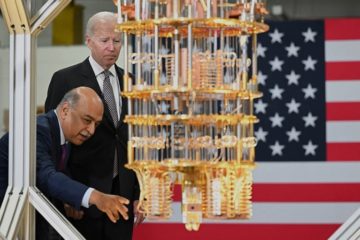 Four years ago, physicists at Google claimed their quantum computer could outperform classical machines — although only at a niche calculation with no practical applications. Now their counterparts at IBM say they have evidence that quantum computers will soon beat ordinary ones at useful tasks, such as calculating properties of materials or the interactions of elementary particles.
 The
The