
Aaron Gell in The New Republic:
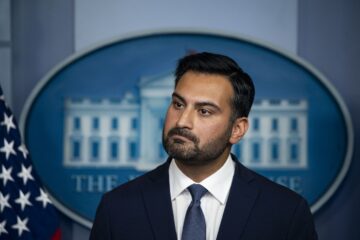 Ali Zaidi, the White House’s thirtysomething national climate adviser, stood before a lectern in a packed conference hall at the NYU School of Law wearing a crisp navy suit, a blue tie, and just enough stubble to look roguish and anti-establishment but not slovenly. It was September 18, day 2 of Climate Week NYC, and Zaidi was in town to tout the administration’s environmental accomplishments. He began by highlighting the critical role the nation’s youth, like the law students arrayed before him, were playing in the climate movement. “It’s really been the voices of young people who have organized and agitated for change—” he was saying when audience member Sim Bilal, 21, rose to his feet.
A member of the newly launched pressure group Climate Defiance, Bilal, an L.A.-based community organizer, wearing a black watch cap and an overstuffed backpack, had come to make his own voice heard. He was young. He was agitating.
“Will you publicly ask Biden to oppose the Willow project?” he demanded, referring to ConocoPhillips’s plan to drill for oil in a 499-acre patch of Alaskan tundra. “You guys have protected 13 million acres of the Arctic, but that’s not enough. So, yes or no?”
More here.
 R
R In 1974, Harry Stein and Thomas Moore, young editors who’d worked together at New Times, a glossy biweekly in New York, had an idea: Let’s start a magazine—in Paris. Moore had recently come into a windfall when one of his articles, about an bank robbery in Brooklyn, became the basis for the film Dog Day Afternoon. He moved to Paris, following his then girlfriend; the relationship ended, but he stayed. Stein had previously lived in Paris, writing features for the International Herald Tribune, and also had a European girlfriend at the time. At first, the idea seemed impossible: Maybe we should sell baseball caps instead of starting a magazine, Stein thought. But Moore had a vision. He stole the name from the café outside his living room window, stole the masthead logo from the subway sigh, and their publication was born: The Paris Metro.
 On her 25th birthday in February 1947, Felicia Montealegre sent a
  As a health reporter who’s been following nutrition news for decades, I’ve seen a lot of trends that made a splash — and then sank. Remember olestra, the Paleo diet and celery juice? Watch enough food fads come and go, and you realize that the most valuable nutrition guidance is built on decades of research, in which scientists have looked at a question from multiple perspectives and arrived at something like a consensus.
 Hanif Kureishi has spoken candidly of how his sense of self and privacy have been “completely eradicated” after a fall on Boxing Day last year left him unable to use his hands, arms or legs.
 People often think they know what causes chronic depression. Surveys indicate that more than 80% of the public blames a “chemical imbalance” in the brain. That idea is widespread in pop psychology and cited in
  It is worth remembering the vast majority of what we call free-speech issues have little basis in the First Amendment, which only forbids the abridgment of speech by the government, not private organizations like magazines, cultural centers, or Hollywood production companies. In most states, for instance, it is perfectly legal for employers to fire workers for speech, as a
  In “
In “ B
B Our conveniently vague or unrealistic
 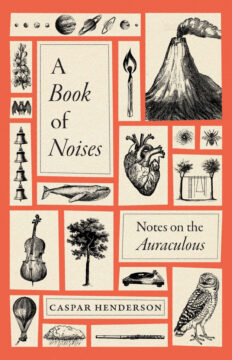 Did you know that sperm whales make sounds using “lips” located near their blowholes — and that those sounds are so loud they could burst the eardrums of a human diver at close range? Or that, near the start of the Covid-19 lockdowns in Britain in 2020, residents on newly quiet streets became aware of “noisy lovemaking” by amorous hedgehogs? Or that, according to legend, churchbells in the English coastal town of Dunwich, which largely disappeared into the sea following storm surges in the 14th century, can still be heard when the tide is just right?
 Two years ago, I gave an academic talk via Zoom on the need to limit work in order to combat the culture of burnout in the United States. Following my presentation, a senior scholar had more of a comment than a question for me. He said that “we” needed to acknowledge our privileged status among workers. When academics criticize the American work ethic, he added, we ought to recognize that most workers “can’t afford to burn out.” Burnout, I took him to be saying, was a luxury, and to complain about it was like flaunting your wealth before someone desperately poor.