Category: Recommended Reading
Sanitizing Heidegger
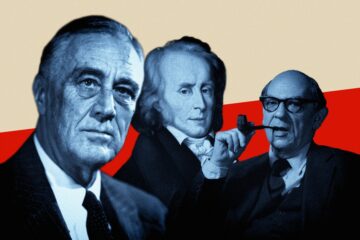
Richard Wolin at the LARB:
The controversies that have haunted the publication of Heidegger’s work are significant, insofar as they concern not merely occasional and understandable editorial lapses but instead suggest a premeditated policy of substantive editorial cleansing: a strategy whose goal was to systematically and deliberately excise Heidegger’s pro-Nazi sentiments and convictions. As Heidegger scholar Otto Pöggeler observed appositely, “Heidegger is like a fox who sweeps away his traces with his tail.”
The problems began with the postwar publication of Heidegger’s lecture courses from the 1930s, as Germany and Europe struggled to climb out from under the ruins of the “German catastrophe.” In Introduction to Metaphysics (1953), Heidegger had falsified his disturbing paean to the “inner truth and greatness of National Socialism,” adding a parenthetical clarification that referenced “the encounter between planetary technology and modern man.” When queried about the authenticity of the passage in question, Heidegger doubled down on his initial duplicity, falsely claiming that the parenthetical remarks had been in the original manuscript but that he had omitted them when the course was first presented in 1935. When, at a later point, scholars sought to establish the veracity of Heidegger’s claim by consulting the original manuscript, they were taken aback to find that the page in question had inexplicably gone missing.
more here.
Why It Took 64 Years to Make a Barbie Movie
Eliana Dockterman in Time:
Barbie is an icon, perhaps the best known toy in the world. As Margot Robbie points out in an interview with me for a TIME cover story, the word “Barbie” has the sort of enviable global recognition only achieved by brands like Coca-Cola. Since her debut in 1959, she has been a staple of the culture, a touchpoint for pop icons like Nicki Minaj, and has become synonymous with a specific shade of pink.
And yet it has somehow taken until 2023 for Barbie to make her live-action film debut. On July 21, the doll will finally grace the big screen. While there have been a number of animated Barbie movies and series on Nickelodeon and streaming services, Barbie will be the first live-action movie starring the doll to premiere in theaters. Margot Robbie will play a version of Barbie, but so will Issa Rae, Kate McKinnon, Hari Nef, Alexandra Shipp, and a number of other actors. Ryan Gosling will play just one of many Kens. Every image from the film, beginning with paparazzi shots of Robbie and Gosling rollerskating in spandex, has been dissected online, and Barbiecore has never been hotter.
More here.
Squeak & Gibber: Explanations we use to grapple with our own mortality
John Crowley in Lapham’s Quarterly:
The Hasidim more than other Jewish sects are committed to a life after death—some believe that dead souls can appear to the living. In the oldest Jewish traditions, though, there is little emphasis on a next life; there are almost no revenants or ghosts in the Hebrew Bible, and no afterlife that impresses us as being more than a name for death itself—Sheol is as featureless and blind and inactive as the grave it stands for. The tradition of the soul’s escape from the earth and the body through the spheres derives from Neoplatonic philosophers of late antiquity; I don’t know how it might have become implicated in the funerary rites of the Lubavitcher Hasidim, and no other rabbi I’ve talked to has ever heard of this explanation for the practice, but I was there on that day, giving aid to a soul on its journey. And yet I also know that on the anniversaries of his death, the man I helped to bury is visited by his relations, who place small rocks on his headstone, and pray that he may rest there in peace.
I sometimes think that humanity’s greatest feats of rationality lie not in the useful discriminations and distinctions made by physics or philosophy within the continuum of life and time but rather in the inventions and explanations we have devised to grapple with the unresolvable ambiguities of our mortality.
More here.
Friday, July 7, 2023
The Case For Effective Altruism
Matt Lutz in Persuasion:
In Peter Singer’s paper, “Famine, Affluence, and Morality,” Singer defends two core moral propositions. The first is that “suffering and death from lack of food, shelter, and medical care is bad.” That should be uncontroversial. Singer doesn’t even argue for it, simply saying that if you disagree with that claim, you’re not his target audience. The second proposition is that “if it is in our power to prevent something bad from happening, without thereby sacrificing anything of comparable moral importance, we ought, morally, to do it.”
Singer illustrates this second proposition with the following thought experiment: suppose you are walking near a shallow pond and see a young child drowning. Unless someone jumps in to rescue the child, he will die. If you jump in, you can easily save him. However, you’re wearing very nice, expensive clothes, and those clothes will be ruined if you jump in. If you save the drowning child, you will prevent something bad from happening, and you will have to sacrifice to do it. But the thing that you will sacrifice, your nice clothes, is not of comparable moral importance to the life of a child. So you ought, morally, to save the child. If you don’t, you’re doing something profoundly morally wrong.
More here. And the case against EA, also in Persuasion, is here.
India’s approach to global warming cannot mirror the West
Usha Alexander in Shunya’s Notes:
Given India’s long coastline and its total reliance on predictable patterns of rainfall and steady rates of snow-replenished, glacial meltwater to feed its people, the mounting threats of climate change are real and urgent. It behoves us, as a nation, to take aggressive action to mitigate these threats by reducing our use of coal, oil and gas, by preserving and expanding mature forests. But, given that we demand more electricity and gasoline to power our increasingly urban, consumerist lives while pursuing a model of development based on pulling more people into energy-intensive lifestyles, the central government has declared its intention to more than double energy generation capacity by 2030, mostly by rapidly expanding low-carbon energy sources. As a low-emissions, renewable resource, the Polavaram dam might be regarded as an example of “green” energy, never mind its immense ecological and human costs.
But, to get a real handle on our predicament, we cannot ignore these costs. We must reckon with the underlying reality that our mounting harms to natural systems have thrust us into a condition of ecological overshoot. This means we are depleting essential resources—perhaps most alarmingly, healthy soils—by annihilating living systems, extracting resources and producing pollution at a rate faster than planetary systems can replenish themselves, faster than natural geochemical cycles can restabilise themselves or the beleaguered biosphere can regain its integrity.
More here.
The Long Reach of China’s Demographic Destiny
Yi Fuxian in Project Syndicate:
When Western leaders welcomed China into the World Trade Organization in 2001, most assumed that they were creating the conditions for eventual democratization. A growing Chinese middle class, they assumed, would demand greater accountability from the government, ultimately creating so much pressure that the autocrats would step aside and allow for a democratic transition. This political fantasy underpinned the Sino-American relationship for decades.
But it wasn’t to be. The Communist Party of China (CPC) has been regressing on all fronts, reasserting more top-down control over the economy and tightening censorship and other forms of social and political control. It has been led down this path by the legacy of the one-child policy, which fundamentally reshaped the country’s demographics and economy.
More here.
Orson Welles on Houdini in Russia, and on Cold Reading
What an Owl Knows
Simon Worrall at The Guardian:
The book is not just about owls, though, but about the people who study them. There are many scientists and conservationists, who have, like Ackerman, fallen under the spell of these endearing creatures. People like José Luis Peña, a neuroscientist at the Albert Einstein College of Medicine, in New York, who has discovered that a barn owl’s sound localisation system relies on sophisticated mathematical computations to pinpoint its prey. Or zoomusicologist Magnus Robb, who studies hoots.
“If anyone knows anything about anything,” Winnie-the-Pooh famously remarked, “it’s Owl who knows something about something.” And it turns out, owls know a lot. Equipped with super-sensitive hearing, great grey owls in the far north are capable of detecting and catching voles deep beneath the snow by sound alone. Scientists have even discovered that owls process sound in the visual centre of their brains, so they may actually get a “picture” of the environment they are hearing.
more here.
Effing Philosophy
Jennifer Szalai at the NY Times:
When setting out to write “A Terribly Serious Adventure: Philosophy and War at Oxford, 1900-1960,” Nikhil Krishnan certainly had his work cut out for him. How to generate excitement for a “much-maligned” philosophical tradition that hinges on finicky distinctions in language? Whose main figures were mostly well-to-do white men, routinely caricatured — and not always unfairly — for being suspicious of foreign ideas and imperiously, insufferably smug?
Krishnan, a philosopher at Cambridge, confesses up front that he, too, felt frustrated and resentful when he first encountered “linguistic” or “analytic” philosophy as a student at Oxford. He had wanted to study philosophy because he associated it with mysterious qualities like “depth” and “vision.” He consequently assumed that philosophical writing had to be densely “allusive”; after all, it was getting at something “ineffable.” But his undergraduate tutor, responding to Krishnan’s muddled excuse for some muddled writing, would have none of it. “On the contrary, these sorts of things are entirely and eminently effable,” the tutor said. “And I should be very grateful if you’d try to eff a few of them for your essay next week.”
more here.
Nikhil Krishnan on the History and Future of Analytic Philosophy
Shadows at Noon: The South Asian Twentieth Century – charming, genre-defying study
William Dalrymple in The Guardian:
The sudden rise of India over the past few years has taken many western observers by surprise. The Indian economy has quadrupled in size in a generation. Its ancient reputation as a centre for mathematics and scientific skills remains intact, and Indian software engineers increasingly dominate Silicon Valley. India now has the largest population in the world and is clearly on its way to becoming the third economic superpower. Its economy overtook the UK last autumn and will overtake Germany and Japan within the next decade. The only questions are whether it is the US, China or India that will dominate the world by the end of this century, and what sort of India that will be.
Little of this would have surprised our ancestors who first sailed to India with the East India Company at the time of Shakespeare. India then had a population of around 150 million – about a fifth of the world’s total – and was producing about a quarter of global manufacturing; indeed, in many ways it was the world’s industrial powerhouse and the leader in manufactured textiles. The idea that India was ever a poor, famine-struck country is a relatively recent one, dating only from the period of British rule: historically, South Asia was always famous as the richest region of the globe, whose fertile soils gave two harvests a year and whose mines groaned with mineral riches.
More here.
Seven Amazing Accomplishments the James Webb Telescope Achieved in Its First Year
Dan Falk in Smithsonian:
The James Webb Space Telescope, the largest and most sophisticated space observatory ever built, has been sending back images and data for almost a full year now—and in that time it has delivered a treasure trove of information about everything from stars and planetary systems in our own galactic neighborhood to distant galaxies that formed when the universe was a tiny fraction of its current age. Webb has also sent back stunning images that surpass those garnered by its famous predecessor, the Hubble Space Telescope.
Webb and Hubble are quite different instruments. For starters, while Hubble is primarily sensitive to visible light, Webb records infrared light that’s invisible to the unaided eye. These longer wavelengths of light pass through clouds of gas and dust that block visible light, letting the telescope peer past such obstacles. It also has a size advantage: While Hubble’s main mirror is 8 feet across, Webb employs an array of 18 small hexagonal mirrors that function like a single mirror 21 feet across.
More here.
Thursday, July 6, 2023
Don DeLillo’s Cold War
Siddhartha Deb in The Nation:
An assassin works from a partial understanding of the world. If not literally a hashishi, as suggested by the word’s etymology, an assassin must nevertheless see the world in tunnel vision, his victim viewed through the lens of a scope. The vast, complex network of humanity to which he and his victim belong, with contending narratives and blurred individual motives, cannot be allowed to exist. To do so would be to fail as an assassin.
A Don DeLillo novel grasps both the assassin’s monomania and the contradictory, counterintuitive world of which it is a part. It is capable of displaying fidelity to both perspectives, brushing one against the other to edge its way toward a fictional truth that neither can uncover on its own. Six novels published in the 1970s established this principle, but the approach truly came into its own only with Libra (1988), DeLillo’s ninth novel. “Hashish. Interesting, interesting word,” a character says to Lee Harvey Oswald as the novel uncoils toward its climactic moment in Dallas with the Kennedy assassination. “Arabic. It’s the source of the word assassin.”
More here.
Nature, Toothless and Declawed
Clare Coffey in The New Atlantis:
We cannot be sure what animals are, because we cannot be sure what we are. We are beasts among beasts, and something qualitatively different. The boundary between these two kinds of being is always ready to dissolve by moonlight.
But that boundary feels bright and clean in Martha Nussbaum’s latest rationalizing project, Justice for Animals, even if she draws it in a different place. The book is an intriguing attempt to find a simultaneously comprehensive and minimally metaphysically committed account of what we owe animals. It is also a plea, with dramatic upshots on questions like the justice of humans eating animals — even the justice of animals eating animals.
More here.
On Race and Academia
John McWhorter in the New York Times:
The Supreme Court last week outlawed the use of race-based affirmative action in college admissions. That practice was understandable and even necessary 60 years ago. The question I have asked for some time was precisely how long it would be required to continue. I’d personally come to believe that preferences focused on socioeconomic factors — wealth, income, even neighborhood — would accomplish more good while requiring less straightforward unfairness.
But many good-faith people believed, and continue to believe, that it is a clear boon to society for universities to explicitly take race into account. The arguments for and against have been made often, sometimes by me, so here I’d like to do something a little bit different.
More here.
David Albert & Sean Carroll: Quantum Theory, Boltzmann Brains, & The Fine-Tuned Universe
All possible worlds
Timothy Andersen in aeon:
Every life contains pain. Even the perfect life, the life where you have everything you want, hides its own unique struggles. Writing in The Genealogy of Morals (1887), Friedrich Nietzsche said: ‘Man, the bravest animal and most prone to suffer, does not deny suffering as such: he wills it, he even seeks it out, provided he is shown a meaning for it, a purpose of suffering.’ A life apparently perfect but devoid of meaning, no matter how comfortable, is a kind of hell.
In our search for meaning, we fantasise about the roads not taken, and these alternative lives take on a reality of their own, and, perhaps, they are real. In his novel The Midnight Library (2020), Matt Haig explores this concept. In it, a woman named Nora Seed is given the chance to live the lives she would have lived had she made different choices. Each life is a book in an infinite library. Opening the book takes her to live in that other world for as long as she feels comfortable there. Each possible world becomes a reality.
More here.
God and Evil with Yujin Nagasawa
How Samuel R. Delany Reimagined Sci-Fi, Sex, and the City
Julian Lucas at The New Yorker:
In the stellar neighborhood of American letters, there have been few minds as generous, transgressive, and polymathically brilliant as Samuel Delany’s. Many know him as the country’s first prominent Black author of science fiction, who transformed the field with richly textured, cerebral novels like “Babel-17” (1966) and “Dhalgren” (1975). Others know the revolutionary chronicler of gay life, whose autobiography, “The Motion of Light in Water” (1988), stands as an essential document of pre-Stonewall New York. Still others know the professor, the pornographer, or the prolific essayist whose purview extends from cyborg feminism to Biblical philology.
There are so many Delanys that it’s difficult to take the full measure of his influence. Reading him was formative for Junot Díaz and William Gibson; Octavia Butler was, briefly, his student in a writing workshop. Jeremy O. Harris included Delany as a character in his play “Black Exhibition,” while Neil Gaiman, who is adapting Delany’s classic space adventure “Nova” (1968) as a series for Amazon, credits him with building a critical foundation not only for science fiction but also for comics and other “paraliterary” genres.
more here.