
Dan Gardner at PastPresentFuture:
 Good news for Joe Biden this week. Job gains beat forecasts and the phrase “surprisingly strong economy” once again appeared in headlines. Voters mostly refused to acknowledge the good news through 2023 but the latest consumer sentiment surveys suggest the sunshine is finally penetrating the gloom. Optimism is rising. If the economy maintains course through 2024, Biden, for all his faults and weaknesses, will be the heavy favourite for re-election.
That’s the standard sort of analysis political pundits churn out. It’s true, as far as it goes. But let’s push it a little further so we can make plain something that is seldom explicitly discussed — although it is far more important than what pundits usually yammer on about.
Why does a strong economy favour an incumbent president? Because voters generally credit the president for economy. This is so common, so baked into our thinking, that we seldom ask if it makes any sense.
Which is a shame because it mostly doesn’t.
More here.
 A preventative anti-aging therapy seems like wishful thinking. Yet
  Martha Nussbaum: I’ll first say what most people think it is (I have a rather different view). The general idea started with Socrates, who thought most people don’t pause to think and they don’t summon their beliefs into explicitness and therefore are guided by custom, convention, and authority, and have never stopped to sort out what they really think. So what most people who teach moral philosophy do is just try to conduct that kind of Socratic inquiry, get people to be more critical, more conscious, and, therefore, to discuss with others more in that spirit of critical awareness, rather than just saying, “Oh, I think this.”
 Since ancient times, plants’ ability to orient their eyeless bodies toward the nearest, brightest source of light — known today as phototropism — has fascinated scholars and generated countless scientific and philosophical debates. And over the past 150 years, botanists have successfully unraveled many of the key molecular pathways that underpin how plants sense light and act on that information.
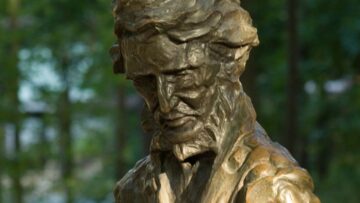 On July 4, 1845, a man from Concord, Massachusetts, declared his own independence and went into the woods nearby. On the shore of a pond there, Henry David Thoreau built a small wooden cabin, which he would call home for two years, two months and two days. From this base he began a philosophical project of “deliberate” living, intending to “earn [a] living by the labor of my hands only”. Though an ostensibly radical undertaking, this experiment was not a break with his past, but the logical culmination of years of searching and groping. Since graduating from Harvard in 1837 Thoreau had tried out many ways of earning his keep, and fortunately proved competent in almost everything he set his mind to. Asked once to describe his professional situation, he responded: “I don’t know whether mine is a profession, or a trade, or what not … I am a schoolmaster, a private tutor, a surveyor, a gardener, a farmer, a painter (I mean a house-painter), a carpenter, a mason, a day-laborer, a pencil-maker, a glass-paper-maker, a writer, and sometimes a poetaster”.
 For many progressives, it was a big moment. In 2019, Congress was holding its first
  Since the late 1970s,
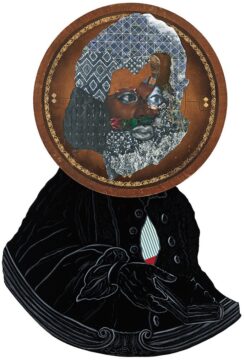 T
T H
H