
Lauren Christensen at the NYT:
 Forget everything you’ve ever heard about less being more, about economy of syntax, about the read-between-the-lines profundity of wide-margined, double-spaced “spare prose.” To read a paragraph by Henry James — a single one can sprawl across pages — is to luxuriate in linguistic excess.
An American expatriate who spent his adulthood in England, James (1843-1916) was the patron saint of exquisite verbosity; of circuitous, compulsively sub-claused sentences that contain all the twists and adventures his story lines lack. Reading the prodigious body of fiction he produced over four decades, between 1871 and 1911, you get the sense he lost himself so deeply in his recurrent themes — the innocence of America versus the experience and depravity of Europe, the psychological richness of everyday life — that he couldn’t help carrying on.
This applied to his nonfiction, too. James didn’t just write novels; he wrote about writing novels, obsessing over his craft the way his characters obsess over the minutiae of their lives.
more here.
 Police officers are often the last to know when someone is being conned. A worried son might spot unusual payments on his elderly father’s bank statement. A concerned friend will do a reverse-image search on a suspiciously good-looking dating-app match. A fraudster will run out of excuses as to why they can’t meet. A horrible realisation will dawn and a report will be filed.
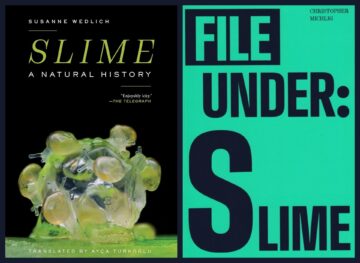 Goo. Gunk. Gloop. Gak. By its own definition, slime is hard to grasp. As an object of disgust, it represents our fears and stigmas, the unknown Other. As a toy or sight gag, it’s a silly plaything. It’s easy to forget that slime permeates every living being on Earth, that, like the cosmos or fungi, slime’s existence is vital to our own, a biological imperative as much as oxygen or sunlight. Nebulous and omnipresent, deathless and primordial, slime is an essential link between nonliving matter and the first life that developed in the ocean 3.6 billion years ago. Slime molds are at least millions of years old and can thrive in outer space. The granddaddy of all mankind, slime is everywhere. It’s also easy to miss, which helps explain why we’re often so afraid of it.
 The past year has given many of us reason to pause.
  In the surreal aftermath of my suicide attempt and amid the haze of my own processing, my best friend visited me in the hospital with a (soft-bound and thus mental-patient-safe) copy of David Foster Wallace’s Infinite Jest under his arm. It was the spring of 2021. A couple months earlier, I had slipped in a tub, suffered a concussion, and triggered my first episode of major depression, and those had been the most difficult months of my life.
 The Supreme Court is on a collision course with itself, and it’s not clear that the justices even know it. We are now witnessing a five-car pileup of Trump–slash–Jan. 6 cases that will either be heard by the Supreme Court or land on their white marble steps in the coming weeks. The court has already agreed to hear the case of Joseph Fischer, the former Pennsylvania cop accused of taking part in the Jan. 6 storming of the Capitol and assaulting police officers,
  T
T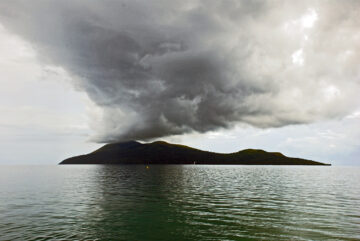 A well-known tourist attraction in Vanuatu is a large private compound near Port Vila on the island of Efate, belonging to local artist Aloï Pilioko. Situated beside Erakor Lagoon, the property — called Esnaar — was the shared studio home of Pilioko, a migrant from the island of Wallis in French Polynesia, and his French-Russian partner, the late Nicolaï Michoutouchkine, who passed away in 2010. After acquiring the property in 1961, the two artists pursued remarkable careers together, traveling, collecting, exhibiting, and making “Oceanic art” all over the world. In the 1990s, the property was converted into a tourist attraction with outdoor pavilions housing displays of travel memorabilia, a shop where they sold a line of hand-painted clothing, and ethnographic works from the collection distributed around the gardens and on display inside their studio homes.
 “By the way, how are you managing with the 100-copy collection?”
 2023 will be the year with the highest emissions ever recorded, according to new projections from the
  Donald Trump is an astoundingly dangerous candidate for president. He is a pathological liar, with clear authoritarian instincts. Were he elected to a second term, the damage he would do to the institutions of our republic is profound. His reelection would be worse than any political event in the history of America — save the decision of South Carolina to launch the Civil War.
 I remember where I was when Edward Said died.