
Alexandra Jacobs at the NYT:
 Margaret Cavendish was an intrepid and prolific writer of the 17th century, who — despite the efforts of many scholars and enthusiasts — is now less well-known than her family’s namesake banana.
Reading Francesca Peacock’s cantering new biography, I thought of that immortal smackdown from “Mean Girls” (movie, musical and soon-to-be movie musical): “Gretchen! Stop trying to make ‘fetch’ happen. It’s not going to happen.”
For centuries, people have been trying to make Margaret Cavendish happen — beginning with Margaret Cavendish, born Lucas and educated in “shreds and patches,” who once declared “all I desire is fame.” To that end she wed William, the horsy Marquis of Newcastle 30 years her senior, and — in defiant lieu of children — published poetry, plays, philosophy and prose romances under her own byline, which was very unusual for that era.
more here.
 A
A MOST AMERICAN SCHOOLCHILDREN
 T
T
 The British philosopher Gillian Rose, who advised the Polish government on how to redesign the Auschwitz-Birkenau State Museum after the fall of Communism, believed that the new regime of memory was mired in bad faith. By framing the Holocaust as an unfathomable evil — “the ultimate event, the ultimate mystery, never to be comprehended or transmitted,” as the writer Elie Wiesel once put it — we were protecting ourselves, Rose argued, from knowledge of our own capacity for barbarism. “Schindler’s List” was a case in point. For her, Spielberg’s black-and-white epic, which sentimentalizes the Jewish victims and keeps the Nazi perpetrators at arm’s length, was really just a piece of misty-eyed evasion.
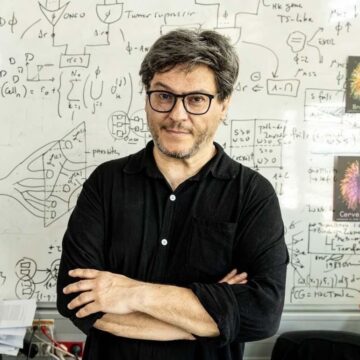 Octopuses, artificial intelligence, and advanced alien civilizations: for many reasons, it’s interesting to contemplate ways of thinking other than whatever it is we humans do. How should we think about the space of all possible cognitions? One aspect is simply the physics of the underlying substrate, the physical stuff that is actually doing the thinking. We are used to brains being solid — squishy, perhaps, but consisting of units in an essentially fixed array. What about liquid brains, where the units can move around? Would an ant colony count? We talk with complexity theorist Ricard Solé about complexity, criticality, and cognition.
 What we have here is the work of a lifetime, a reflective volume alert to local and geopolitics, art and culture, high society and the affairs of ordinary people. If he had served up a larger slice of history, encompassing the consolidation of Stalinism rather than ending the narrative with Lenin’s demise, he could have claimed with some justification to have written the definitive word on the revolution.
 Taking supplements has been a popular health trend for the last few years. Drug store shelves are filled with dozens of different options that come in a variety of gummy or pill forms. Though many claim that supplements are key for our health, there’s a lot you need to know before you start adding supplements to your diet. Here is what you need to know on some of the most popular supplements.
 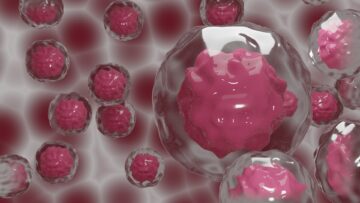 In a scientific breakthrough that aids our understanding of the internal wiring of immune cells, researchers at Monash University in Australia have cracked the code behind Ikaros, an essential protein for immune cell development and protection against pathogens and cancer. This disruptive research, led by the eminent Professor Nicholas Huntington of Monash University’s Biomedicine Discovery Institute, is poised to reshape our comprehension of gene control networks and its impact on everything from eye color to cancer susceptibility and design of novel therapies. The study, published in Nature Immunology, promises pivotal insights into the mechanisms safeguarding us against infections and cancers.
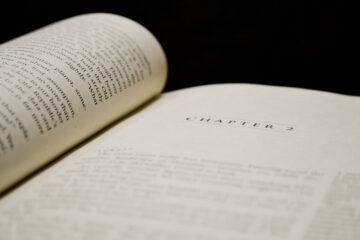 It is hard to see chapters, such is their banal inevitability. The chapter possesses the trick of vanishing while in the act of serving its various purposes. In 1919, writing in the Nouvelle revue française, Marcel Proust famously insisted that the most beautiful moment in Gustave Flaubert’s