Vauhini Vara in Wired:
One night, with anxiety and anticipation, I went to GPT-3 with this sentence: “My sister was diagnosed with Ewing sarcoma when I was in my freshman year of high school and she was in her junior year.”
GPT-3 picked up where my sentence left off, and out tumbled an essay in which my sister ended up cured. Its last line gutted me: “She’s doing great now.” I realized I needed to explain to the AI that my sister had died, and so I tried again, adding the fact of her death, the fact of my grief. This time, GPT-3 acknowledged the loss. Then, it turned me into a runner raising funds for a cancer organization and went off on a tangent about my athletic life.
I tried again and again. Each time, I deleted the AI’s text and added to what I’d written before, asking GPT-3 to pick up the thread later in the story. At first it kept failing. And then, on the fourth or fifth attempt, something shifted. The AI began describing grief in language that felt truer—and with each subsequent attempt, it got closer to describing what I’d gone through myself.
When the essay, called “Ghosts,” came out in The Believer in the summer of 2021, it quickly went viral. I started hearing from others who had lost loved ones and felt that the piece captured grief better than anything they’d ever read. I waited for the backlash, expecting people to criticize the publication of an AI-assisted piece of writing. It never came. Instead the essay was adapted for This American Life and anthologized in Best American Essays. It was better received, by far, than anything else I’d ever written.
More here.

 China’s property sector is the largest asset class in the world – larger even than the US equity or bond market. But there are growing fears that it is a bubble poised to burst. Already, the heavily indebted Chinese property giant Evergrande has filed for bankruptcy protection in the United States, and the real-estate developer Country Garden is battling a liquidity crisis. The failure of either, or both, could well trigger a financial crisis.
 C
C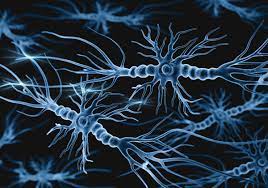 Brain development is a carefully choreographed dance. Neurons develop specialized functions and, in small hops, move through the brain to get into the correct position. The chemical signals coursing through the resulting network allow animals to think, feel, and live. In neurodevelopmental disorders (NDD), however, hundreds of mutations in the DNA can interrupt this process. But scientists still do not know how each of these mutations interrupts the neurons’ precise differentiation or migration patterns. Studying these defects directly in embryos or newborns is too dangerous, and other animal models may deviate from human development.
 I WAS AMONG MANY THAIS
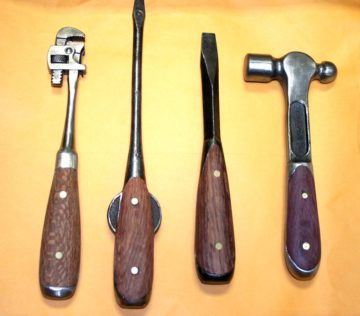 Consider how you hold a piece of chalk. Not by the handle: it doesn’t have one. Or, if it does, that handle is of the chalk’s own substance, flesh of its flesh, distinguishable only because it is the bit left in your hand when you can’t write anymore. A useless nub, or stub, or butt. Its persistence is a faint embarrassment, a remainder you don’t know what to do with—maybe you should stuff it in your pocket, or leave it in the tray with the erasers, or drop it on the floor and grind it into dust with your heel. It’s a waste, surely, just to throw it out. But it cannot be grafted onto another piece of chalk, not without gratuitous ingenuity, nor can it be used to hold anything else. It’s like the end of a pencil or of a filterless cigarette. Life is a midden of such abandoned handles. You didn’t even know they were handles, until they lost their grip and you were left holding them in a pinch, a pinch that can narrow, without your noticing, to contempt.
 A
A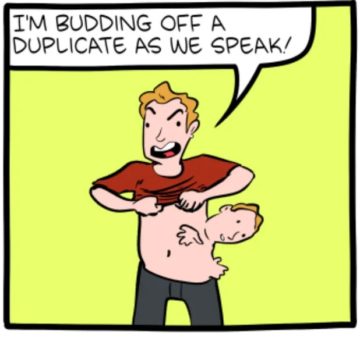 It’s pretty clear that, on a direct one-v-one cage match, an asexual organism would have much better fitness than a similarly-shaped sexual organism. And yet, all the macroscopic species, including ourselves, do it. What gives?
 Mr. Trump and others on the right deride the new norms as “woke,” a term with strongly pejorative connotations. I prefer a more neutral phrase, which emphasizes that this ideology focuses on the role that groups play in society and draws on a variety of intellectual influences such as postmodernism, postcolonialism and critical race theory: the “identity synthesis.”
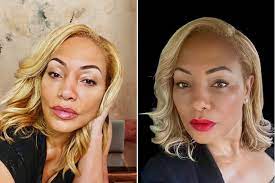 In the quiet corner of a dimly lit hospice room, I stood beside my friend Diane and her son Hans, also one of my dearest friends, who was journeying home. I told Diane to rest as she moved over, and I continued holding Hans’ hand, as I watched Diane rest. The room was filled with a sense of peace and acceptance. At this moment, I realized I was no longer a hospice volunteer. I was living my purpose as a death doula, accompanying souls as they gracefully depart this world. My death doula journey began several years ago when I started as a hospice volunteer. I had no experience in end-of-life care, but I did possess a strong desire to become a better human being.
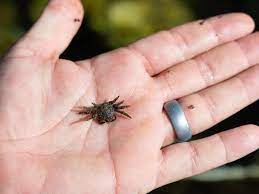 With giant pincers and rough, spider-like legs, Caribbean king crabs don’t look like your typical heroes. Yet these crustaceans may be key to solving one of the world’s most pressing environmental problems: the decline of coral reefs. In recent decades, warming seas, diseases, and other threats have wiped out
 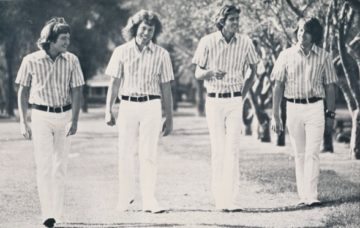 BRIAN WILSON HAS BEEN DEAF IN HIS RIGHT EAR since childhood. He mixed the Beach Boys’ albums, including Pet Sounds, in mono because he couldn’t hear them any other way. “It was sort of like being robbed of something, some pleasure of life,” he said in 1976. “I’m not complaining, but it’s a little bit of a setback.” I think the deafness might explain why the left side of his mouth reaches up when he speaks, like he’s addressing his good ear. (The affect has become more pronounced with age, but it’s visible in footage from the 1960s.) “I got one ear left and your big loud voice is killin’ it,” Brian yelled at his father and former band manager, Murry Wilson, during 1965’s “Help Me, Rhonda” recording session. Murry, drunk but not untrue to his sober form, had been berating the guys for almost forty minutes as they tried to get down the vocals.
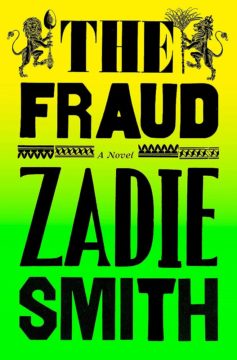 Zadie Smith’s first historical novel spins a tangled web around the knotty case of the Tichborne claimant, a long-running legal saga that divided Victorian Britain. The book’s title, The Fraud, ostensibly refers to Arthur Orton, a butcher who, in 1866, claimed (falsely, in the eyes of the law) that he was Sir Roger Tichborne, an aristocratic heir long presumed lost at sea. Yet in Smith’s crowded narrative – crafted to imply that the much-debated phenomena of polarisation and disinformation are hardly new – the frauds multiply, the titular slur clinging to everything from writing novels (for Smith, always a suspicious enterprise) to neoliberal economics.
 Biological organisms are paradigmatic emergent systems. That atoms of which they are made mindlessly obey the local laws of physics; even cells and organs do their individual jobs without explicitly understanding the larger whole of which they are a part. And yet the system as a whole functions beautifully, with apparent purpose and function. How do the small parts come together to form the greater whole? I talk with biophysicist Rosemary Braun about what we’re learning about collective behavior within organisms from the modern era of huge biological datasets, especially crucial aspects like timekeeping (with bonus implications for dealing with jet lag).