Returning giant tortoises are helping recreate the Galapagos islands Darwin saw

Warren Cornwall in Anthropocene Magazine:

When Charles Darwin made the famous voyage that took him to the Galapagos, he marveled at the giant tortoises that lumbered across the islands. He tried to ride them. He ate their flesh. He followed the paths they created in their ponderous travels. And he mused at their differing shapes on different islands, insights that helped steer him toward his theory of evolution by natural selection.

“It is the circumstance, that several of the islands possess their own species of the tortoise, mocking-thrush, finches, and numerous plants, these species having the same general habits, occupying analogous situations, and obviously filling the same place in the natural economy of this archipelago, that strikes me with wonder,” Darwin wrote in his account of the trip, The Voyage of the Beagle.

What he didn’t fully appreciate—at least judging by his writings—is the critical role the enormous reptiles played in shaping the plant communities of these islands. But the return of thousands of giant tortoises to the Galapagos island of Española is giving scientists new insights into the transformative power these behemoths wield. It is the latest in a long list of scientific discoveries emerging from the tiny cluster of islands off the coast of Ecuador. And it holds out the potential for restoring island ecosystems in part by reviving reptile herbivores.

More here.

Can We Prevent Alzheimer’s? Scientists Say New Tests and Treatments are “a Game Changer”

Adam Piore in Newsweek:

For years, Alzheimer’s conferences were like the obituary pages in the local newspaper: It’s where clinicians and researchers in the field went to find out the names of the latest promising drugs to die. Between 1998 and 2017 alone, 146 clinical trials of new Alzheimer’s drugs failed.

So when Randall Bateman showed up outside a restaurant in Bar Harbor, Maine, one evening in the fall of 2022 during an industry confab and announced to a couple of tables full of his colleagues drinking on the patio that he had something important to share with them, no one was prepared for what came next. Bateman, a neurologist and Alzheimer’s researcher at the Washington University School of Medicine in St. Louis, told them he had just received a phone call from his contact at the drug company running the trials of lecanemab, an experimental drug designed to facilitate the removal of the toxic plaques in the brain associated with the disease. The results, set for public release the following morning, were in: In a study of 1,800 Alzheimer’s patients over 18 months, the treatment had reduced the rate of cognitive decline by close to 30 percent.

More here.

Sunday Poem

Footnotes

Where does history go
when it hasn’t been tended?
I say it grows wild amongst
the Periwinkle, the Turkey-foot fern
and my mind. There it is
right alongside my heavy heart
like that mass of stones left on a hill
the only remnants left of the Kingdom
speaking of mountain royalty,
King Robert and Queen Louella
leased for ten cents a day
by a Civil War widow, named Serpta.
Their rule over 200 acres
of chopping, hauling and toting.
I understand this urgency
the need of self-appointment.
I hear it in the restless wind on the ridge
or are those ancestral voices crying out
about the uneasy quilt stitch hearsay
of their lives being left to myth and lore?
Where does history go when it dies?
When corn cribs and makeshift houses
no longer riddle the mountain slopes
and forty years of hands culling
Comfrey into a healing balm
along with Gospel Songs cease.
This silent edge is where I live
filled with heartache remembering history
and where it goes without a foothold.

by Glenis Redmond
from
My Laureates Lasso, 3/11/2009

Does the U.S. Really Want a Mass Expulsion in Gaza?

Rashid Khalidi in The New York Times:

Israel has ordered more than a million people to leave northern Gaza, presumably to prepare for an imminent ground offensive. Its military strategists appear to be planning the depopulation and reoccupation of at least part of an area home to around 2.3 million people — nearly half of them children — and most of them descended from people driven from their homes before and during the 1948 Arab-Israeli war. We must understand that these are human beings at grave risk, not just numbers.

Consider what some in the Israeli defense establishment have said. “The State of Israel has no choice but to turn Gaza into a place that is temporarily or permanently impossible to live in,” a reservist major general, Giora Eiland, wrote in Yedioth Ahronoth, an Israeli newspaper. “Creating a severe humanitarian crisis in Gaza is a necessary means to achieve the goal.” He added, “Gaza will become a place where no human being can exist.” Defense Minister Yoav Gallant said, “We are fighting human animals, and we are acting accordingly.”

Maj. Gen. Ghassan Alian declared that in Gaza, “there will be no electricity and no water. There will only be destruction. You wanted hell; you will get hell.”

More here.

Saturday, October 14, 2023

Saturday Poem

The Park

In that oblivious, concentrated, fiercely fetal decontraction
. . . . peculiar to the lost,
a grimy derelict is flat out on a green bench by the sandbox,
. . . . gazing blankly at the children.
“Do you want to play with me?” a small boy asks another,
. . . . his fine head tilted deferentially,
but the other has a lovely fire truck so doesn’t have to answer
. . . . and emphatically he doesn’t,
he just grinds his toy, its wheels immobilized with grit, along
. . . . the low stone wall.
The first child sinks forlornly down and lays his palms against
. . . . the earth like Buddha.
The ankles of the derelict are scabbed and swollen, torn with
. . . . arching varicose and cankers.
Who will come to us now? Who will solace us? Who will
. . . . take us in their healing hands?

by C.K. Williams
from
C.K. Williams Selected Poems
The Noonday Press, 1994

Abortion bans in America are corroding some doctors’ souls

Charlie McCann in 1843 Magazine:

The patient was about 16 weeks pregnant. As Donna stood by her bed, steeling herself to deliver the bad news, she tried to stifle the now-familiar feeling of helplessness. It was November 2022 and they were in the triage area of the hospital in Texas where Donna (a pseudonym) worked as an ob-gyn (obstetrician-gynaecologist). The pregnant woman’s waters had broken. At this stage in the pregnancy, the fetus’s lungs are months away from fully forming and stop developing as the amniotic fluid drains away. Doctors therefore usually recommend aborting the fetus or waiting to miscarry. The latter course can take days or weeks, during which time the mother is at high risk of infection – and must endure the trauma of carrying a non-viable fetus.

More here.

How the Arab world sees the Israel-Palestine conflict

Jonathan Guyer in Vox:

In the Arab world, people have been as quick to show support for Palestine as most American politicians have for Israel. On Friday, after prayers at Egypt’s al-Azhar Mosque, protesters filled the streets. As did tens of thousands of Iraqis in Baghdad’s Tahrir Square, thousands of Jordanians protesting in the capital and in major cities, and hundreds who gathered outside a central mosque in Qatar, along with protesters in Lebanon, Oman, Tunisia, and Yemen. Demonstrators burned Israeli flags and chanted against Israel’s military campaign.

Without understanding the full history of the conflict and the region, some American readers could dismiss everyone participating in these protests as “angry Arabs,” a repugnant trope that has permeated Western media for a century and was heightened after 9/11. It may still be jarring to watch for many, but the forces that drive the protests go deep — and will only deepen as the latest war unfolds.

More here.

My Delirious Trip to the Heart of Swiftiedom

Taffy Brodesser-Akner in The New York Times:

Section 301, in the second-to-highest tier of Levi’s Stadium, floats 105 feet above Santa Clara, Calif. It comprises 251 seats — a mere hamlet in the vast 64,000-seat general kingdom of the place, but it was our hamlet, and on the last Saturday in July, we took up each one of those seats and watched, our collective breath held, as Taylor Swift emerged from a bevy of billowing pastel parachutes and rose up on a platform to perform the 47th show of her Eras Tour. A few songs in, she announced, laughing, that her father told her that Santa Clara had named her its honorary mayor during her two-night stay there and that the entire town had been renamed Swiftie Clara. On the way in, we saw the Police Department cheerfully exchanging friendship bracelets with legions of Swifties. The microcosm of Section 301 offered this same sense of sorority. What a nice neighborhood we had moved into, my 15-year-old son, Ezra, and I. Within minutes of sitting down, we were already a community with a shared, ardent sense of purpose.

More here.

The Meaning of Madonna

Michelle Orange in The New Yorker:

It was a more physical world, though we thought it quite advanced. There seemed nothing “terrestrial” about twisting a radio knob to some eccentric decimal point, dialling static into song. In the summer of 1985, we all knew someone, usually an older sibling, who owned a portable, cassette-playing stereo. The rest of us remained stuck catching Top Forty countdowns on AM radio, or playing, on our parents’ imperial turntables, the one or two LPs in our possession. Increasingly, we listened to music by watching it on TV, our dance parties often overseen by a strutting, tattered sprite who wore bangles like opera gloves and held the camera’s gaze with her entire being, as though locked in a dare she was not going to lose.

More here.

Friday, October 13, 2023

Daniel Dennett’s Been Thinking About Thinking—and AI

Taylor McNeil at Tufts Now:

In the book, Dennett describes his intellectual growth and the role he played in many philosophy developments over the years. There’s plenty of inside baseball, but it is lively reading even for those with no stake in the game.

Dennett also devotes a section to academic battles, including what he calls academic bullies, who he often called out when no one else would. “They have ended people’s careers—they have squashed really good people when they disagree with them,” he says. “I was pretty well immune to that, and recognized I should use my relative invulnerability to say what others were saying over drinks in the bar late at night, but didn’t dare say in public.”

More here.

Remnants Of Ancient Life: The New Science Of Old Fossils

Leon Vlieger at The Inquisitive Biologist:

This is the second of a two-part review about ancient biomolecules; think of them as the other fossil evidence. Having just reviewed Jones’s Ancient DNA which gave an intellectual history of this young scientific discipline, I now turn to Dale E. Greenwalt’s book Remnants of Ancient Life. Beyond DNA, his book discusses what we can learn about extinct life forms from traces of other molecules, such as proteins, pigments, and metals.

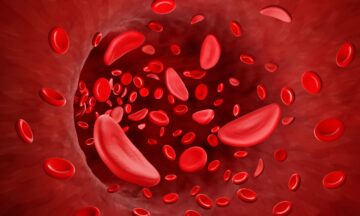
This book is a good example of the kind of whistlestop tour normally written by science journalists: delve into a topic, read tons of academic papers, serve up interesting results in a digestible form for your reader, and profile some of the scientists involved. The difference is that Greenwalt is an insider, working as the curator of the fossil insect collection at the Smithsonian Institution’s National Museum of Natural History. It was actually the background research he did for a book chapter on the fossil record of blood that made him decide to write a popular book on ancient biomolecules.

More here.

Israel Goes to War

Peter Singer at Project Syndicate (also pieces by Shlomo Ben-Ami, Barak Barfi, Richard Haass):

Hamas’s brazen and vicious attacks within Israel have rightly drawn condemnation from around the world. If this is a war, as both sides agree it is, then Hamas’s deliberate targeting of civilians counts as a major war crime.

But the brutality demonstrated by Hamas did not emerge in a vacuum. The lesson of what is currently happening in Israel and Gaza is that violence breeds more violence.

The last real chance of avoiding the tragic conflict being waged between Israel and Hamas was destroyed by a single killing: the assassination of Israeli Prime Minister Yitzhak Rabin in 1995.

More here.

Friday Poem

Welcome to Paradise

The mother sits within her palm-thatched hut
Surrounded by stray dogs, their shit, and flies.
She sells blond surfers unripe coconut
For crypto underneath rich tropic skies.

Her children spear for fish and build their toys
From plastic bags, they surf on driftwood planks.
They wear clothes left behind by expat boys
And girls, ripped rash guards reading “f*ck the banks.”

The tourist tree-pose on the sand while wading
In the sea. Taking Insta pics, they lie
In hammocks day-drinking and day-trading
On Macbooks stickered with “live free or die.”

It’s paradise on Bitcoin Beach, they say,
Just learn to smile and turn the other way.

by Maya Clubine
from
Rattle Magazine, 6/30/23

A Loss for Words: Jenni Nuttall’s mission to recover the forgotten and suppressed vocabulary of women’s lives

Jo Livingstone in Book Forum:

AMONG THE OLDEST REFERENCES to menstruation in literature is in the book of Genesis, in a story about a lie. Rachel stole her father’s household gods, it goes, and when he came to retrieve them, she threw a covering over the objects and sat on it. She couldn’t stand, she apologized to her father, because she was in “the way of women.” At the end of the sixteenth century, an English clergyman clarified in his guide to Genesis that Rachel wasn’t pretending to be incapable of standing, just uncomfortable, due to her “monethly custome,” an ancestor to our contemporary “period.” As Jenni Nuttall explains in her new book Mother Tongue: The Surprising History of Women’s Words, “period” has been in use to name a quantity of time since the Middle Ages, but “only at the end of the seventeenth century”—so, a little after the clergyman’s time—“does the phrase ‘monthly period’ appear in medical books as a name for menstruation.”

More here.

Tobias Wolff Will Receive Our 2024 Hadada Award

From The Paris Review:

In an interview published in The Paris Review no. 171 (Fall 2004), Tobias Wolff pinpointed the radical power of a well-written story. “Good stories slip past our defenses—we all want to know what happens next—and then slow time down, and compel our interest and belief in other lives than our own, so that we feel ourselves in another presence. It’s a kind of awakening, a deliverance, it cracks our shell and opens us up to the truth and singularity of others—to their very being.”

The Paris Review has always sought out just this kind of writing, of which Wolff’s own body of work is an extraordinary example. We are thrilled to honor him with the Hadada, our award for lifetime achievement in literature. Previous recipients include Joan Didion, Philip Roth, Lydia Davis, Jamaica Kincaid, and Vivian Gornick. 

Over the last several decades, Wolff has established himself as a virtuosic storyteller across several forms. His memoirs, novels, and short stories express, in infinite variety, the human struggle to reconcile the truth we wish for with the one we get. In This Boy’s Life (1989), his memoir about a peripatetic childhood—which won a Los Angeles Times Book Prize—and Old School (2003), his novel modeled in part on his own disastrous attempt to fit in at an elite prep school, he captures the vulnerability of youth with precision and delicacy.

More here.

Scientists unlock biological secrets of the aging process

From Phys.Org:

How we grow old gracefully—and whether we can do anything to slow down the process—has long been a fascination of humanity. However, despite continued research the answer to how we can successfully combat aging still remains elusive.

…As we get older, our cells produce inflammatory proteins that further promote aging. Cancer treatments also cause this same inflammatory process by damaging cells, which can then prevent treatments from working well in patients. The new research, which is co-led by Professor Stephen Tait and his team at the School of Cancer Sciences, reports a key inflammatory role for our cells’ energy-producing organelles, mitochondria. The researchers found that in old cells—or following cancer therapy—mitochondria become leaky, releasing DNA that promotes inflammation and, as a result, aging. The team then discovered that if they could prevent the mitochondria from becoming leaky, this in turn blocked inflammation and improved health during aging.

Their discovery suggests that targeting mitochondrial-driven inflammation may offer a new way to promote healthy aging, as well as improve the response to cancer therapies.

More here.

Younger Women Are Getting Lung Cancer at Higher Rates Than Men

Dani Blum in The New York Times:

Over the last several decades, the rates of new cases of lung cancer have fallen in the United States. There were roughly 65 new cases of lung cancer for every 100,000 people in 1992. By 2019, that number had dropped to about 42.

But for all that progress, a disparity is emerging: Women between the ages of 35 and 54 are being diagnosed with lung cancer at higher rates than men in that same age group, according to a report published Thursday by researchers at the American Cancer Society. The disparity is small — one or two more cases among every 100,000 women in that age range than among men — but it is significant enough that researchers want to know more. The report adds to a mounting body of evidence that emphasizes the lung cancer risks for women in particular. Overall, lung cancer remains the leading cause of cancer death in the United States. The Centers for Disease Control and Prevention estimates that, nationwide, around 197,000 people are diagnosed with the disease each year.

More here.

Thursday, October 12, 2023

Paul Nurse: Does winning a Nobel prize make you less productive? Do you get ‘Nobelitis’? Here’s what it did to me

Paul Nurse in The Guardian:

The prize changed our lives. It is the one scientific prize everyone knows. Suddenly you become a public figure being asked to do all sorts of things: to give lectures, quite often on topics you know little about; to sit on committees and reviews you are not always well qualified to be on; to visit countries you have barely heard of; to sign endless petitions on what are probably good causes, but you never know. It is like having a whole new extra job, with upwards of 500 requests a year. It is impostor syndrome on steroids.

A big problem is that people think you have something sensible to say about nearly everything. Over time it can become dangerous, as you start to believe that perhaps you do know about nearly everything.

More here.

On Jon Fosse, winner of the 2023 Nobel prize in literature

Randy Boyagoda in the New York Times:

I have for years been an evangelist for Fosse, who won the Nobel Prize in Literature on Thursday. And “evangelizing” is an apt word, given the vibrant, mirror-dark religious feeling of his books. Fosse converted to Catholicism in 2012, when he was already a well-established playwright and fiction writer in his native Norway, which celebrates Fosse with a biannual festival dedicated to his work. (The most recent took place this past summer, over 12 days.) His international stature and popularity in a generally secular country is a strong indicator that Fosse’s books aren’t just for the faithful: Indeed, many religiously minded readers of the Chesterton, Lewis and Tolkien club may be put off by Fosse’s formal and stylistic demands, and also by his obscure, at times even willfully inchoate writing about human and divine life.

The Nobel announcement comes only a few weeks before his latest novel, “A Shining,” will be published in English (beautifully and brilliantly translated, as was “Septology,” by Damion Searls), and it affords an excellent occasion to make a stronger case for why reading Fosse is a singular and transporting experience. In the words of the Nobel committee, he received the prize “for his innovative plays and prose which give voice to the unsayable.”

More here.