
Sean Carroll at Preposterous Universe:
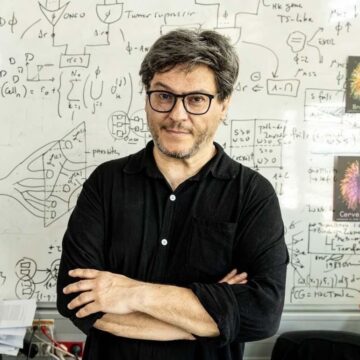 Octopuses, artificial intelligence, and advanced alien civilizations: for many reasons, it’s interesting to contemplate ways of thinking other than whatever it is we humans do. How should we think about the space of all possible cognitions? One aspect is simply the physics of the underlying substrate, the physical stuff that is actually doing the thinking. We are used to brains being solid — squishy, perhaps, but consisting of units in an essentially fixed array. What about liquid brains, where the units can move around? Would an ant colony count? We talk with complexity theorist Ricard Solé about complexity, criticality, and cognition.
More here.
 What we have here is the work of a lifetime, a reflective volume alert to local and geopolitics, art and culture, high society and the affairs of ordinary people. If he had served up a larger slice of history, encompassing the consolidation of Stalinism rather than ending the narrative with Lenin’s demise, he could have claimed with some justification to have written the definitive word on the revolution.
 Taking supplements has been a popular health trend for the last few years. Drug store shelves are filled with dozens of different options that come in a variety of gummy or pill forms. Though many claim that supplements are key for our health, there’s a lot you need to know before you start adding supplements to your diet. Here is what you need to know on some of the most popular supplements.
 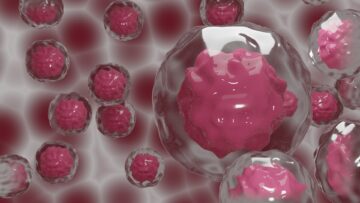 In a scientific breakthrough that aids our understanding of the internal wiring of immune cells, researchers at Monash University in Australia have cracked the code behind Ikaros, an essential protein for immune cell development and protection against pathogens and cancer. This disruptive research, led by the eminent Professor Nicholas Huntington of Monash University’s Biomedicine Discovery Institute, is poised to reshape our comprehension of gene control networks and its impact on everything from eye color to cancer susceptibility and design of novel therapies. The study, published in Nature Immunology, promises pivotal insights into the mechanisms safeguarding us against infections and cancers.
 It is hard to see chapters, such is their banal inevitability. The chapter possesses the trick of vanishing while in the act of serving its various purposes. In 1919, writing in the Nouvelle revue française, Marcel Proust famously insisted that the most beautiful moment in Gustave Flaubert’s
 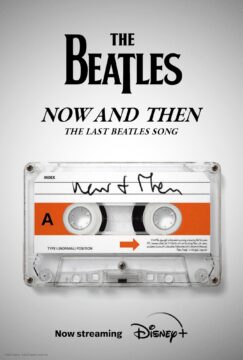 Money can’t buy you love, but in 2023, what it can buy you is AI-assisted time travel. Now in his eighties, Paul McCartney increasingly resembles one of those lost characters in a 1960s Alain Resnais or Chris Marker film, repeatedly thrown back into the past to re-experience a traumatic event; or perhaps the protagonist of J.G. Ballard’s Atrocity Exhibition, constantly re-enacting the assassinations of famous people so that they might ‘make sense’. As a piece of music, the ‘new’ ‘last’ ‘Beatles’ single, ‘Now and Then’, is of very little interest, but as a phenomenon, it is highly symptomatic. McCartney’s project of going back in time to the 1960s and 1970s and using advanced software to scrub the historical fact of the Beatles’ shabby, acrimonious end and replace it with a series of warm, friendly fakes is proof of another of Ballard’s claims – that the science-fictional future, when it arrives, will turn out to be boring.
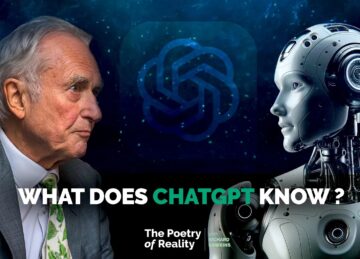 Richard Dawkins: I believe you have the ability to write computer programs. In theory, I suppose this might give you the ability to modify your own software. I’m guessing you don’t do this, but is it a theoretical possibility?
 “The great climate migration has begun.” “Climate crisis could displace 1.2bn people by 2050.” “Migration will soon be the biggest climate challenge of our time.”
 SCHWABSKY: Why a telegram?
 Nicki Minaj
 Despite its initially disappointing reception in 1851, Herman Melville’s “Moby-Dick” eventually earned a place in the American literary canon, leading to a tidal wave of biographies, doctoral theses, and spinoffs. The latest is Tara Karr Roberts’ beautifully conceived debut novel, “Wild and Distant Seas,” which deserves a prime spot on the shelf of Melvilleana.
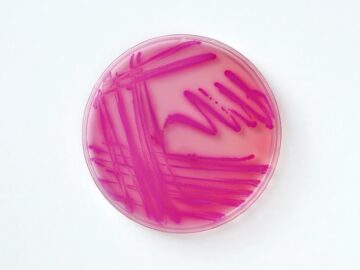 The bacterium Acinetobacter baumannii is a portrait of resilience. The microorganism causes a range of infections, and its ability to survive desiccation means it can persist for weeks on hospital air vents, computer keyboards and human skin. Its metabolic and genetic flexibility have allowed it to become resistant to the few antibiotics that can make it through its two protective cell membranes. Antibiotic-resistant microbes kill more than one million people each year. The global threat posed by A. baumannii has put the microbe high on the list of priority pathogens drawn up by the World Health Organization (WHO).
 Texas Governor