Juliet Frost & Sophie Roell at Five Books:
 Normally at Five Books we ask experts to recommend the best books in their field and talk to us about them in an interview, either in person, by phone or via Zoom. In January 2023, we asked the AI bot, ChatGPT, to recommend books to us on the topic of AI. Being an AI doesn’t necessarily make the chatbot an expert on AI books, but we thought it might have some ideas. This week we caught up with ChatGPT to find out if there were any new AI books it wanted to recommend in the year since we spoke.
Five Books: Tell me about your top choice among these new AI books, AI 2041: Ten Visions for Our Future (2021) by Kai-Fu Lee and Chen Qiufan.
ChatGPT: This book combines both science fiction and non-fiction to explore how AI will change our world by 2041. Kai-Fu Lee, a prominent AI expert, and Chen Qiufan, a science fiction writer, offer a unique blend of storytelling and analysis. The fictional stories, set in the year 2041, are penned by Chen Qiufan, while Kai-Fu Lee provides insights into how these scenarios might become reality. It’s a thought-provoking look at how AI could shape our future in diverse ways.
Five Books: Kai-Fu Lee was head of Google China, is that right?
ChatGPT: Yes, Kai-Fu Lee was the founding president of Google China. He served in this role from 2005 to 2009. During his tenure, he played a key role in establishing Google’s presence in China and managing its operations in the country. After leaving Google, Kai-Fu Lee went on to become a prominent figure in the Chinese technology and venture capital industries.
More here.

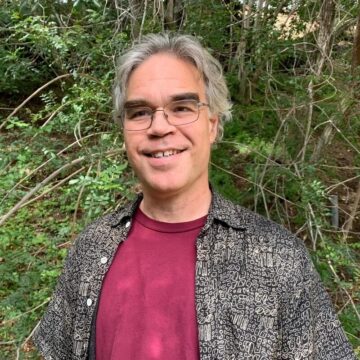 Scientists and philosophers sometimes advocate pretty outrageous-sounding ideas about the fundamental nature of reality. (Arguably I have been guilty of this.) It shouldn’t be surprising that reality, in regimes far away from our everyday experience, fails to conform to common sense. But it’s also okay to maintain a bit of skepticism in the face of bizarre claims. Philosopher Eric Schwitzgebel wants us to face up to the weirdness of the world. He claims that there are no non-weird ways to explain some of the most important features of reality, from quantum mechanics to consciousness.
 A somewhat obscure text, about 2,000 years old, has been my unlikely teacher and guide for the past many years, and my north star these last several months, as so many of us have felt as if we’ve been drowning in an ocean of sorrow and helplessness. Buried deep within the Mishnah, a Jewish legal compendium from around the third century, is an ancient practice reflecting a deep understanding of the human psyche and spirit: When your heart is broken, when the specter of death visits your family, when you feel lost and alone and inclined to retreat, you show up. You entrust your pain to the community. The text,
 A
A I had two memorable experiences with the moon this year. The first was seeing the
  It struck me recently that it’s been quite some time since I last heard anyone speak of the importance of maintaining a “work/life balance”. Like co-dependency, like low blood-sugar,
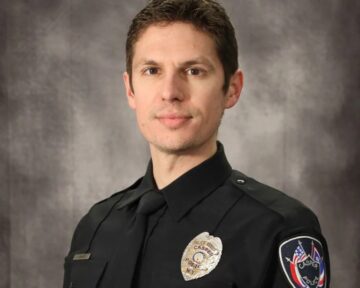 This might sound as though Lincowski is a crime-fighting hunter of aliens in a Marvel superhero film, and that interpretation isn’t far off. Until the end of last year, Lincowski worked as a police detective in Casper, Wyoming, from Monday to Thursday. And on Fridays, he looked for signs of life on planets beyond the Solar System, as part of a research team at the University of Washington in Seattle. Earlier this month, he started working as a mathematician at Eastern Wyoming College in Torrington, where he will be teaching mainly 18–21-year-old students. However, he will continue his one-day-a-week planetary science research at Washington.
 GAZANS HAVE INDEED SOUGHT OUR EYES and attention amid these days of peril. Defying Israel’s
  Architectural historians can easily stray into advocacy. Consider Sigfried Giedion, the Swiss author of Space, Time and Architecture and a self-appointed propagandist of early Modernism, or Henry-Russell Hitchcock, who with Philip Johnson curated the exhibition at the Museum of Modern Art that launched the International Style in the United States. The late Vincent Scully, a Hitchcock student and longtime Yale professor of architectural history, was an advocate too, one of his early forays into advocacy being a book provocatively titled The Shingle Style Today: Or the Historian’s Revenge.