
Robin McKie in The Guardian:
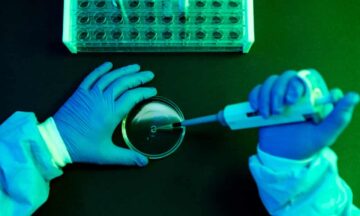 Scientists at a recently opened cancer institute at Cambridge University have begun work that is pinpointing changes in cells many years before they develop into tumours. The research should help design radically new ways to treat cancer, they say. The Early Cancer Institute – which has just received £11m from an anonymous donor – is focused on finding ways to tackle tumours before they produce symptoms. The research will exploit recent discoveries which have shown that many people develop precancerous conditions that lie in abeyance for long periods.
“The latency for a cancer to develop can go on for years, sometimes for a decade or two, before the condition abruptly manifests itself to patients,” said Prof Rebecca Fitzgerald, the institute’s director.
“Then doctors find they are struggling to treat a tumour which, by then, has spread through a patient’s body. We need a different approach, one that can detect a person at risk of cancer early on using tests that can be given to large numbers of people.” One example of this is the cytosponge – a sponge on a string – which has been developed by Fitzgerald and her team. It is swallowed like a pill, expands in the stomach into a sponge and is then pulled up the gullet collecting oesophagus cells on the way. Those cells that contain a protein, called TFF3 – which is found only in precancerous cells – then provide an early warning that a patient is at risk of oesophageal cancer and needs to be monitored. Crucially, this test can be administered simply and on a wide scale.
More here.
 Great tracts of culture, notably the
 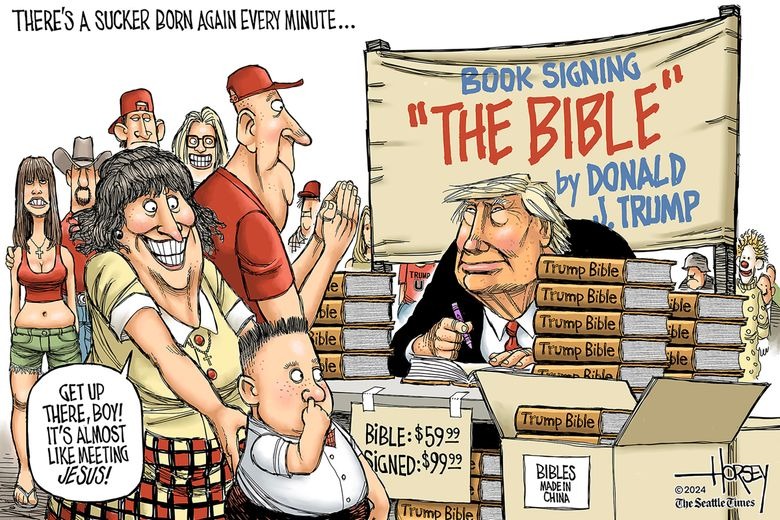 P.T. Barnum, the great 19th century showman, circus owner and hoax promoter, is quoted as saying, “There’s a sucker born every minute.” Donald J. Trump, the great 21st century con man, political phenomenon and hoax promoter, would heartily agree. Trump has built a weirdly successful career in business, entertainment and politics based on his uncanny ability to convince legions of suckers to buy into his self-aggrandizing schemes, from Trump University, the Trump charity and the Big Lie, to his latest scam tricking thousands of poor chumps into chipping in to pay his millions of dollars in legal bills.
 One of the most arresting things about Adam Phillips’s work is how it resists easy summary, dissolving into a trace memory the moment you try to describe it. Over several decades, in more than 20 books — many of them slim volumes further subdivided into even slimmer essays — Phillips, a British psychoanalyst, sidles up to his subjects, preferring the gentle mode of suggestion to the blunt force of argument. His writing has a way of sneaking up on you, like a subterranean force. An interviewer once described trying to edit his comments as
 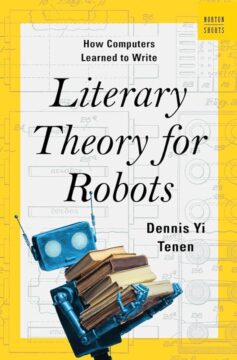 Tenen, a tenured professor of English at New York’s Columbia University, isn’t nearly as apocalyptic as he initially makes out. His is an oddly titled book – do robots need literary theory? Are we the robots? – that has little in common with the techno-theory of writers such as
 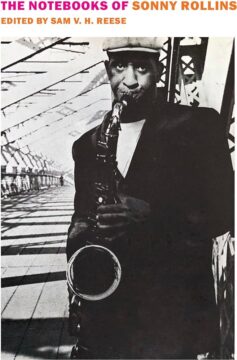 It is possible to imagine the jazz musician Sonny Rollins’s life as a novel, pitched between realism and surrealism in the manner of Ralph Ellison’s “Invisible Man.” The settings would include Harlem, where Rollins grew up poor in the 1930s and ’40s, and the decadence of clubland in New York City and Chicago at the century’s midpoint, when he was a musical prodigy. A chapter might linger on the recording of his landmark 1957 album “Saxophone Colossus.”
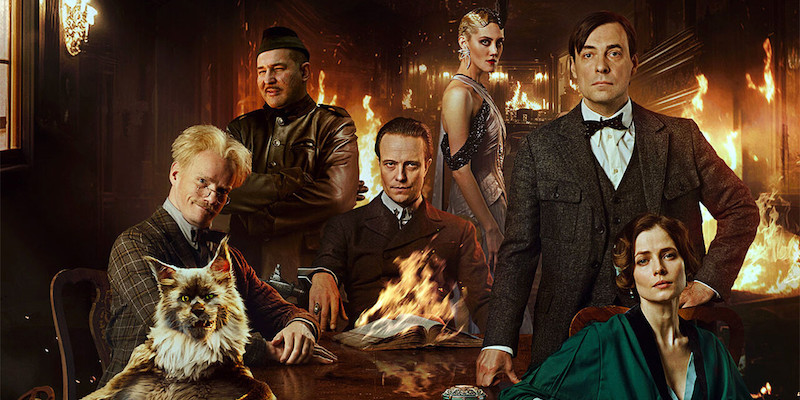 One of the most celebrated lines from Mikhail Bulgakov’s novel The Master and Margarita emerges from the lips of the devil himself. “Manuscripts don’t burn,” Woland, the mysterious Professor of Black Magic, tells the eponymous Master. The declaration echoes throughout the narrative: try as the Soviet authorities might, they cannot ban, repress, or destroy the Master’s art, because the unyielding ideas within have taken on a life of their own.
 O
O
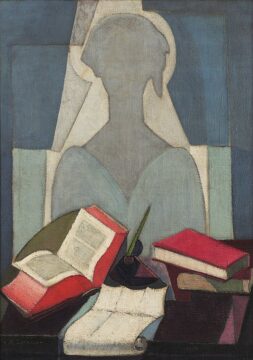 In my second year of college I applied for a spot in a creative writing program. If I got in, I could graduate in two years with a writing major. If I didn’t, well, I needed a new major. I fussed over the application for months. Attended info sessions, met with the program director, revised my portfolio of poems so often that one professor finally said, Bryan, relax. Let the poems speak. I didn’t grow up saying I wanted to be a writer, but the signs were there, like a secret wish I kept from everyone, myself included. A stroll through the half-hearted journals and failed diaries of my teenage years turns up observations like: “I want to write books, but you can’t make a living that way.” Such a Midwesterner: The arts just aren’t practical.