
Andrew Zalisky in Science:
 In 19th century New York City, Theodore Gaillard Thomas enjoyed an unusual level of fame for a gynecologist. The reason, oddly enough, was milk. Between 1873 and 1880, the daring idea of transfusing milk into the body as a substitute for blood was being tested across the United States. Thomas was the most outspoken advocate of the practice.
At the time, severe bleeding was often a death sentence. Blood transfusion was practiced, but it was something of a crapshoot. Medical science was still 3 decades removed from discovering blood types. Patients who received mismatched blood suffered discolored urine, itching, and a sometimes-fatal complication: hemolytic shock, wherein their own immune systems attacked the transfused cells.
Doctors in the U.S. were looking for something less risky to stabilize a hemorrhaging patient. Thomas was sure milk was the answer. In 1875, he injected 175 milliliters of cow’s milk into a woman suffering from severe uterine bleeding after an operation to remove her cancerous ovaries. At first, he wrote, the patient “complained that her head felt like bursting.” She soon developed a high fever and an abnormally high heart rate, but recovered a week later. Thomas subsequently performed seven separate milk transfusions, publishing his results in several medical journals, and predicted their “brilliant and useful future.”
More here.
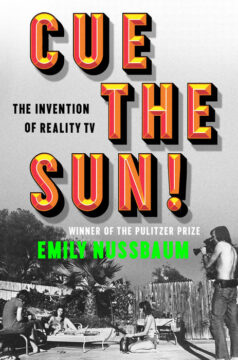 EMILY NUSSBAUM, THE PULITZER-WINNING television critic and New Yorker staff writer, ends her well-researched, somewhat grueling book on the history of reality television, Cue the Sun!, with a reminder that critics have historically dismissed reality TV as a fad. Yet reality TV has not gone away. It’s more than just a fad, she writes, because “in the end, all our faces got stuck that way.”
 In early May, Google announced it would be adding artificial intelligence to its search engine. When the new feature rolled out,
  In early 1824, 30 members of Vienna’s music community sent a letter to Ludwig van Beethoven
  F
F WHEN HAMAS TERRORISTS
 S
S