
It’s the little things
It’s the Little Things
the sparrow’s tender head
the dead possum on the road
the pungent smell of the fresh creek
in the summer when heat rises
to the bridge that spans its width
and if you should come to me
wondering and daring
I would not show you a good time
we would sit and watch
our breaths, silence, death approaching
so slowly, it would feel
like the ecstasy of making love
by Marc Steven Mannheimer
from Poetry Feast
 D
D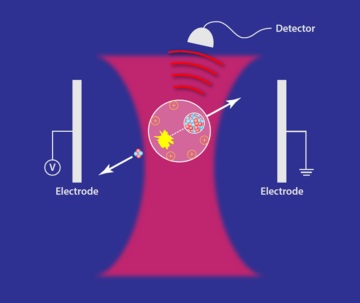 For centuries, physicists have exploited momentum conservation as a powerful means to analyze dynamical processes, from billiard-ball collisions to galaxy formation to subatomic particle creation in accelerators. David Moore and his research team at Yale University have now put this approach to work in a new setting: they used momentum conservation to determine when a radioactive atom emitted a single helium nucleus, known as an alpha particle (Fig.
 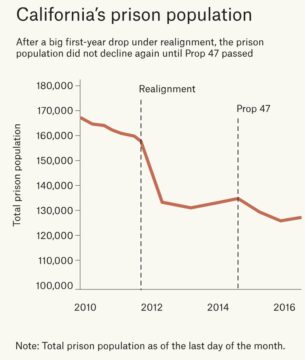 Asterisk: You’re responsible for managing one of the most comprehensive data sets of criminal outcomes for various criminal justice systems in California. It includes 12 counties and 60% of the state population. How did you put this resource together, and what kinds of outcomes you are tracking with it?
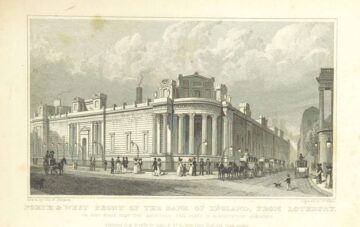 In 1916 the Bank of England committed what Nikolaus Pevsner was to call the greatest architectural crime to befall London in the 20th century. It decided to demolish much of its own building, designed by the great Georgian neoclassical architect John Soane.
 W
W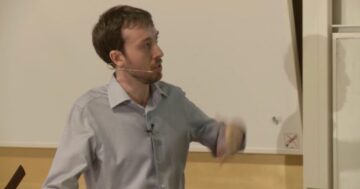 In recent years, MIT physicist Jeremy England (pictured above) has gained media attention for proposing a thermodynamic energy-dissipation model of the origin of life. England’s view was summarized when he famously said that the origin and evolution of life “should be as unsurprising as rocks rolling downhill.” He continued, “You start with a random clump of atoms, and if you shine light on it for long enough, it should not be so surprising that you get a plant.”1Another physicist, ID theorist Brian Miller, has responded to England’s research.
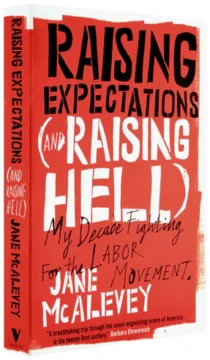 Raising Expectations is as much tell-all as organizing manual, but it was Jane’s second book, published in 2016—by an academic press, no less—that turned her into as much of a household name as any labor organizer can be in what she called “the new Gilded Age.”
 Stephen King, Min Jin Lee, Karl Ove Knausgaard, Bonnie Garmus, Nana Kwame Adjei‑Brenyah, Junot Díaz, Sarah Jessica Parker, James Patterson, Elin Hilderbrand, Annette Gordon‑Reed, Rebecca Roanhorse, Marlon James, Roxane Gay, Jonathan Lethem, Sarah MacLean, Ed Yong, Thomas Chatterton Williams, Paul Tremblay, Nick Hornby, Scott Turow, Daniel Alarcón, Honorée Fanonne Jeffers, Lucy Sante, Gary Shteyngart, Anand Giridharadas, Jessamine Chan, Michael Robbins, Alma Katsu, Megan Abbott, Joshua Ferris, Ann Napolitano, John Irving, Tiya Miles, Jami Attenberg, Stephen L. Carter, Sarah Schulman, Elizabeth Hand, Dion Graham, Jeremy Denk, Morgan Jerkins, Michael Roth & Ryan Holiday.
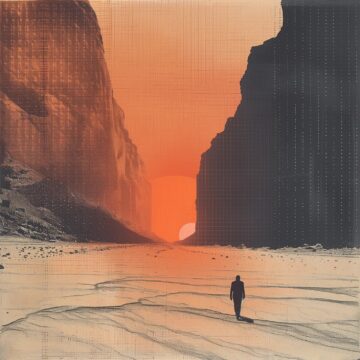 Over several years now, a single question has refused to leave me: what is beauty? Triggering it was a series of aesthetic experiences so intense that I count them among the most significant moments of my life. They felt supercharged with meaning, yet what they meant I could not tell. After a couple years of scratching my head, I still cannot claim to understand them. Nevertheless, I believe I have taken a step towards understanding what beauty is.
 For weeks, pundits have been speculating that France’s snap legislative election could blow up in President Emmanuel Macron’s face—and boy did it. Only it’s blown up in a way nobody expected. Instead of the much-feared far right victory, the election will probably force the centrist president into an awkward coalition with the left, an exercise likely to leave both sides badly bruised.
 ‘Why did you decide to study philosophy?’ asked the Harvard professor, sitting in the park in his cream linen suit.
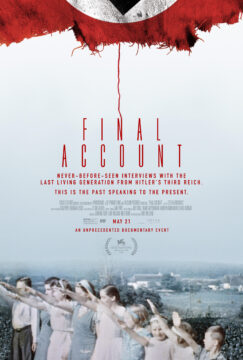 Anyone who’d like to look a Nazi in the eye is working against the clock. An eighteen-year-old member of the Nazi Party in 1945 would now be coming up to a hundred. Soon there will be none left. When the film director Luke Holland was diagnosed with terminal cancer in 2015, he was interviewing the last surviving Nazis to build an archive of their first-hand accounts of complicity. He kept going as his health declined. One of my colleagues was Holland’s haematologist, and a few of us were invited to watch some unedited footage of German nonagenarians in dowdy sitting-rooms recounting, with nostalgia, unease or insouciance, their involvement in the operation of the Nazi state. Afterwards, another colleague broke our stunned silence with the remark: ‘There but for the grace of God go I.’ At first I thought she meant we were lucky to have not been Jewish, disabled, Romani or gay in Germany in the 1930s, but she meant we were lucky not to have been Nazis.
 One June afternoon, I found myself idling about a meadow at the top of a forest in the northwest of the Pacific Northwest. I ate a rough lunch and slept, hands in pockets and cap on face. When I awoke, the sun was still high and the bees buzzed and the meadow kept its drowsiness on me—and so I opened a book of essays I’d been carrying around for the better part of a week and turned to Henry David Thoreau’s 1862 essay “