
Frederik Joelving in Science:
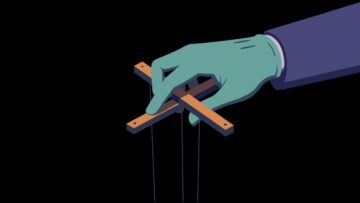 One evening in June 2023, Nicholas Wise, a fluid dynamics researcher at the University of Cambridge who moonlights as a scientific fraud buster, was digging around on shady Facebook groups when he came across something he had never seen before. Wise was all too familiar with offers to sell or buy author slots and reviews on scientific papers—the signs of a busy paper mill. Exploiting the growing pressure on scientists worldwide to amass publications even if they lack resources to undertake quality research, these furtive intermediaries by some accounts pump out tens or even hundreds of thousands of articles every year. Many contain made-up data; others are plagiarized or of low quality. Regardless, authors pay to have their names on them, and the mills can make tidy profits.
But what Wise was seeing this time was new. Rather than targeting potential authors and reviewers, someone who called himself Jack Ben, of a firm whose Chinese name translates to Olive Academic, was going for journal editors—offering large sums of cash to these gatekeepers in return for accepting papers for publication.
More here.
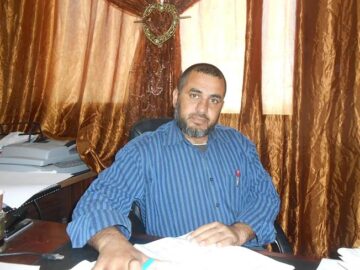 On Saturday, December 30, our front door was busted down, and twenty masked men barged in and took my father, a widely respected and deeply learned imam here in Gaza.
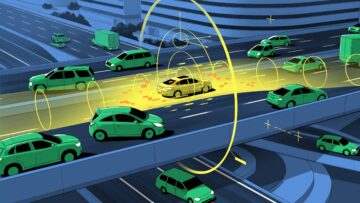 Driverless cars and planes are no longer the stuff of the future. In the city of San Francisco alone, two taxi companies have collectively logged 8 million miles of autonomous driving through August 2023. And more than 850,000 autonomous aerial vehicles, or drones, are registered in the United States — not counting those owned by the military.
 When we find words being used in a novel way, our countenances tend to stiffen. What’s going on here? Is this a euphemism? Is there a hidden agenda here?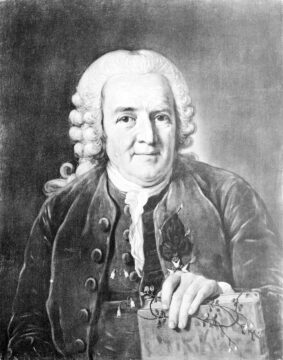
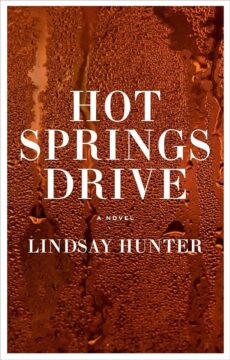 Lindsay Hunter: As I was drafting this novel, I was thinking of it as almost a shattered windshield, or a crazy quilt. Something made of shards but that, together, was a whole thing. Initially, I had Jackie in both first- and third-person narration. I wanted readers to have access to her story, the way she’d tell it, but also glimpse a more objective truth about her. I thought that was pretty clever.
  T
T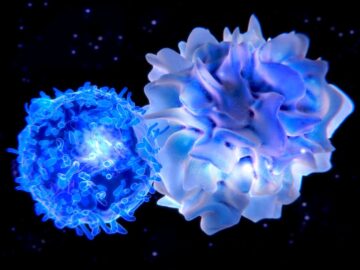 Back in 2001, immunologist Pere Santamaria was exploring a new way to study diabetes. Working in mice, he and his collaborators developed a method that uses iron oxide nanoparticles to track the key immune cells involved in the disorder.
 L
L Switching between languages, we may feel as if we are stepping from one world into another. Each language seemingly compels us to talk in a certain way and to see things from a particular perspective. But is this just an illusion? Does each language really embody a different worldview, or even dictate specific patterns of thought to its speakers?
 People would later say
 Scientists and philosophers sometimes advocate pretty outrageous-sounding ideas about the fundamental nature of reality. (Arguably I have been guilty of this.) It shouldn’t be surprising that reality, in regimes far away from our everyday experience, fails to conform to common sense. But it’s also okay to maintain a bit of skepticism in the face of bizarre claims. Philosopher Eric Schwitzgebel wants us to face up to the weirdness of the world. He claims that there are no non-weird ways to explain some of the most important features of reality, from quantum mechanics to consciousness.
 Normally at Five Books we ask experts to recommend the best books in their field and talk to us about them in an interview, either in person, by phone or via Zoom. In January 2023, we asked the AI bot, ChatGPT, to recommend books to us on the topic of AI. Being an AI doesn’t necessarily make the chatbot an expert on AI books, but we thought it might have some ideas. This week we caught up with ChatGPT to find out if there were any new AI books it wanted to recommend in the year since we spoke.