
David Denby in The New Yorker:
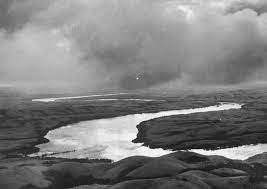 Who here comes from a savage race?” Professor James Shapiro shouted at his students.
“We all come from Africa,” said the one African-American in the class, whom I’ll call Henry, calmly referring to the supposition among most anthropologists that human life originated in sub-Saharan Africa. What Henry was saying was that there are no racial hierarchies among peoples—that we’re all “savages.”
Shapiro smiled. It was not, I thought, exactly the answer he had been looking for, but it was a good answer. Then he was off again. “Are you natural?” he roared at a girl sitting near his end of the seminar table. “What are the constraints for you? What are the rivets? Why are you here getting civilized, reading Lit Hum?”
It was the end of the academic year, and the mood had grown agitated, burdened, portentous. In short, we were reading Joseph Conrad, the final author in Columbia’s Literature Humanities (or Lit Hum) course, one of the two famous “great books” courses that have long been required of all Columbia College undergraduates. Both Lit Hum and the other course, Contemporary Civilization, are devoted to the much ridiculed “narrative” of Western culture, the list of classics, which, in the case of Lit Hum, begins with Homer and ends, chronologically speaking, with Virginia Woolf. I was spending the year reading the same books and sitting in on the Lit Hum classes, which were taught entirely in sections; there were no lectures. At the end of the year, the individual instructors were allotted a week for a free choice. Some teachers chose works by Dostoyevsky or Mann or Gide or Borges. Shapiro, a Shakespeare scholar from the Department of English and Comparative Literature (his book “Shakespeare and the Jews” will be published by Columbia University Press in January), chose Conrad.
More here.
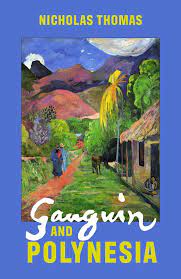 Today, says Thomas, ‘it feels difficult just to look at a Gauguin painting, without being told what to think’. The instructions tell us that he was ‘a sexual predator in life and a colonialist in his art’. Thomas’s aim is not to launder Gauguin’s reputation or undo recent decades of feminist art history and postcolonial studies but to eliminate some of the anachronism that inevitably arises when the past is examined, and judged, by contemporary mores.
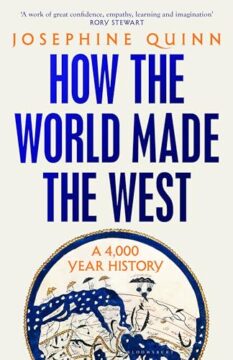 “Western civilisation” would not exist without its Islamic, African, Indian and Chinese influences. To understand why, Quinn takes us back in time, beginning at the bustling port of Byblos in Lebanon in about 2000BC. It was the middle of the bronze age, which “inaugurated a new era of regular long-distance exchange”. Carbon dating techniques applied to recent archaeological findings provide compelling evidence about just how “globalized” the Mediterranean already was, 4,000 years ago. Welsh copper went to Scandinavia, and Cornish tin as far as Germany, for the forging of bronze weapons. Beads of Baltic amber, found in the graves of Mycenaean nobles, were made in Britain. A thousand years later, trade up and down the Atlantic seaboard meant that “Irish cauldrons became especially popular in northern Portugal”.
 William Ewart Gladstone was Britain’s prime minister four times between 1868 and 1894, a member of Parliament for more than sixty years, a brilliant and passionate orator, an accomplished writer, and an indefatigable social reformer. Lord Kilbracken, his private secretary, estimated that if a figure of 100 could represent the energy of an ordinary man and 200 that of an exceptional one, Gladstone’s energy would be represented by a figure of at least 1,000.
 A
A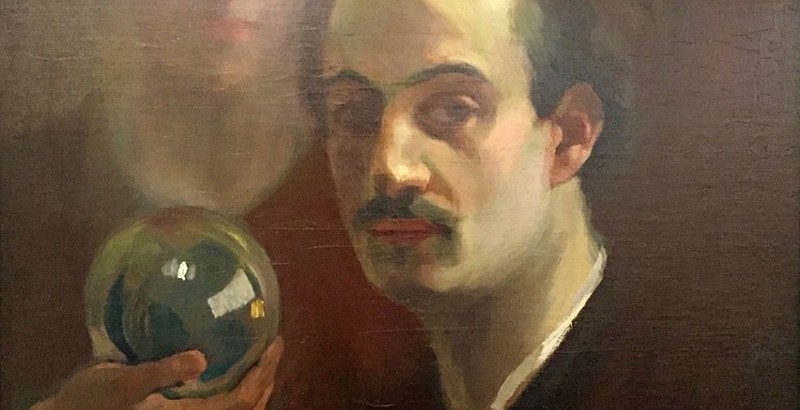 What made
  Cousin marriage rates are high in many countries today. We provide the first estimate of the effect of such marriages on the life expectancy of offspring. By studying couples married over a century ago, we observe their offspring across the lifespan. Using US genealogical data to identify children whose parents were first cousins, we compare their years of life to the offspring of their parents’ siblings. We find that marrying a cousin leads to more than a three-year reduction in offspring life expectancy. This effect is strikingly stable across time, despite large changes in life expectancy and economic environment.
 In 2007 Louise Glück selected Fady Joudah as the winner of the distinguished Yale Series of Younger Poets competition. In a foreword to his debut poetry collection published the following year, The Earth in the Attic, she called Joudah a “lyric poet in whom circumstance and profession . . . have compelled obsession with large social contexts and grave national dilemmas.” Since then, Joudah has published five more collections of poetry, won numerous awards, and translated several volumes of poetry by Palestinian writers, among them Mahmoud Darwish, perhaps the best-known Palestinian poet in the English-speaking world.
 “Where’s my tail?”
 T
T