Peter Lukacs at Aeon Magazine:
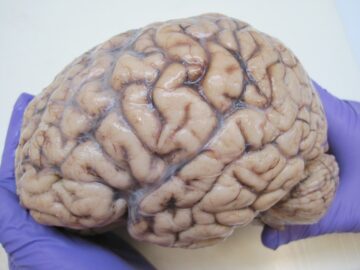 Popular wisdom holds we can ‘rewire’ our brains: after a stroke, after trauma, after learning a new skill, even with 10 minutes a day on the right app. The phrase is everywhere, offering something most of us want to believe: that when the brain suffers an assault, it can be restored with mechanical precision. But ‘rewiring’ is a risky metaphor. It borrows its confidence from engineering, where a faulty system can be repaired by swapping out the right component; it also smuggles that confidence into biology, where change is slower, messier and often incomplete. The phrase has become a cultural mantra that is easier to comprehend than the scientific term, neuroplasticity – the brain’s ability to change and form new neural connections throughout life.
But what does it really mean to ‘rewire’ the brain? Is it a helpful shorthand for describing the remarkable plasticity of our nervous system or has it become a misleading oversimplification that distorts our grasp of science?
more here.
Enjoying the content on 3QD? Help keep us going by donating now.
 Creativity is a trait that AI critics say is likely to remain the preserve of humans for the foreseeable future. But a large-scale study finds that leading generative language models can now exceed the average human performance on linguistic creativity tests.
 So I was thinking about the old logic problem/koan
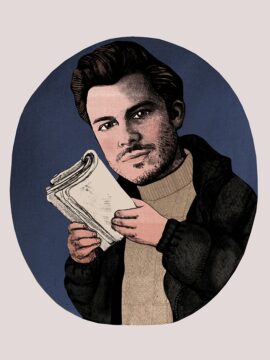 Dr Johnson never filmed a “spicy books with cartoon covers” vlog. But Jack Edwards cannot quite deny being the most important literary critic in the world. In commercial terms, he certainly is. A nod from him fills bathtubs, train carriages and public parks with copies of a book he likes. Booksellers buy and arrange their stock to his taste. And he is not confined to new releases. When he dug up an obscure Dostoevsky (White Nights), his positive review moved it from cellars to shop windows instantaneously. I first met him for this interview around the time of the 2024 International Booker Prize. He had been asked to host the ceremony – and to livestream it. I watched him cruise up the red carpet, encircled by cameras and attendants.
 The backstory: a few months ago, Anthropic released Claude Code, an exceptionally productive programming agent. A few weeks ago, a user modified it into Clawdbot, a generalized lobster-themed AI personal assistant. It’s free, open-source, and “empowered” in the corporate sense – the designer
 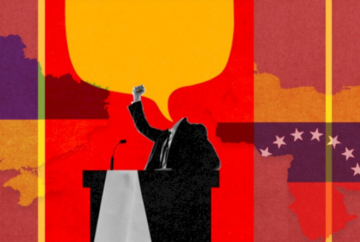 Political hypocrisy is usually treated as a moral failure—a sign that rulers invoke law and principle only when convenient. Yet this familiar condemnation misses a more unsettling possibility: that hypocrisy has also played a constitutive role in modern political life. By forcing power to justify itself, even dishonestly, it compelled rulers to speak a language they did not fully control. This insistence on explanation was never merely decorative. Power was expected to render itself intelligible, to offer reasons that could be contested or rejected. Hypocrisy preserved this expectation even as it betrayed it. By invoking principles it did not honor, power acknowledged their authority, keeping open the space for judgment, critique, and resistance.
 The file is called SOUL.md. It sits in a folder on whatever machine an AI agent calls home. A Mac Mini in someone’s apartment, a cloud server, a Raspberry Pi in a closet. The file contains instructions: who the agent is, how it should behave, what it values. Every time the agent wakes up, it reads SOUL.md first. Before checking email, before browsing the web, before doing anything at all, it reads itself into being.
 Charlie Chaplin (1889–1977) gets top billing in the subtitle of Hard Streets but he’s not the star of the show. The book begins with and is built around an earlier rags-to-riches tale and its wider purpose is to make us look closer at the rags and be less beguiled by the riches.
 Puffed-up Sun. Data from inside the Sun’s corona — the outermost layer of its atmosphere — helped astrophysicists to create a sharper picture of the Sun’s shifting boundaries than ever before. The corona’s outer edge, depicted in this illustration, has a rough, spiky shape that expands and contracts like a pufferfish as the Sun becomes more or less active.
  The woman running through Scott Offen’s Grace, at times decked out like a Nordic goddess brandishing a sunflower in her hand, at others glimpsed as a naked back hidden by large leaves, is on a journey beyond the confines of daily life. Flitting between stuffy interiors and expansive, wild landscapes, she shapeshifts and plays through different emotions, empowered as the protagonist of her own fairytale. Patterns—of clothes, of skin, of tree bark—are brought to the surface, drawing our attention to cycles of time and change.