
Sahasranshu Dash at The Hedgehog Review:
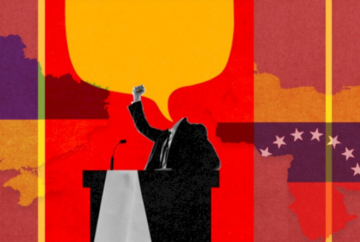 Political hypocrisy is usually treated as a moral failure—a sign that rulers invoke law and principle only when convenient. Yet this familiar condemnation misses a more unsettling possibility: that hypocrisy has also played a constitutive role in modern political life. By forcing power to justify itself, even dishonestly, it compelled rulers to speak a language they did not fully control. This insistence on explanation was never merely decorative. Power was expected to render itself intelligible, to offer reasons that could be contested or rejected. Hypocrisy preserved this expectation even as it betrayed it. By invoking principles it did not honor, power acknowledged their authority, keeping open the space for judgment, critique, and resistance.
As Hannah Arendt observed in On Violence, power and violence are not interchangeable. Power depends on recognition and collective judgment; violence appears where power can no longer command assent. What distinguishes political authority from domination is not the capacity to coerce but the ability to secure obedience without resorting to force.
More here.
Enjoying the content on 3QD? Help keep us going by donating now.