In The Ideas Letter, Aaron Benanav, Leif Weatherby, and Evgeny Morozov debate AI, capitalism and socialism:
Evgeny Morozov knows how to theorize (and, a fortiori, how to intellectually provoke) like few other mortals. The elegance of his argumentation and the sophistication of his critiques are legendary. Several issues back, Morozov launched a grenade by suggesting that socialist attempts to harness AI have treated it like other basic tools of capitalist production—as a neutral instrument that can simply be redirected—rather than as a transformative force that actively shapes social values and human capacities.
We now have two responses to Morozov’s original essay, one from the Cornell historian Aaron Benanav, a target of Morozov’s earlier salvo, and another from the NYU scholar Leif Weatherby. For Benanav, humanity stands between two technological revolutions—generative AI and the green energy transition—and how we choose between them will determine the shape of the future. His essay develops a broader project of designing a post-capitalist “multidimensional economy” (for more see his coruscating essays in New Left Review this past year ) while rebutting Morozov’s claim that such a framework would stifle technological “worldmaking.”
Weatherby, who looks at both Morozov and Benanav, argues that contemporary Marxist and socialist analyses of technology fail to engage adequately with the entanglement between technological rationality and capitalist ideology. To understand AI and the digital economy, Weatherby suggests, one must see them as the logical outcomes of a longstanding merger between mathematics, computation, and neoliberal governance—a fusion that has turned “optimization” into both the logic and the theology of capitalism itself.
Morozov responds in analytically stentorian tones asserting misrepresentation. His rebuttal is a blistering defense of his original essay on socialism and AI.
Enjoying the content on 3QD? Help keep us going by donating now.

 The pace of progress in the field has picked up dramatically, especially in the past two years or so, along several fronts. Teams in academic laboratories, as well as companies ranging from small start-ups to large technology corporations, have drastically reduced the size of errors that notoriously fickle quantum devices tend to produce, by improving both the manufacturing of quantum devices and the techniques used to control them. Meanwhile, theorists better understand how to use quantum devices more efficiently.
 A ray of hope is emerging in American education.
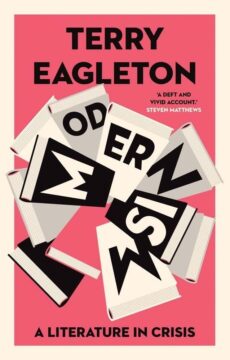 RECENTLY, THERE HAS been renewed scholarly interest in reassessing modernism. Several edited anthologies have been published this decade—Stephen J. Ross and Alys Moody’s Global Modernists on Modernism (2020), Douglas Mao’s The New Modernist Studies (2021), Sean Latham and Gayle Rogers’s The New Modernist Studies Reader (2021), the renowned Bloomsbury series Understanding Philosophy, Understanding Modernism, and Penn State University Press’s series Refiguring Modernism, to name a few. Terry Eagleton’s newest book, Modernism: A Literature in Crisis (2025), rides the wave of this renewed interest. The book is written in the author’s typically witty style, offering a reader-friendly introduction to—and vivid account of—modernism, not only in literature but also in all of its cultural dimensions. The word “literature” in the subtitle is thus misleading as the book goes well beyond that, engaging a range of debates about “crisis” at the beginning of the 20th century.
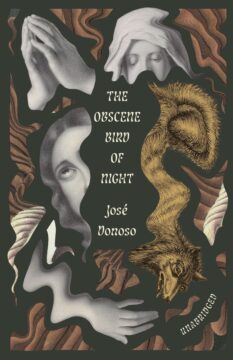 At the time of its initial publication in Spanish, José Donoso’s extravagantly grotesque novel The Obscene Bird of Night seemed to lend itself to a primarily political interpretation. It was 1970, and his native Chile was in the throes of the election campaign that resulted that September in the victory of Salvador Allende, the country’s first socialist president, and a sweeping effort to reorder its social and economic structures. Donoso’s novel read easily then as a deliberately outlandish allegory of the centuries of exploitation and oppression that were fueling Allende’s rise, and by the time the book appeared in English in 1973, the situation in Chile had cemented that impression: Allende and the transformation he sought were being besieged by the forces of reaction, and General Augusto Pinochet was soon to launch his bloody coup.
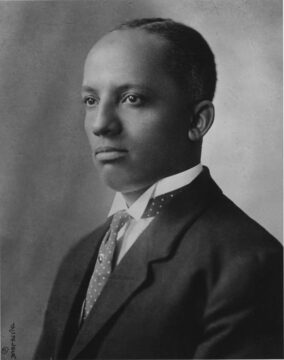 2026 marks a century of national commemorations of Black history. Dr. Carter Godwin Woodson, George Cleveland Hall, William B. Hartgrove, Jesse E. Moorland, Alexander L. Jackson, and James E. Stamps institutionalized the teaching, study, dissemination, and commemoration of Black history when they founded the Association for the Study of Negro Life and History (ASNLH) on September 9, 1915.
 M
M We need
  At the core of Wang’s argument is the assertion that for all their similarities, the two countries often function as “inversions” of one another. Labels of capitalist, neoliberal, communist and socialist have limited utility when it comes to the United States and China of the present. Instead, Wang argues, China is best understood as an “engineering state”, while the United States is a “lawyerly society”.
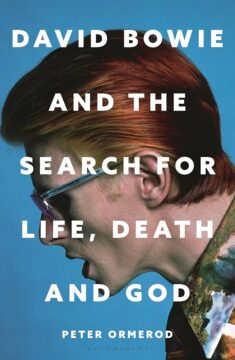 Beginning with the Anglicanism of St Mary’s Church in Bromley, where Bowie sang in the choir, continuing with his immersion in Tibetan Buddhism in the late 1960s and on to the occultism of Aleister Crowley, Ormerod unpacks the religious preoccupations of Bowie’s art in compelling prose. But still, it all seems rather straightforward and the little stabs at philosophy (Kierkegaard, Nietzsche, and so on) feel a tiny bit Wiki.
 Coppola’s adaptation cleaves relatively closely to the plot of Stoker’s novel, but Besson’s script replicates, almost exactly, only the parts of Coppola’s film that deviate from Stoker’s story. In both films, Dracula is explicitly the undead Vlad Ţepeș (the Wallachian warlord whose moniker Stoker borrowed while eschewing the rest of the actual history), in love with his wife, who dies during the Count’s fight against the Ottoman Empire. In both films, the character of Mina Murray is reimagined as the reincarnation and doppelgänger of said dead wife, and lengthy sequences are added in which Dracula and Mina have a secret courtship and fall in love. But in its deviation from Stoker’s text, Besson’s Dracula introduces some intriguing if somewhat underdeveloped ideas: Besson combines Renfield (Dracula’s asylum-bound thrall) and Lucy (his first victim) into a single character. The Van Helsing role is filled by an unnamed priest, played by Christoph Waltz, who muses about the obligations of lapsed Christians (like Dracula) to a God who has failed them. This Dracula also has all the visual hallmarks of a typical Besson film: an arresting, overblown style; intricately choreographed, dance-like action sequences (and dance sequences); slapstick with a 50 percent hit rate; weird, cutesy little CGI dudes.
 An axolotl is a salamander with a superpower:
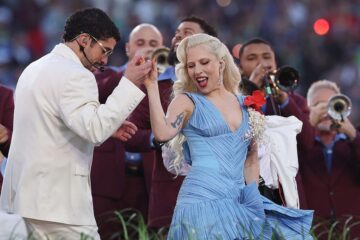 When Bad Bunny emerged from a row of towering sugar cane stalks to kick off his Super Bowl halftime show performance, it might have been easy to read the set design as little more than a lush backdrop: a tableau of Caribbean paradise imported to the Bay. Bad Bunny certainly didn’t explicitly acknowledge the sugar cane: He was too busy singing “Tití Me Preguntó,” a brash ode to his sexual prowess, which has racked up a billion streams both on Spotify and YouTube.