
Luke Harding in The Guardian:
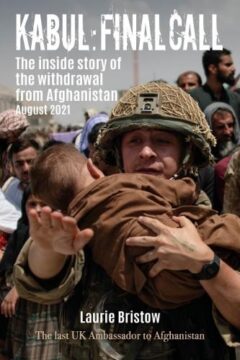 What went wrong? As Bristow tells it, the west failed because of bad strategy and a loss of will. After the attacks on the twin towers, a military response from the US and its allies was inevitable. Its goal: to exterminate al-Qaeda. As a young reporter, I watched the Taliban’s northern army surrender outside Mazar-i-Sharif. The five-year-old emirate ended in “a wilderness of shimmering desert and telegraph poles”, I wrote in 2001. It was “vanishing into history”.
This prediction turned out to be wrong. After a period in Pakistan’s tribal regions, the Taliban returned. They waged a brutal and increasingly effective insurgency against international and Afghanistan government troops. The conflict cost billions. Meanwhile, George Bush’s administration invaded Iraq. A surge by the next US president, Barack Obama, didn’t bring results. By 2021, the public had lost interest in Afghanistan, seeing it as a for ever war with few benefits.
Washington and London’s mistake, in Bristow’s view, was to seek a military solution to what was a political problem.
More here.
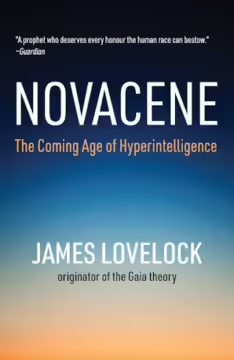 What is today called “artificial intelligence” should be counted as a Copernican Trauma in the making. It reveals that intelligence, cognition, even mind (definitions of these historical terms are clearly up for debate) are not what they seem to be, not what they feel like, and not unique to the human condition. Obviously, the creative and technological sapience necessary to artificialize intelligence is a human accomplishment, but now, that sapience is remaking itself. Since the paleolithic cognitive revolution, human intelligence has artificialized many things — shelter, heat, food, energy, images, sounds, even life itself — but now, that intelligence itself is
  A
A In March, the first lady, Jill Biden, announced a new
  B
B
 Tempted as I am to lavish consciousness on
  By now, you probably know that plastic recycling is a scam. If not, this
 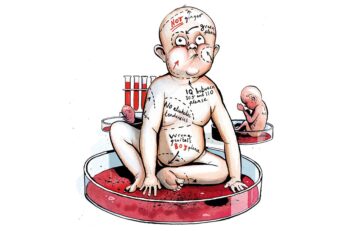 Emerging technology is about to present parents with a set of ethical questions that make the usual kinds of debates – breast milk or formula? Nanny or daycare? – seem trivial. We have always had the power (more or less) to control our children’s nurture. Before long – perhaps in just a few years – any parent who can afford to will have control over the minutest details of a child’s nature too.
 Editors of
  S
S Don’t mellow my harsh, dude.