
 Dear Reader,
Here’s your chance to say what you want to the large number of highly educated readers that make up 3QD’s international audience. Several of our regular columnists have had to cut back or even completely quit their columns for 3QD because of other personal and professional commitments and so we are looking for a few new voices. We do not pay, but it is a good chance to draw attention to subjects you are interested in, and to get feedback from us and from our readers.
We would certainly love for our pool of writers to reflect the diversity of our readers in every way, including gender, age, ethnicity, race, sexual orientation, etc., and we encourage people of all kinds to apply. And we like unusual voices and varied viewpoints. So please send us something. What have you got to lose? Click on “Read more” below…
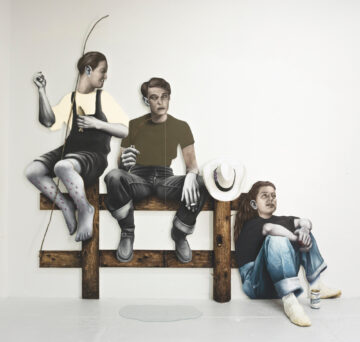 A hint of blue on the horizon meant morning was coming. And as they have for the past fifty-four years, Audrey and Gary Revell stepped out their screen door, walked down a ramp, and climbed into their pickup truck. Passing a cup of coffee back and forth, they headed south into Tate’s Hell—one corner of a vast wilderness in Florida’s panhandle where the Apalachicola National Forest runs into the Gulf of Mexico. Soon, they turned off the road and onto a two-track that stretched into a silhouette of pine trees. Their brake lights disappeared into the forest, and after about thirty minutes, they parked the truck along the road just as daylight spilled through the trees. Gary took one last sip of coffee, grabbed a wooden stake and a heavy steel file, and walked off into the woods. Audrey slipped on a disposable glove, grabbed a bucket, and followed. Gary drove the wooden stake, known as a “stob,” into the ground and began grinding it with the steel file. A guttural noise followed as the ground hummed. Pine needles shook, and the soil shivered. Soon, the ground glowed with pink earthworms. Audrey collected them one by one to sell as live bait to fishermen. What drew the worms to the surface seemed like sorcery. For decades, nobody could say exactly why they came up, even the Revells who’d become synonymous with the tradition here. They call it worm grunting.
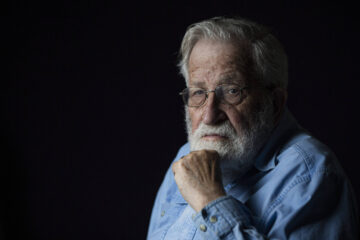 Besides being a linguist, Chomsky is a respected international political analyst. Of his more than one hundred books, four are specifically about Israel – its wars, governments, and aggressions against the Palestinian people. Despite hundreds of requests from the world press, he has not analyzed the Hamas attack on October 7 and the destruction of Gaza because he had a massive stroke last June. He has difficulty speaking, and the right side of his body is numb.
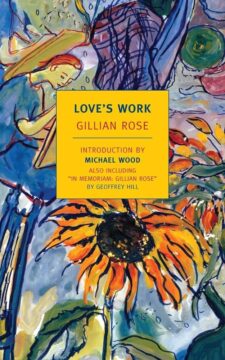 “I may die before my time.” The English philosopher Gillian Rose (1947-1995) opened one of her final lectures with these words; soon after, she would die of cancer at the age of 48. Rose’s words were doubly prescient. While her reputation has long been overshadowed by that of her more famous sister, the literary critic Jacqueline Rose, Gillian’s time seems to have arrived at last. Earlier this year in the U.K. Penguin Classics reissued Rose’s forthright memoir Love’s Work (1995), for which she is best known. The book, with its intimate yet unsentimental portrayal of sex, illness and death—in response to her cancer diagnosis, the author reaches “for my favourite whisky bottle” and vows “not to cease wooing, for that is my life affair”—has captivated many of its readers. London’s literati gathered in April at the London Review Bookshop for an event on Love’s Work, and preparations are already underway to mark the thirty years that have passed since the book’s publication and Rose’s death.
 ‘The trick is to create a world,’
 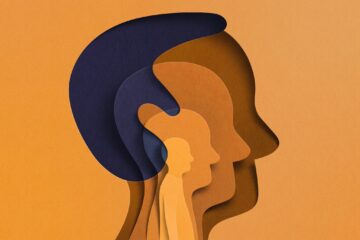 The average human head contains around 100,000 hairs. Each is connected to a follicle, which can hold one to five hairs. “It’s basically its own organ,” Dr. Mostaghimi said of a scalp follicle. “It has its own stem cells. It regenerates.”
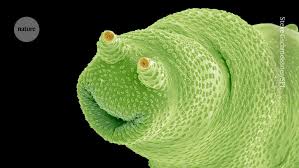 Cheese fungus, head lice, human sperm, a bee eye, a microplastic bobble: scientific photographer Steve Gschmeissner has imaged them all under the probing lens of a scanning electron microscope (SEM). In his colourized electron micrographs, faecal bacteria resemble thin spaghetti, silica-walled diatoms look like cubes of breakfast cereal and a segmented tardigrade resembles a curled-up, tubby piglet. Gschmeissner, who has been imaging microbes, cancer cells and invertebrates for about 50 years, has crafted an extraordinary array of more than 10,000 SEM images, some of which have been featured in Nature. He spoke to Nature about the importance of scientific images, looking at imploding cancer cells and the miniature world he found on a rotten raspberry.
 If you are single and looking for a romantic partner, chances are that you have used a
  Today is a big one for Kemmerer—for the coal plant workers who will be able to see their future job site being constructed across the highway, for the local construction workers who will be part of a 1,600-person skilled labor force building the plant, and for the local businesses that will take care of the new workforce.
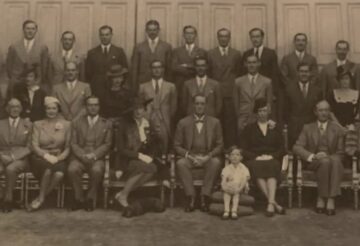 “I feel enormous shame about what happened,” Susannah Herbert tells me.
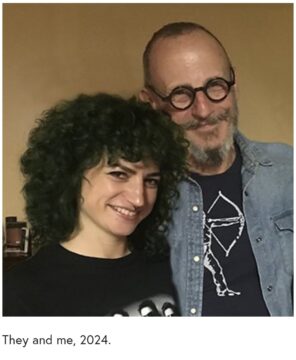 I successfully raised two children to adulthood who, until recently, I called my daughters. But in the past year, one of them has asked that I not refer to her with terms associated with females. She doesn’t feel that words like “her,” “ma’am,” or “daughter” describe her. In fact, she doesn’t think of herself as a woman and does not like to be referred to as “she.” Her pronouns are “they” and “them.”
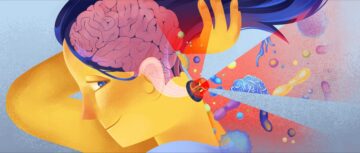 Last month, researchers discovered cells in the brainstem that regulate inflammation throughout the body. In response to an injury, these nerve cells not only sense inflammatory molecules, but also dial their circulating levels up and down to keep infections from harming healthy tissues. The discovery adds control of the immune system to the brainstem’s core functions — a list that also includes monitoring heart rate, breathing and aspects of taste — and suggests new potential targets for treating inflammatory disorders like arthritis and inflammatory bowel disease.