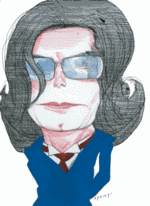
the freak

20090813-als

In his 1985 essay “Freaks and the American Ideal of Manhood,” Baldwin wrote of Michael Jackson:

The Michael Jackson cacophony is fascinating in that it is not about Jackson at all. I hope he has the good sense to know it and the good fortune to snatch his life out of the jaws of a carnivorous success. He will not swiftly be forgiven for having turned so many tables, for he damn sure grabbed the brass ring, and the man who broke the bank at Monte Carlo has nothing on Michael.

Baldwin goes on to claim that “freaks are called freaks and are treated as they are treated—in the main, abominably—because they are human beings who cause to echo, deep within us, our most profound terrors and desires.” But Jackson was not quite that articulate or vocal about his difference, if he even saw it as such after a while. Certainly his early interest in subtext —expressed primarily by wordplay and choice of metaphor—receded after he released his synthesizer-heavy 1991 album, Dangerous. That album gave us “In the Closet,” where an uncredited Princess Stéphanie of Monaco pleads, at the beginning of the song, for the singer not to ignore their love, “woman to man.” (It's another link in the chain of influence; she sounds like Jackson doing Diana Ross.) In a later part of the song, Michael pleads: “Just promise me/Whatever we say/Or whatever we do/To each other/For now we'll make a vow/To just keep it in the closet.”

But this would be his last engagement of this kind. Unlike Prince, his only rival in the black pop sweepstakes, Jackson couldn't keep mining himself for material for fear of what it would require of him—a turning inward, which, though arguably not the job of a pop musician, is the job of the artist.

more from Hilton Als at the NYRB here.

Merce Cunningham (1919-2009)

Merce-Cunningham-002

Merce Cunningham, who has died aged 90, was one of the greatest choreographers of the 20th century, and the greatest American-born one. As a choreographer, he never abandoned the voyage of discovery that he embarked on at the beginning of his career. Like his life partner and frequent collaborator, the composer John Cage, he remained intransigent to the last. He continued to lead his dance company, founded in 1953, until his death, and presented a new work, Nearly Ninety, last April, at the Brooklyn Academy of Music, New York, to mark his 90th birthday. In spite of what was often seen as his iconoclasm, his work was essentially classical in its formal qualities, its rigour, and its purity. Both Cunningham and Cage used chance processes, though in very different ways: Cage carried them through to the actual performance of his music, while Cunningham used them only in the creation of the choreography itself. As with any other compositional tool, what really matters is the quality of the imagination at work. Apart from Cunningham’s sheer fecundity of invention, his choreography was notable for its strength of structure, even though that structure was organic rather than preconceived.

more from David Vaughan at The Guardian here.

your brain in drive

Ideascenterdrive__1248524931_1492

The unresolved debate over how to monitor older drivers points to not only the difficulty of regulating an important social activity, but of the underappreciated complexity of driving itself. Getting behind the wheel of a car may be an everyday activity, but it’s also the most dangerous and cognitively assaultive thing most of us do, and the only realm in which most people are regularly confronted with split-second, life-or-death decisions. That also makes it a valuable laboratory for the study of human attention, perception, and concentration – an arena where brain science is turning seeming abstractions into hard knowledge about important life skills. “[Studying driving] turns out to be an excellent way to look at the limits of our attentional abilities, especially as we get older and we start to show significant declines,” says David Strayer, a psychology professor at the University of Utah. “It’s one of the most direct ways to be able to look at how attention works, how multi-tasking works.”

more from Drake Bennett at The Boston Globe here.

Tuesday Poem

On the Train with Judy Garland

We are leaving the coast,
the seafarer’s road to Utopia.
The train sounds weary, it is old stock.
The branch line runs between

dry-stone walls and bushes of gorse.
There are small estuaries,
inlets where the day ends in solitudes
that feel cold and fill with sudden stillness.

We hurtle through provincial stations
and slow down when it’s time to stop
for new passengers.
The girl on the seat opposite,

like a young Judy Garland,
has become my three-hour figment
of infatuation. Sometimes she seems
on the verge of speaking

but really she is occupied by what she sees
in nature: the vernal landscape
in the window frame,
the black raincloud like a mascara stain.

by Gerard Smyth

from A New Tenancy; Dedalus Press, Dublin, 2004

Evolutionary Psychology: A Response to Its Critics

Gad_saadIn Psychology Today, Gad Saad responds to Sharon Begley’s article on evo psyc in Newsweek. One of Saad’s points is that many evo psyc models incorporate contingent behavioral strategies, the “it depends” mode of explanation. I wonder though. If the claims of evolutionary psychology are given credence by identifying them in cross-cutural, transhistoric universal patterns of behavior, how can we know that the variations in behavior are the result of an “it depends” hardwiring or socio-cultural development?:

Sharon Begley has just written an article in Newsweek wherein she castigates the field of evolutionary psychology (EP) using the same antiquated and perfectly erroneous set of criticisms that have been addressed by evolutionary psychologists on endless occasions. If cats have nine lives then critics of evolutionary psychology à la Ms. Begley have infinite lives. The anti-EP dragon is slain repeatedly and yet it always resurfaces, emboldened by its blind and prideful ignorance of the facts. Unfortunately, it would take several posts for me to provide a point-by-point retort to the endless number of falsehoods that appear in her article. Instead, I will focus on a few key ones that were central to her critique.

(1) Ms. Begley’s article title, Can We Blame Our Bad Behavior on Stone-Age Genes, seems to levy yet again the specter that evolutionary psychology is tantamount to genetic determinism. Evolutionary psychologists posit that the human mind does indeed consist of evolved computational systems that can be instantiated in one of several ways as a function of specific triggering inputs. Put simply, evolutionary psychologists are perfectly aware that humans are an inextricable mélange of their genes and idiosyncratic life experiences. This is known as the interactionist perspective. Epigenetic rules by definition recognize the importance of the environment in shaping the manner by which biological blueprints will be instantiated. Hence, EP does not imply that we are endowed with a perfectly rigid and inflexible human nature. Rather, we do possess an evolutionary-based human nature that subsequently interacts with environmental cues. That said this does not imply that human nature is infinitely malleable. I challenge Ms. Begley to find a culture in the annals of recorded history where parents were overwhelmingly more concerned about their son’s chastity as compared to their daughter’s.

Tennessee Williams: the quiet revolutionary

From The Guardian:

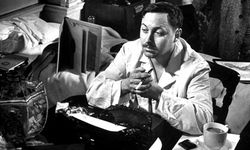
Tennessee-Williams-002 Who is Britain's favourite American dramatist? One year it seems to be Arthur Miller, the next it's David Mamet. Right now, Tennessee Williams is having a moment. Rachel Weisz opens in A Streetcar Named Desire tonight, at the Donmar in London. In December, a Broadway African-American Cat On a Hot Tin Roof, starring James Earl Jones and Adrian Lester, comes to the West End. And, in between, there is the European premiere of a forgotten 1937 play, Spring Storm, at the Royal & Derngate in Northampton. But, for all our enthusiasm for Williams, I think we still get him subtly wrong. He is most often dubbed a “psychological” dramatist, but this ignores his social and political radicalism – as well as his rich talent for comedy.

Of course, perceptions of Williams have evolved over the years. When Streetcar was first seen in London in 1949, in a production directed by Laurence Olivier and starring Vivien Leigh, Williams was viewed as a kind of filthy American sleaze-merchant. The confrontation of Blanche Dubois and Stanley Kowalski sent the British press into a tizzy: Logan Gourlay in the Sunday Express spoke for many when he condemned the play as “the progress of a prostitute, the flight of a nymphomaniac, the ravings of a sexual neurotic”. The play was attacked in Parliament as “low and repugnant”, and by the Public Morality Council as “salacious and pornographic”. When Cat On a Hot Tin Roof had its British premiere in 1958, it had to be presented under the polite fiction of a “club performance” – lest the broader public be corrupted by the discreet suggestion that its hero, Brick, is gay.

More here.

An Easy Way to Increase Creativity

From Scientific American:

An-easy-way-to-increase-c_1 Creativity is commonly thought of as a personality trait that resides within the individual. We count on creative people to produce the songs, movies, and books we love; to invent the new gadgets that can change our lives; and to discover the new scientific theories and philosophies that can change the way we view the world. Over the past several years, however, social psychologists have discovered that creativity is not only a characteristic of the individual, but may also change depending on the situation and context. The question, of course, is what those situations are: what makes us more creative at times and less creative at others?

One answer is psychological distance. According to the construal level theory (CLT) of psychological distance, anything that we do not experience as occurring now, here, and to ourselves falls into the “psychologically distant” category. It’s also possible to induce a state of “psychological distance” simply by changing the way we think about a particular problem, such as attempting to take another person's perspective, or by thinking of the question as if it were unreal and unlikely. In this new paper, by Lile Jia and colleagues at Indiana University at Bloomington, scientists have demonstrated that increasing psychological distance so that a problem feels farther away can actually increase creativity.

More here.

Exhuming the Spanish Civil War

Purcell_34.4_gravesiteJulius Purcell in the Boston Review:

History to the defeated

May say Alas but cannot help or pardon.

—W.H. Auden,

“Spain, 1937”

Auden’s anthem to the doomed Spanish Republic, his somber warning, has rarely been more relevant.

Last September Spain’s homegrown “super-judge” Baltasar Garzón—best-known for his dramatic 1998 effort to arrest the late Chilean dictator Augusto Pinochet in London— announced that he was investigating not only the whereabouts of the remains of the “disappeared” of the Spanish Civil War (1936-1939), but also the huge numbers of defeated Republicans executed by General Francisco Franco in the grim postwar years. His goal was to try to amass enough evidence to charge Franco’s regime posthumously with crimes against humanity. Could it be that, after so long, “help” and “pardon” were finally coming to the descendants of those who died defending the Spanish Republic?

According to the great Hispanist Hugh Thomas, the three-year Civil War claimed the lives of 365,000 Spaniards, a toll that includes both those loyal to the fascist rebel Franco and those who opposed him. Some historians put the figure higher. Both sides carried out brutal executions, the bodies of victims often ending up in unmarked mass graves.

When the Civil War ended in 1939, the victorious Franco regime executed an additional one hundred thousand-plus Republican prisoners, many of whose corpses were flung into yet more mass-burial pits. These unmarked mounds, visited stealthily by the families of the “defeated” during the dictatorship, are scattered the length and breadth of Spain.

Monday, July 27, 2009

Sunday, July 26, 2009

The foundations of NYU Abu Dhabi

From The National:

Bilde As the foundations of NYU Abu Dhabi come into view, John Gravois concludes his two-part series on NYU's new campus by examining the university’s efforts to translate grand ambition into reality – and the many challenges that remain.

Read part one of this series

To reach the offices of the Executive Affairs Authority – one of Abu Dhabi’s several modernising brain trusts – you ride a glass elevator up through the atrium of one of the city’s more upscale buildings and then walk to a set of unmarked doors. These open onto a minimalist, ivory-coloured lobby, as elegant as it is Apollonian, whose dominant feature is an immaculate bank of windows overlooking several desert islands to the north.

The office sits more or less on the edge of Abu Dhabi, with its back to the inhabited parts of the city, so its view to the unpopulated north is hushed, unobstructed and otherworldly. Across a blue-green waterway, half-skeletal towers rise out of the sand on Reem Island (slated for commercial and residential development) and Sowwah Island (financial, medical). Further off in the distance, you can see the first big power lines stretching out to Saadiyat Island, the planned site of Abu Dhabi’s Guggenheim and Louvre museums and the future home of New York University Abu Dhabi.

If the view from the Executive Affairs Authority has the feel of a command post, it is not undue. A number of the projects at the heart of Abu Dhabi’s growth fall under the authority’s quiet direction. NYU Abu Dhabi is one of them. For the past year, a handful of strategists here – along with NYU’s own small ground team, working out of a converted condominium across town – have been fine-tuning plans for the new university and overseeing its first pilot projects. From this exquisite office, they have been mapping out what some see as the masterstroke in Abu Dhabi’s future as a high-cosmopolitan capital of ideas.

More here.

On Iran, Do Nothing. Yet.

Fareed Zakaria in Newsweek:

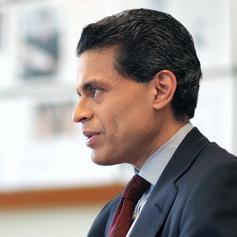
Zakaria_237-covermedium What is happening in Iran? On the surface, the country has returned to normalcy. Demonstrations have become infrequent, and have been quickly dispersed. But underneath the calm, there is intense activity and the beginnings of a political opposition. In the past week, Mir Hossein Mousavi, the candidate who officially lost last month's presidential election, has announced his intention to create a “large-scale social movement” to oppose the government and press for a more open political system. Mohammad Khatami, the reformist former president, has called for a referendum on the government. Another powerful former president, Ali Akbar Hashemi Rafsanjani, has criticized the regime's handling of the election and post-election “crisis.” All three have demanded the release of politicians and journalists imprisoned over the past month and held without charges. (Those prisoners include Maziar Bahari, NEWSWEEK's Tehran correspondent, a Canadian citizen, and an internationally recognized documentary filmmaker.) These are not dissidents in the wilderness. Between them, the three men have been at the pinnacle of power for most of the Islamic Republic's existence.

More here.

Can 21st-century Twitter rescue the wordplay mastered by 1st century Romans?

Our own Morgan Meis in The Smart Set:

Morgan, Greg, Jennifer, etc 084 People find a great deal of satisfaction worrying about attention span, at least for a little while, and especially in the realm of popular culture. Twitter is the latest culprit. It's recent importance in organizing Iranian street protests notwithstanding, the 140 character posting limit on Twitter makes a certain kind of person nervous. Such persons (such as Baroness Susan Greenfield, a scientist at Oxford University) wonder whether tweeting and other such activities “encourage instant gratification and make young people more self-centered.” She goes on to say, “My fear is that these technologies are infantilizing the brain into the state of small children who are attracted by buzzing noises and bright lights, who have a small attention span and live for the moment.”

Unfair to the inherent joys of buzzing noises and bright lights, the statement is particularly galling to those of us who are rather fond of the moment, and living therein. One wonders during which time period the Baroness would prefer we live. I will leave wholly without comment the fact that Baroness Greenfield is also a Patron of Dignity in Dying.

More here.

Finding the ‘I’ In Life

Michael Dirda in The Washington Post:

Book When young, we are all aesthetes, eager to enjoy a wondrous world full of beauty, promise and reward. The experience of life itself seems enough to keep us busy and happy. So we fall in love and go to work and find success or not, and the decades roll by. In later years, however, we become unwilling philosophers. A parent unexpectedly dies. The now-grown children go off on their own. Work suddenly loses its savor. Before long, we are taking long walks and wondering about the old perplexities: What makes for a meaningful life? How should we pass our too few days upon this Earth? What really matters?

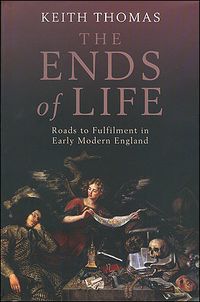
Keith Thomas's “The Ends of Life” examines the ways that people answered those questions from the early 16th century to the late 18th. To do so, this cultural historian — author of the classic “Religion and the Decline of Magic” (1971) — investigates six areas that have traditionally supplied aims for purpose-driven lives: Military prowess, work and vocation, wealth and possessions, honor and reputation, friendship and sociability, and fame and the afterlife. In each case, he presents his evidence largely through quotations from contemporary letters, memoirs, court testimonies and other documents. As Thomas's own connecting prose is graceful and sometimes crisply epigrammatic, “The Ends of Life” is a pleasure to read.

More here.

Your brain in drive

From The Boston Globe:

Driveinside__1248524670_1022 For all the indignities that the elderly suffer, they aren’t typically accused of being a menace to society. Until, that is, they get behind the wheel of a car. Here in Massachusetts, a spate of high-profile accidents involving older drivers – a 92-year-old man who killed his wife by backing over her in a parking lot, an 88-year-old woman who allegedly hit and killed a 4-year-old girl in a crosswalk in Stoughton last month, a 93-year-old man who mistook the gas pedal for the brake and drove through the entrance of a Danvers Wal-Mart – have triggered calls on Beacon Hill for measures that would take older drivers off the roads as their abilities decline. Within families, it has heightened anxieties about whether it may finally be time to take the car keys away from elderly parents or grandparents.

The risk is real. While there is a wide variation, people for the most part grow measurably worse at driving as they age. They experience a steady erosion of physical capabilities like strength, eyesight, and hearing. And perhaps more importantly, they also lose the specific cognitive skills that driving requires. Even a healthy aging brain suffers a declining ability to respond quickly, to take in one’s surroundings and identify potential dangers, and to balance and coordinate all of the different tasks that merely backing out of a driveway can involve.

And yet it also emerges that, as a group, elderly drivers are in far fewer accidents per capita than those in any other age group. Older people, it turns out, have a second set of skills that helps them make up for the ones that have diminished. For many people, old age brings a growing awareness of their own limits, and they compensate by driving less and avoiding situations that overtax their abilities. They don’t drive fast, or at night, or on the freeway, or during rush hour. They certainly don’t text and drive. Consciously or not, older drivers become savvy at working with what they have.

More here.

Saturday, July 25, 2009

Jon Stewart: The Most Trusted Newscaster in America… Be Afraid, Be Somewhat Afraid

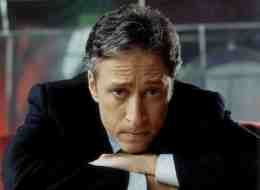
S-JON-STEWART-largeTime Magazine conducted an online poll, asking “Now that Walter Cronkite has passed on, who is America’s most trusted newscaster?” Jon Stewart received 44% of the vote, 15 percentage points more than the second most trusted newscaster, Brian Williams. Stewart came in first or second in every state, except Vermont.  And he won more than 50% of the vote in Rhode Island and Massachusetts, but also surprisingly in Idaho, Utah, Arkansas (where he won 63% of the vote). Jason Linkins in the Huffington Post:

Well, in a result that he will probably accept as downright apocalyptic for America, The Daily Show’s Jon Stewart has been selected, in an online poll conducted by Time Magazine, as America’s Most Trusted Newscaster, post-Cronkite. Matched up against Brian Williams, Katie Couric and Charlie Gibson, Stewart prevailed with 44 percent of the vote. Now, if we’re being honest, he probably managed to prevail as the winner precisely because he was the odd man out in a field of network news anchors. Nevertheless, I think Jim Cramer should feel free to SNACK ON THAT.

Brian Williams drew the second largest percentage of votes, with 29 percent. Gibson and Couric finished third and fourth, respectively, with 19 and 7 percent of the vote.

[H/t: Mark Blyth]