philosopher-bums, filthy-minded teenage prostitutes, and incorruptible government ministers

Jakov-lind

When Jakov Lind died in 2007, The Guardian hailed him as a writer who was a consummate survivor, an odd, sort-of Jew who had lived through the peak of Nazi power “inside the lion’s mouth” where he did not “have to feel the animal’s teeth and claws.” The author wrote some decidedly odd books, books that his publisher once said “never made a profit,” though “it was an honor to publish him,” and when he died he left behind a brilliant body of work that was largely out of print. Thanks to the efforts of an enthusiastic few, this work, translated by the legendary Ralph Manheim, is now experiencing a resurrection. Lind is not only a major post-Holocaust writer; he is also a modernist of extraordinary talent and vision. His writing shows an intriguing, Beckettian dissolution of reason, and it owes a clear debt to the absurdists, whose themes of obsession and the perversion of reality closely resemble Lind’s work. Born in Vienna a decade before the Anschluss, Lind also owes something also to the Austro-Jewish literary tradition exemplified by Stefan Zweig—there’s a humanist regard that colors his work and tinges his cynicism with a smirking regret. This sort of weeping giddiness characterizes all of Lind’s writing, from his excellent dramatic efforts like The Silver Foxes Are Dead to his short stories and his extraordinary dark novels.

more from Jeff Waxman at The Quarterly Conversation here.

To be an American this patriotic, it probably helps to be Scottish

Borowitz-600

Craig Ferguson isn’t kidding. That’s what struck me as I turned the pages of the Scottish late-night comedian’s memoir, “American on Purpose: The Improbable Adventures of an Unlikely Patriot.” Almost every time Ferguson has a chance to go for a cheap, easy laugh — the mother’s milk of late-night comedy — he runs in the opposite direction. Take the opening scene in which he meets George W. Bush at a reception before the 2008 White House Correspondents’ Association dinner, where Ferguson, a newly minted American citizen, is to be the entertainment. He recognizes that making fun of Bush near the end of his catastrophic presidency would be like shooting fish in a barrel, so what does he do instead? He bonds with Bush as a fellow recovering alcoholic, clinking glasses of sparkling water with him as the president makes an earnest toast to America. I repeat: this is the opening scene of a book by a comedian. That’s what we in the comedy business call courage, and it pretty much sets the tone for the rest of this memoir, in which Ferguson admirably avoids wisecracks and instead goes for something like wisdom.

more from Andy Borowitz at the NY Times here.

What Scorsese and All the Rest Know About Roman Polanski That Maybe You Don’t

Allison Benedikt in The Village Voice:

Roman-polanski If it's weird to you that every filmmaker you've ever liked is taking Roman Polanski's side in the curent controversy, perhaps it's because you don't know Polanski like we know Polanski.

Sure, it seems obvious: Polanski raped a kid, Polanski fled the country, Polanski should pay for his crime. But if all that were true, why would the world's most prominent filmmakers and artists sign a petition demanding his release? I'm not just talking cranks like Pedro Almodovar. Good, stand-up Americans like Wes Anderson and Alexander Payne are demanding that justice be served by forgetting about all this rape business. And if you knew Roman Polanski like we know Roman Polanski, you would surely understand how artistically narrow-minded it is to treat him like a rapist just because he raped someone.

More here. [Thanks to Maud Newton.]

Darwin In Chile

From Edge:

Edge was invited by Alvaro Fischer, the Director of Fundacion Ciencia Y Evolucion in Chile to attend the Foundation's Darwin Seminar in Santiago, entitled “Darwin's Intellectual Legacy To The 21st Century” and join the eight speakers (all Edge contributors) on a trip to the “extreme south” including a trip along “The Beagle Channel”, named after the ship HMS Beagle which surveyed the coasts of the southern part of South America from 1826 to 1830.

Glacier

The Seminar, which ran for two days, attracted an audience of 2,200 people on each day…

Pinker Dennett Our intention is to illuminate and discuss how Darwinian thought influenced the disciplines that focus on the study the individuals (biology, neuroscience, psychology); the individual within their social interactions (anthropology, sociology, economy, political science); and how these concepts pertain, in general, to a moral philosophy.”

“We wish to explore how, from Darwinian thought, there emerges a vision of what it is to be a human being. And that this vision is fundamental and coherent with the entire body of accumulated scientific knowledge. With reverence for the details of their application, it is the impact of Darwin's ideas that is the reason we are celebrating Darwin's anniversary.”

More here.

Kid Stuff

From The New York Times:

Kid As if we needed yet another indicator of economic collapse, note that the men who once chronicled financial high jinks have turned to baby sling strategy and sibling rivalry. First Michael Lewis, author of “Liar’s Poker,” hit the best-seller list with a memoir about the perils (and awww, rewards) of being a dad. Now Po Bronson, who made his name novelizing Bay Area bond trading and Silicon Valley upstarts, has come out with a book on child-rearing.

But not just any book! “NurtureShock,” with its Toffleresque title, promises to revolutionize parenthood with “New Thinking About Children.” According to Bronson and his co-writer, Ashley Merryman, who runs a church-based tutoring program for urban youth, “nurture shock” is the panic common to new parents that “the mythical fountain of knowledge is not magically kicking in.” It’s that gut-pummeling doubt that hits the moment you bring your first child home from the hospital— “They let us keep this thing?” — and snowballs from there. Such feelings of inadequacy, the authors suggest, are justified. But, as they write with deeply felt earnestness, “small corrections in our thinking today could alter the character of society long term, one future-citizen at a time.”

More here.

There’s no bally God, so put a sock in it and have a gargle with the lads

Lede_bus_480

Richard Dawkins has a go at some P.G. Wodehousery:

I was hoofing it down Regent Street, admiring the Christmas decorations, when I saw the bus. One of those bendy buses that mayors keep threatening with the old heave-ho. As it drove by, I looked up and got the message square in the monocle. You could have knocked me down with the proverbial. Another of the blighters nearly did knock me down as I set a course for the Dregs Club, where it was my purpose to inhale a festive snifter, and I saw the same thing on the side. There are some pretty deep thinkers to be found at the Dregs, as my regular readers know, but none of them could make a dent on the vexed question of the buses when I bowled it their way. Not even Swotty Postlethwaite, the club’s tame intellectual. So I decided to put my trust in a higher power.

“Jarvis”, I sang out, as I latchkeyed self into the old headquarters, shedding hat and stick on my way through the hall to consult the oracle. “I say Jarvis, what about these buses?”

“Sir?”

“You know, Jarvis, the buses, the ‘What is this that roareth thus?’ brigade, the bendy buses, the conveyances with the kink amidships. What’s going on, Jarvis? What price the bendy bus campaign?”

More here. [Thanks to Ruchira Paul, who has a post on Wodehouse here.]

Understanding the Anxious Mind

Robin Marantz Henig in the New York Times Magazine:

ScreenHunter_03 Oct. 03 08.53 Jerome Kagan’s “Aha!” moment came with Baby 19. It was 1989, and Kagan, a professor of psychology at Harvard, had just begun a major longitudinal study of temperament and its effects. Temperament is a complex, multilayered thing, and for the sake of clarity, Kagan was tracking it along a single dimension: whether babies were easily upset when exposed to new things. He chose this characteristic both because it could be measured and because it seemed to explain much of normal human variation. He suspected, extrapolating from a study he had just completed on toddlers, that the most edgy infants were more likely to grow up to be inhibited, shy and anxious. Eager to take a peek at the early results, he grabbed the videotapes of the first babies in the study, looking for the irritable behavior he would later call high-reactive.

More here.

On Roman Polanski and Moral Luck

Morgan_meis_photo Morgan Meis in The Smart Set:

Roman Polanski may have finally turned out to be morally unlucky. Let me explain what I mean.

When Immanuel Kant was thinking about morality, lo those many years ago in Königsburg, he made an important distinction. Morality, he reasoned, cannot be about what actually happens in the world — it has to be about the pure moral will. Here’s why. Let’s say I walk out of the house on my way to murder as many people as possible. I trip over a vagrant and accidentally push a small child. The child falls down and thus narrowly misses being decapitated by a falling sheet of glass. Whoopee, I’m the moral hero of the day, having saved the little tyke’s life.

“No way,” says Kant. I am still morally bad because I was a murderous fiend in intent, even as I saved the tiny crumb snatcher. Morality is about the purity of my choices and decisions, not about happenstance. One can’t be accidentally good, or bad.

A century and a half or so after Kant, Bernard Williams — a Cambridge man who eventually ends up at Berkeley in the 1980s — thinks about moral philosophy and warms his disapproval of strict Kantians. For Williams, outcomes matter. Let’s say, after inadvertently preventing the gruesome decapitation of the child, I intend to resume my killing spree but, curses! my weapon jams. According to Williams I am less morally culpable (as an attempted murderer) than if I actually achieved the intended body count (as a first-degree murderer). Outcomes matter, and we prove it in the way we treat crime and justice all the time.

Friday, October 2, 2009

Roman Polanski Has a Lot of Friends

Katha Pollitt in The Nation:

It’s enraging that literary superstars who go on and on about human dignity, and human rights, and even women’s rights (at least when the women are Muslim) either don’t see what Polanski did as rape, or don’t care, because he is, after all, Polanski–an artist like themselves. That some of his defenders are women is particularly disappointing. Don’t they see how they are signing on to arguments that blame the victim, minimize rape, and bend over backwards to exonerate the perpetrator? Error of youth, might have mistaken her age, teen slut, stage mother–is that what we want people to think when middle-aged men prey on ninth-graders?

The widespread support for Polanski shows the liberal cultural elite at its preening, fatuous worst. They may make great movies, write great books, and design beautiful things, they may have lots of noble humanitarian ideas and care, in the abstract, about all the right principles: equality under the law, for example. But in this case, they’re just the white culture-class counterpart of hip-hop fans who stood by R. Kelly and Chris Brown and of sports fans who automatically support their favorite athletes when they’re accused of beating their wives and raping hotel workers.

No wonder Middle America hates them.

i am my own wife

Genesis090913_1_560

‘We are an eccentric English person,” says the artist Genesis Breyer P-Orridge, greeting me at his apartment, where he’s touching up collages. “You’re okay with that?” I nod. “Good,” he purrs, his voice dropping an octave. “Then we’re going to do just fine.” I’m here to discuss the curatorial interest in his work as of late—his opening at the Lower East Side gallery Invisible-Exports, the films about his life, the Tate’s acquisition of his archives. But what I see, when he sits down on his bed, is that his potbelly props up his C-cup breasts. As we speak, his thick fingers brush away strands of his platinum bob from bloated lips slicked pink with gloss. He looks like a funhouse version of Courtney Love. More accurately, he has refashioned himself to look uncannily like his late wife, the woman with whom he has come to share an identity, a profile, even beauty marks.

more from Erica Orden at New York Magazine here. 3QD friend Marie Losier’s music video starring P-Orridge (with cameos by many fluxers including Stefany Anne Golberg) below…

The Nature of Technology: An Interview with W. Brian Arthur

2009917944227491-ArthurBrian3 In American Scientist:

Technologies evolve, but how far does the analogy go with Darwin’s ideas? Does it hold up pretty well, or have you had to adapt it?

Attempts to create a theory of evolution for technology have failed because they have tried to import Darwin’s mechanism of the gradual accumulation of changes through variation and selection. That works pretty well once a technology exists—the helicopter, say, or the steam engine. It exists in many variants, the better ones are selected, and progress happens. That’s what Darwin would have called descent with modification, and that does apply in technology.

But the difficult part comes in the question that Darwin himself asked for biology: How do new species originate? The counterpart question is “How do radically new technologies originate, such as jet engines or laser printers?” It’s pretty clear that a different mechanism is at work, and I came upon the idea—it’s by no means totally new—that these radically new technologies are created by putting together combinations of what already exists. That doesn’t mean you throw technologies up into the air and randomly watch what combines. The human mind is extraordinarily important, and human beings are essential to how new technologies originate. Still, when someone comes up with an invention, it turns out to have been put together from existing components.

A GPS system is a combination of computer processors, satellites, atomic clocks, radio transmitters and receivers. Whoever invented that did not say, “I am going to combine existing technologies”; they’re basically saying, “What is it going to take to solve a problem here—the one of finding a point’s location on the earth?” And that combination resulted. So technology evolves by combination, and once the technology’s in place, then the Darwinian mechanisms of variation and selection set in.

Metaphysics in a Time of Terrorism

Eagleton2 Terry Eagleton in Commonweal:

Why are the most unlikely people, including myself, suddenly talking about God? Who would have expected theology to rear its head once more in the technocratic twenty-first century, almost as surprisingly as some mass revival of Zoroastrianism? Why is it that my local bookshop has suddenly sprouted a section labeled “Atheism,” hosting anti-God manifestos by Christopher Hitchens, Richard Dawkins, and others, and might even now be contemplating another marked “Congenital Skeptic with Mild Baptist Leanings”? Why, just as we were confidently moving into a posttheological, postmetaphysical, even posthistorical era, has the God question broken out anew?

Can one simply put it down to falling towers and fanatical Islamists? I don’t really think we can. Certainly the New Atheists’ disdain for religion did not sprout from the ruins of the World Trade Center. While some of the debate took its cue from there, 9/11 was not really about religion, any more than the thirty-year-long conflict in Northern Ireland was over papal infallibility. In fact, radical Islam generally understands exceedingly little about its own religious faith, and there is good evidence to suggest that its actions are, for the most part, politically driven.

That does not mean these actions have no religious impact or significance. Islamic fundamentalism confronts Western civilization with the contradiction between the West’s own need to believe and its chronic incapacity to do so. The West now stands eyeball-to-eyeball with a full-blooded “metaphysical” foe for whom absolute truths and foundations pose no problem at all—and this at just the point when a Western civilization in the throes of late modernity, or postmodernity if you prefer, has to skate by on believing as little as it decently can. In post-Nietzschean spirit, the West appears to be busily undermining its own erstwhile metaphysical foundations with an unholy mélange of practical materialism, political pragmatism, moral and cultural relativism, and philosophical skepticism. All this, so to speak, is the price you pay for affluence.

Byatt’s knowingly archival Victorianism

Byatt-as

There is what seems an interesting slip early in A.S. Byatt’s new novel. It is 1895. A young working-class man, Philip Warren, has been adopted by a liberal upper-class family, the Wellwoods. At the Kentish country home of Olive and Humphry Wellwood, a glorious Midsummer Party is in preparation. Humphry is a banker (though he will soon switch to journalism), and Olive is a famous children’s writer. Lucky Wellwood children, Tom, Dorothy, Phyllis and Hedda, are making paper lanterns. Philip reflects that, in his former life, he had to beg for scraps of paper to draw on; but these generous people throw away paper with unconcern. Byatt comments: ‘He looked up and had the disconcerting sense that Dorothy was reading his mind.’ There is a section break, and Byatt continues: ‘Dorothy had indeed, more or less accurately, followed Philip’s thoughts. She did not know how she had done that. She was a clever, careful child, who liked to think of herself as unhappy.’ We have instantly entered, with the finality of fairy tale, a familiar Byattian world, in which the author dances, with leaden slippers, around the thought-sleep of her characters. There is that teacherly, qualifying authorial judgment: ‘more or less accurately’.

more from James Wood at the LRB here.

Friday Poem

Predicament

I feel exactly like a young mother
who buys a book—a biography of Marie
Antoinette and then cannot
push past the opening chapters,
the overbearing Queen, summer retreat,
line of carriages slowly winding
through the forest, the necessary
rouge, everyone watching, nothing
happening, gambling experts brought
in from Paris, the earnest insistence
that one has not been riding horseback.
I feel exactly like a young mother
who bought a book about a young
Austrian girl but is actually only
a new mother, not young, pushing
my cart through the bread aisle,
rolls and loaves lined up
wondering about scarcity,
the anger rising up in the countryside
when the nobles go plowing through
fields as they hunt, thoughtlessly stomping
down the corn, the peasants at this point
still raising a hand in respectful greeting,
but the smile, the bright and fixed smile,
fading away so much more quickly now.

by Jenn Blair

from Loch Raven Review;
2009- Vol. 5, No.2

Will Love Reawaken the Recently Dead?

Ron Charles in The Washington Post:

Book More than a month before Halloween, the most sophisticated horror stories are already crawling out of the ground. You think you're safe over there in the primly maintained Literary Fiction section of the cemetery, peering across the rusty gate at Stephen King's “Under the Dome” (Nov. 10), Anne Rice's “Angel Time” (Oct. 27) and even a sequel to “Dracula” written by — please, no! — Bram Stoker's great-grandnephew (Oct. 13). But meanwhile your genteel old friends have already been hideously transformed: Sarah Waters leads this bone-chilling pack with a Jamesean ghost story called “The Little Stranger,” which has a good shot at winning the Booker Prize next week. Dan Chaon's “Await Your Reply” pays homage to everybody from Peter Straub to H.P. Lovecraft, and Mary Shelly's “Frankenstein” has been re-stitched by such non-horror writers as Peter Ackroyd and Laurie Sheck. In short, there's nowhere to hide this year from frighteningly smart, scary novels.

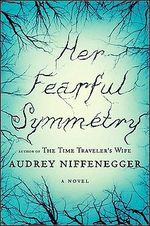
The latest to join this infernal group comes from Audrey Niffenegger, author of the phenomenally popular “Time Traveler's Wife,” which means her new one has a good chance of haunting the bestseller list, too. As naturally as she used elements of science fiction in the past, she borrows the tropes of Victorian Gothic here for a story that seems, at first, more interested in whimsy than terror. “Her Fearful Symmetry” doesn't reveal its spectral elements for more than 60 pages, and when the first ghost does make an appearance, “gaining opacity gradually,” the scene is strangely poignant and witty, like a visitation from Noël Coward's “Blithe Spirit.” But Niffenegger manages to breathe life into these dead cliches, noting at one point that the soul leaves the body “slippery like an avocado stone popping out.”

More here.

Destigmatizing Depression

From Science:

Depression_SaraBjork_160 Flaherty speaks in a rapid-fire staccato about her still-born twin sons, lost after a difficult pregnancy more than 10 years ago, as she was about to start the residency portion of the Harvard-MIT M.D.-Ph.D. program. A postpartum depression morphed into mania and an eventual diagnosis of bipolar disorder. As a psychiatrist in training, Flaherty was fascinated by her own disease and began speaking publicly about her travails. During that time, she was approached by her peers and discouraged from talking about her mental illness.

“One thing that appalled me is how many doctors told me I should hush it up,” says Flaherty, who today is an assistant professor in the Neurology Department at Harvard Medical School in Boston and directs a fellowship program at Massachusetts General Hospital. She didn't listen. And as she reached out, she found that her experiences resonated with other students who were isolated, enveloped in their own malaise. They began to seek her out and share their own experiences with depression. Their stories convinced her that there was an undercurrent of depression among a significant portion of her profession that no one wanted to talk about publicly. “The more I talked, the more I met all these people who were saying, 'Oh yeah, I had all these problems when I was a resident or when I got my first job.' And they had never talked to anybody, so it was a sort of a relief for them that I was out of the closet,” she says.

More here.

The Hudson River at 400

Our own Morgan Meis in The Smart Set:

Morgan Henry Hudson spent most of his time looking for the Northwest Passage. He wanted to get through all the pesky land and make it from one ocean (the Atlantic) to another (the Pacific). Such a passage doesn't really exist. To get around North America you've got to do just that — go up and around the thing altogether. But Henry didn't know that. He hoped the river was the ticket, west meets east. When you're looking for something that bad it screws your brain up. Some suspect that's what happened to Henry. The Northwest Passage drove him crazy. He pushed his crew too far. He couldn't stop and everyone else wanted to go home. Finally, the crew put Henry in a dingy with his son and a few others and set him loose in northern waters. It was mutiny. Real, honest-to-goodness mutiny. Nobody ever saw Henry Hudson again, at least that we know of. He died for the Northwest Passage and for being a stubborn bastard and for not knowing when it is time to go home.

The Hudson River is similarly possessed of an irresponsible flow. It doesn't know whether it is coming or going.

More here.