Brian Leiter on Nietzsche Myths

Over at Philosophy Bites:

Friedrich Nietzsche is famous for many things, including the idea of the Übermensch, The Will to Power and his sceptical beliefs about truth that make him a precursor of much postmodern thinking. But according to Nietzsche expert Brian Leiter (the man behind the Leiter Reports Weblog) close reading of his work tells a different story.

Listen to Brian Leiter on Nietzsche Myths

Brian Leiter's Nietzsche Weblog

1989!…Twenty Years Later

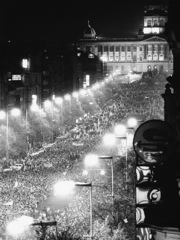
20091105-prague Timothy Garton Ash in the New York Review of Books:

Unsurprisingly, the twentieth anniversary of 1989 has added to an already groaning shelf of books on the year that ended the short twentieth century. If we extend “1989” to include the unification of Germany and disunification of the Soviet Union in 1990–1991, we should more accurately say the three years that ended the century. The anniversary books include retrospective journalistic chronicles, with some vivid personal glimpses and striking details (Victor Sebestyen, György Dalos, Michael Meyer, and Michel Meyer), spirited essays in historical interpretation (Stephen Kotkin and Constantine Pleshakov), and original scholarly work drawing on archival sources as well as oral history (Mary Elise Sarotte and the volume edited by Jeffrey Engel). I cannot review them individually. Most add something to our knowledge; some add quite a lot. It is no criticism of any of these authors to say that I come away dreaming of another book: the global, synthetic history of 1989 that remains to be written.

Over these twenty years, the most interesting new findings have come from Soviet, American, and German archives, and, to a lesser extent, from East European, British, and French ones. They throw light mainly on the high politics of 1989–1991. Thus, for example, we find that the Soviet Politburo did not even discuss Germany on November 9, 1989, the day the Berlin Wall would come down, but instead heard a panicky report from Prime Minister Nikolai Ryzhkov about preparations for secession in the Baltic states and their possible effects in Ukraine and Russia. “I smell an overall collapse,” said Ryzhkov.

It’s All a Dream

From The Washington Post:

City Jonathan Lethem's brilliant, bloated new novel about the hollowness of modern life should delight his devoted fans — and put them on the defensive. They will point, justifiably, to the exquisite wit and dazzling intricacy of every single paragraph. In the pages of “Chronic City,” all 467 of them, this super-hip, genre-blurring, MacArthur-winning, best-selling novelist proves he's one of the most elegant stylists in the country, and he's capable of spinning surreal scenes that are equal parts noir and comedy. But ultimately, these perfectly choreographed sentences compose a tedious reading experience in which redundancy substitutes for development and effect for profundity.

This is a strange study of the shimmering unreality of New York City, full of knowing references to its culture, politics, celebrities, aristocrats and authors. The story takes place as a series of long monologues and conversations, both cerebral and silly. The narrator, Chase Insteadman, is a handsome bon vivant, “a Manhattan gadabout,” who skates on “frictionless ball bearings of charm” and lives off residuals from his days as a child TV star.

More here.

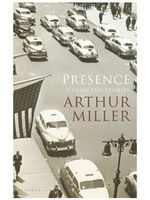
Presence: Collected Stories by Arthur Miller

From The Telegraph:

Book Arthur Miller’s foreword to his first collection of short stories from 1967 won’t delight the more bullish champions of the form – and not just because, as reprinted here, it keeps misspelling “Hemingway”. The idea, he writes, that short stories are “more or less casual things at the lower end of the scale of magnitude” is one he is quite happy to accept. In fact, this is precisely why he enjoys writing them. For a playwright, they’re a chance to escape “the terrible heat at the centre of the stage” for something less grand and more self-effacing.

The rest of the book triumphantly lives up to these modest claims. The 18 stories – which include the two collections published during his life, and a third, Presence, published posthumously (here making its first British appearance) – lack the crunching power of Miller’s best drama. The compensation, though, is a rich, even touching sense of intimacy. With a few exceptions, these stories are not just good, but good in a way that may well come as a revelation to Miller fans. “I feel I know Chekhov better from his stories than from his plays,” he says in that same foreword – and after reading Presence you have exactly the same feeling about him.

More here.

Sunday Poem


Carrigskeewaun, County Mayo, Ireland

The Leveret
………….

This is your first night in Carrigskeewaun.
The Owennadornaun is so full of rain
You arrived in Paddy Morrison’s tractor,
A bumpy approach in your father’s arms
To the cottage where, all of one year ago,
You were conceived, a fire-seed in the hearth.
Did you hear the wind in the fluffy chimney?
Do you hear the wind tonight, and the rain
And a shore bird calling from the mussel reefs?
Tomorrow I’ll introduce you to the sea,
Little hoplite. Have you been missing it?
I’ll park your chariot by the otters’ rock
And carry you over seaweed to the sea.
There’s a tufted duck on David’s lake
With her sootfall of hatchlings, pompoms
A day old and already learning to dive.
We may meet the stoat near the erratic
Boulder, a shrew in his mouth, or the merlin
Meadow-pipit-hunting. But don’t be afraid.
The leveret breakfasts under the fuchsia
Every morning, and we shall be watching.
I have picked wild flowers for you, scabious
And centaury in a jam-jar of water
That will bend and magnify the daylight.
This is your first night in Carrigskeewaun.

by Michael Longley, 2004

Photo: Carrigskeewaun, County Mayo, Ireland

Saturday, October 17, 2009

Herta Müller: being watched, bugged, filmed or scanned

DEU_Buchmesse_Buchpreis__FRA1074ad4c5b224bf

Herta Müller has eyes like spotlights that drive out the darkness night after night. She is small, featherweight even, and is the last person you would suspect spent to have spent a childhood herding cows. Of her background, she says: “I was born in 1953 in Nitzkysdorf, the year in which Stalin physically died – mentally, he continued living for years. The village,” she continues, referring to her place of birth, “lies in the Romanian Banat, a two-hour drive from Belgrade and Budapest. A peasant population, white, pink, pale blue gables – and triangular houses in symmetrical streets. My father hated working in the fields and when he returned from the SS in 1945, he became a lorry driver and alcoholic. The combination is possible in the countryside. My mother was and remained a peasant in the corn and sunflower fields. Corn for me is the socialist plant par excellence: it displays its colours, grows in colonies, blocks the view and cuts your hands with its leaves while you’re working.”

more from Verena Auffermann at Sign and Sight here.

Midnight Pussycats (!)

Vonnegut

“The only way I can regain credit for my early work is to die,” Kurt Vonnegut once said, sounding more amused than worried about it. Ever the realist, ever the stoic, ever the cynic, Vonnegut got how the lit game works. Reputations soar, tumble into the trash and rise mysteriously again. The good news is that quality tells in the end; and so here we are, 2 1/2 years after Vonnegut’s death, celebrating new books and handsome reprints by a man who, by the time he passed on, had been a part of the liberal furniture for so long (“counter-culture icon,” proclaimed the New York Times obituary) it was possible to forget he’d done a life sentence at the typewriter, fighting his suicidal tendency and instead making magic happen. Vonnegut started publishing in the early 1950s and, in 1969, came out with “Slaughterhouse-Five,” recently reissued by Dial Press — along with “Sirens of Titan,” “Mother Night” and “Galapagos,” all $15 — a miracle book that both distilled everything its writer knew and caught the wave of America’s damaged, deranged Vietnam-era mood. The worldwide splash made by “Slaughterhouse-Five” turned Vonnegut into a wealthy celebrity, and thereafter it came to seem that everything he’d written before had been a kind of preparation, while what he wrote after merely drifted in that book’s wake. That judgment is true in a way and yet totally unfair — a very Vonnegutian formulation — although “Slaughterhouse-Five” does remain central.

more from Richard Rayner at the LA Times here.

eliminationism

Traub-600

Evil repels analysis. Poets from the time of Homer have sung of war, but only a monster sings of atrocities. So, too, with journalism and scholarship. We are admonished not to ascribe rational motives to Osama bin Laden or Hitler, or to their followers. To admit of motives is to reduce the moral to the psychological, and thus to the comprehensible, and thus perhaps to the acceptable. Our understanding of unspeakable acts is limited on the one hand to the irreducible moral fact of evil, and on the other to the dynamics of mob psychology — of mass lunacy. But to exclude mass murder from the realm of conscious action offers an exculpation of its own, both to the killers and to ourselves — for how could we, ordinary folk who cherish life, descend to such madness? In this magisterial and profoundly disturbing “natural history” of mass murder, Daniel Jonah Goldhagen calls for an end to such willful blindness. As he did in his celebrated and controversial “Hitler’s Willing Executioners,” Goldhagen insists that even the worst atrocities originate with, and are then propelled by, a series of quite conscious calculations by followers as much as by leaders.

more from James Traub at the NYT here.

Saturday Poem

Heaven for Stanley

For his birthday, I gave Stanley a hyacinth bean,
an annual, so he wouldn’t have to wait for the flowers.

He said, Mark, I have just the place for it!
as if he’d spent ninety-eight years

anticipating the arrival of this particular vine.

I thought poetry a brace against time,
the hours held up for study in a voice’s cool saline,

but his allegiance is not to permanent forms.
His garden’s all furious change,

budding and rot and then the coming up again;

why prefer and single part of the round?
I don’t know that he’d change a word of it;

I think he could be forever pleased
to participate in motion. Something opens.

He writes it down. Heaven steadies
and concentrates near the lavender. He’s already there.

by Mark Doty

from School of the Arts; Harper and Collins, NY, 2005

Flies get fright from false memories

From Nature:

News.2009 The seemingly complex phenomenon by which fruit flies (Drosophila) learn from bad experiences has been reduced to the actions of a mere 12 neurons, according to research by a team of UK- and US-based scientists. Manipulating this cluster of cells with a laser, the scientists were able to trick the flies into having associative memories of events they had not actually experienced. Flies learn from smells and other signals in their environment. Conditioning by, for example, electric shocks, can teach them to avoid certain odours.

Previous experiments had shown that a structure in the fly brain called the mushroom body was essential for storing those memories, but the mechanism by which those memories get stored has not been well understood. To examine the mechanism, a team led by the University of Oxford's Gero Miesenböck took advantage of “optogenetics”, a technique in which they use light to activate particular cell types that have been genetically engineered to express a light-responsive protein. When laser pulses hit the brain, cells expressing the light-sensitive protein activate. “It's like sending a radio signal to a city but only those houses with a radios set to the right frequency will get the signal,” says Miesenböck.

More here.

Untamed Heart

From The New York Times:

Cover-500 Jeannette Walls was raised in poverty and hardship by skittish, eccentrically idealistic, profoundly unfit parents. As Rex and Rose Mary Walls caromed between dying mining towns, both of them too willful to hold down a job, their four children slept in cardboard boxes, set themselves on fire, subsisted on margarine and cat food, and, as they grew older, struggled to hide their meager earnings from their father, who cheerfully robbed them to pay for his alcoholic sprees. Anyone who devoured Walls’s incandescent 2005 memoir, “The Glass Castle,” has wondered: How did such untamed characters come to exist in America, in the not-so-distant 1960s and ’70s? Walls’s new book, “Half Broke Horses,” a novelistic re-creation of the life of her maternal grand­mother, Lily Casey Smith, in the first half of the 20th century, told in her grandmother’s voice, gives a partial answer to that perplexing question. Through the adventures of Lily Casey — mustang breaker, schoolteacher, ranch wife, bootlegger, poker player, racehorse rider, bush pilot and mother of two — Walls revisits the adrenaline-­charged frontier background that gave her own mother a lifelong taste for vicissitude. “I’m an excitement addict,” Rose Mary Walls liked to tell her children. And yet — can the contours of one woman’s life ever sufficiently explain the life that proceeds from hers?

More here.

On Repressive Sentimentalism

Mark Greif in n + 1:

ScreenHunter_02 Oct. 17 10.42 Gays are our utopian heroes. Many things changed in the twentieth century. No change was more momentous and utopian than that men could choose men for love objects, and women choose women, to remake the sexual household. If the household organization of three thousand years of recorded history could be altered simply in the interest of what people wanted, in the interest of desire, then anything could be changed.

Traditional society choked this down—some more progressive parts of it did, anyway—by attributing same-sex love to brain chemistry, or a gay gene, and an eternal sexual identity that must be rigid and ineluctable. It hypothesized three millennia of men and women who must have been closeted, before they had such wonderfully enlightened friends and neighbors as we are. Only in this restricted way could society understand homosexuality without gayness threatening to reveal more new choices.

The utopians among us held our peace.

More here.

Advice for America as it faces the end of empire (from the entity formerly known as the British Empire)

Kate Hahn in McSweeney's:

ScreenHunter_01 Oct. 17 10.32 Get obsessed with celebrities, even more than you are now. What gaping hole inside myself was I trying to fill that I had to bend entire nations to my will when I just could have lain by the pool all day reading the tabs? That's what my spiritual advisor Angelica—her office is over the chip shop—made me realize. Don't even miss the bloody battles with Raj followers anymore. I'd rather speculate on what's going to happen on Dr. Who or look at pictures of Billy Piper on holiday.

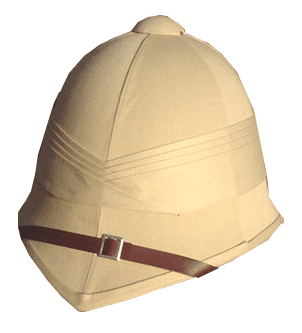
Yeah, she's bloody worth crying speechlessly over isn't she? Oh, you're shedding tears for your lost ideals? You say you pissed away your Manifest Destiny? Yes, yes, I understand. All right then, if it will make you feel any better I'll, as Angelica says, share. Don't tell the Persian Empire this but when I first retired, I used to flat out bawl for hours. I'd whinge on about England and pith helmets. Didn't know what to do with myself. I felt as scattered as those tapas plates they serve here instead of a proper meal. Used to sit in my room in the dark and order Chinese.

Oh, bollocks. Sorry. Don't moan. You're not the only one hates those Mandarin bastards. Heard of the Boxer Rebellion? That empire tried to kill me but now if I want a good pool noodle I've got no choice but to buy it from them. Those buggers have import/export locked up.

More here. [Thanks to Nikolai Nikola.]